The End of Plastic Payment Cards? Why 2027–2035 Could Be the Decade of Digital Wallets and Mobile Money
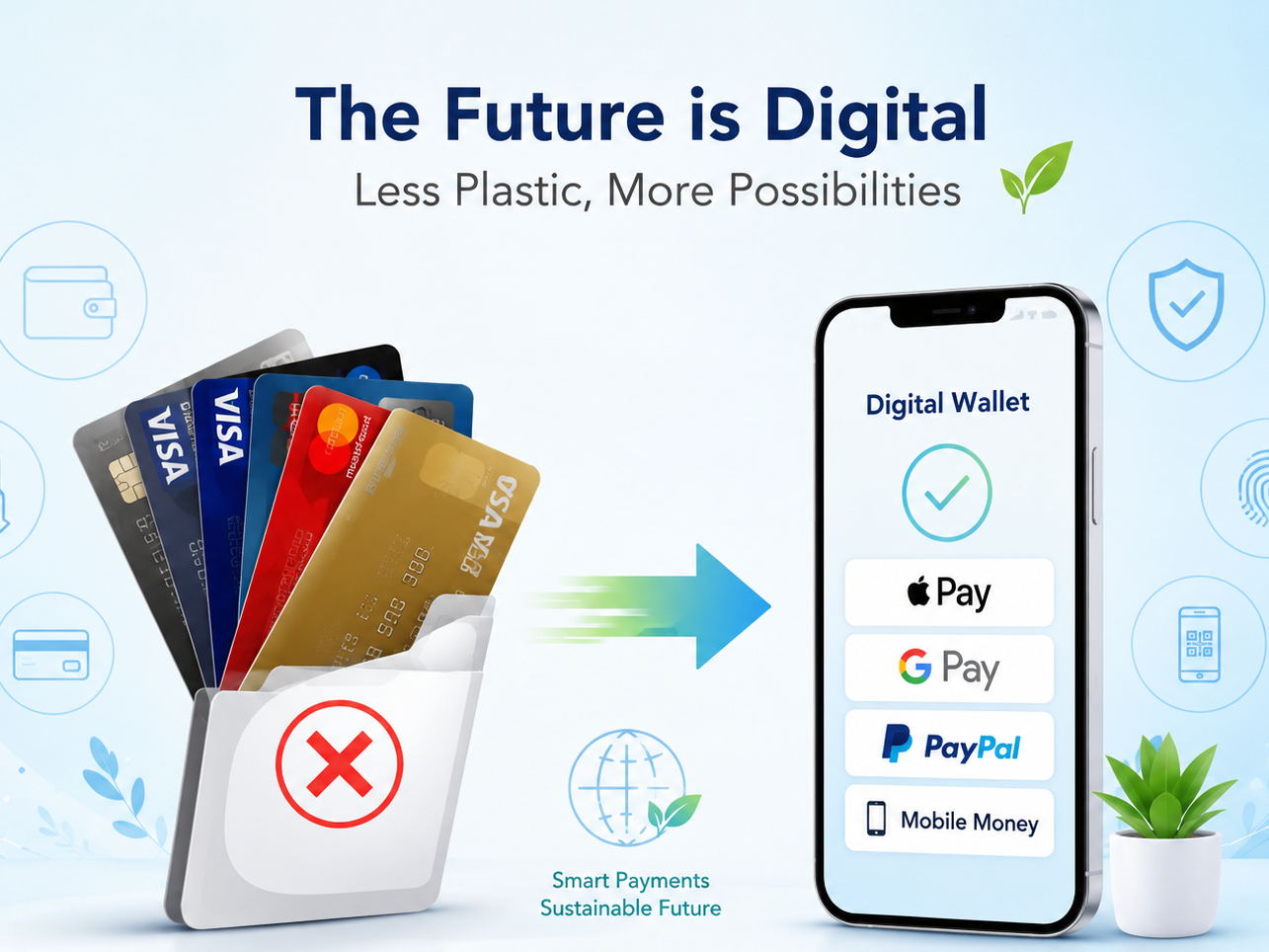
For more than five decades, plastic payment cards have dominated the global financial ecosystem. Whether it is Visa, Mastercard, American Express, JCB, UnionPay, Maestro, Cirrus, Discover, or domestic debit cards issued by banks, consumers have become accustomed to carrying multiple cards in their wallets.
However, an important question is emerging:
Will we still need plastic cards by 2030?
As technology evolves, smartphones are becoming our wallets, identification documents, travel passes, loyalty cards, and payment devices. Consequently, the world is rapidly moving toward digital wallets, mobile money platforms, tokenized payments, and eventually Central Bank Digital Currencies (CBDCs).
Although plastic cards are unlikely to disappear entirely by 2027, the transition away from physical cards has already begun. Therefore, the more relevant question is not whether plastic cards will disappear, but how quickly they will become irrelevant.
The Evolution of Payments
Human civilization has continuously transformed the way it exchanges value.
The journey began with barter systems, followed by precious metals, paper currency, cheques, credit cards, debit cards, online banking, mobile banking, digital wallets, and now digital currencies.
Each evolution has focused on three objectives:
• Greater convenience
• Higher security
• Faster transactions
Plastic cards represented a revolutionary innovation in the twentieth century. Nevertheless, every technology eventually reaches maturity.
Today, the next stage is digital-first payments.
Consumers increasingly expect transactions to be instant, contactless, secure, and integrated into their daily digital lives.
The Numbers Tell the Story
Global payment trends clearly demonstrate where the market is heading.
Recent international industry reports indicate:
• More than 6.8 billion smartphone users worldwide
• Over 4 billion people actively use digital payment services
• Mobile wallet transactions now account for approximately half of global e-commerce payments
• Contactless transactions continue to grow annually across developed and emerging economies
• Several countries already conduct the majority of retail transactions electronically
Meanwhile, younger consumers increasingly prefer mobile wallets over physical cards.
Generation Z and younger Millennials are often comfortable leaving home with only a smartphone.
For many consumers, carrying a wallet full of cards feels increasingly outdated.
Why Plastic Cards Are Losing Relevance
1. Smartphones Have Become Digital Wallets
Consumers can already store multiple payment cards inside one device.
Platforms such as PayPal, Apple Pay, Google Pay, Samsung Wallet, Alipay, WeChat Pay, and numerous banking applications allow users to make payments without presenting a physical card.
Instead of carrying ten cards, a consumer can securely access them through a single smartphone.
As a result, convenience has significantly improved.
2. Contactless Payments Are Becoming the Norm
The COVID-19 pandemic accelerated global adoption of touch-free transactions.
Consumers became more conscious of hygiene and convenience.
Today, tap-and-go payments are standard in many countries.
Increasingly, consumers tap a smartphone or smartwatch instead of a plastic card.
The payment experience remains the same while reducing dependence on physical cards.
3. Digital Payments Offer Better User Experiences
Modern consumers demand speed.
Nobody enjoys waiting in queues, inserting cards, entering PINs repeatedly, or carrying multiple cards.
Digital wallets simplify transactions through:
• Facial recognition
• Fingerprint authentication
• Tokenized security
• One-click payments
• Integrated loyalty programmes
• Instant transaction records
Consequently, digital payments often deliver a superior customer experience.
4. Environmental Sustainability Matters
Billions of plastic cards are manufactured worldwide.
Many contain PVC materials that require resources for production and disposal.
As governments and corporations pursue sustainability objectives, reducing unnecessary plastic production becomes increasingly important.
Although payment cards represent only a small proportion of global plastic consumption, every reduction contributes to broader environmental goals.
A digital wallet generates significantly less physical waste than multiple plastic cards.
5. Financial Institutions Are Going Digital
Banks are increasingly investing in:
• Mobile banking
• Virtual cards
• Digital onboarding
• AI-powered fraud detection
• Instant payments
• Open banking ecosystems
These investments indicate where the industry sees future growth.
The focus is moving from physical products toward digital experiences.
Case Study 1: China – The Mobile Payment Revolution
China represents one of the world’s most successful transitions toward digital payments.
In many urban areas, consumers rarely use cash or physical cards.
Instead, QR-code payments dominate retail transactions.
Restaurants, taxis, street vendors, supermarkets, and shopping malls widely accept mobile payments.
The result is a highly efficient payment ecosystem that demonstrates how quickly consumer behaviour can change when convenience improves.
Case Study 2: Sweden – Towards a Cashless Society
Sweden has become one of the least cash-dependent economies in the world.
Many businesses no longer accept cash.
Digital transactions dominate retail spending.
Although cards remain in use, mobile payment applications continue expanding rapidly.
Sweden provides a glimpse into how developed economies may evolve over the next decade.
Case Study 3: Singapore – Smart Nation Strategy
Singapore has actively promoted digital transformation.
Government agencies, banks, transportation providers, and retailers support integrated digital payment systems.
Consumers can pay for transport, shopping, dining, and government services through digital platforms.
The nation demonstrates how policy support can accelerate digital payment adoption.
Case Study 4: India – UPI Success Story
India’s Unified Payments Interface (UPI) transformed payment accessibility.
Consumers can instantly transfer money using smartphones at minimal cost.
Millions of merchants now accept digital payments.
The success of UPI proves that digital payment adoption is not limited to wealthy nations.
Innovation can flourish in emerging economies as well.
Case Study 5: Kenya – Mobile Money Leadership
Kenya’s mobile money ecosystem changed financial inclusion.
Millions gained access to financial services without traditional banking infrastructure.
Mobile payments became part of daily life.
The Kenyan experience demonstrates how technology can expand access while reducing dependency on physical banking instruments.
Case Study 6: South Korea – Highly Connected Consumers
South Korea’s advanced digital infrastructure supports widespread electronic transactions.
Consumers increasingly rely on smartphones for commerce, transport, and financial services.
Physical payment instruments continue to decline in relative importance.
The country illustrates how technological readiness accelerates payment innovation.
Case Study 7: Sri Lanka – The Emerging Opportunity
Sri Lanka has made significant progress in digital banking, QR-code payments, online commerce, and mobile banking applications.
The Central Bank, commercial banks, fintech companies, telecommunications providers, and payment networks continue encouraging digital adoption.
However, consumer education, merchant acceptance, cybersecurity awareness, and infrastructure development remain important priorities.
Sri Lanka has tremendous potential to become a regional leader in digital payments over the coming decade.
Will Visa and Mastercard Disappear?
The answer is no.
This is where many people misunderstand the future.
Visa, Mastercard, American Express, JCB, UnionPay, and other networks are not merely card manufacturers.
They are global payment networks.
Even if physical cards disappear, the underlying payment networks may continue operating behind digital wallets.
For example:
A consumer may use Apple Pay.
However, the transaction may still travel through Visa or Mastercard infrastructure.
Therefore, the future may involve the disappearance of plastic cards rather than the disappearance of payment networks.
The networks themselves are likely to evolve rather than vanish.
The Challenges of a Fully Digital Future
Despite remarkable progress, several obstacles remain.
Cybersecurity Risks
Digital systems can be vulnerable to:
• Fraud
• Identity theft
• Phishing attacks
• Data breaches
• Social engineering scams
Therefore, security must remain a top priority.
Digital Exclusion
Not everyone owns a smartphone.
Not everyone has internet access.
Not everyone possesses digital literacy skills.
Governments must ensure inclusion during the transition.
System Outages
Technology occasionally fails.
Power failures, network disruptions, or technical issues can interrupt digital transactions.
Backup systems remain essential.
Privacy Concerns
Some consumers remain concerned about transaction tracking and data collection.
Future payment systems must balance convenience with privacy protections.
The Role of Central Bank Digital Currencies
Many central banks are exploring CBDCs.
These digital forms of sovereign currency could eventually complement existing payment methods.
CBDCs may offer:
• Faster payments
• Lower transaction costs
• Greater transparency
• Enhanced financial inclusion
Although widespread implementation remains uncertain, CBDCs represent another important step toward digital economies.
What Could Happen by 2030?
A realistic scenario might include:
• Significantly fewer physical cards
• More virtual cards
• Greater smartphone payments
• Increased wearable payments
• Expanded digital identity systems
• Wider use of digital currencies
• Continued operation of global payment networks
Therefore, consumers may carry fewer plastic cards while relying more heavily on digital alternatives.
My Perspective
I do not believe plastic cards will disappear completely by 2027.
However, I strongly believe their importance will decline dramatically throughout the next decade.
The future belongs to integrated digital ecosystems where payments occur seamlessly through smartphones, smartwatches, biometric authentication, and digital wallets.
Consumers increasingly prioritize convenience.
Businesses increasingly prioritize efficiency.
Governments increasingly prioritize digital transformation.
These three forces are pushing society toward a future where carrying numerous plastic cards may eventually feel as outdated as carrying a cheque book today.
The question is no longer whether digital payments will dominate.
The question is how quickly consumers, businesses, financial institutions, and governments can adapt to that reality.
One thing appears certain:
The wallet of the future will be digital.
And for many people, that future has already arrived.
Disclaimer
This article has been authored and published in good faith by Dr. Dharshana Weerakoon, DBA (USA), based on publicly available industry information, global payment trends, professional observations, and practical business experience across multiple sectors and international markets. The content is intended solely for educational, informational, and public discussion purposes regarding the future of digital payments, mobile money, digital wallets, and financial technology innovation.
The views expressed are personal, analytical, and forward-looking in nature and should not be interpreted as legal, financial, banking, investment, regulatory, or professional advice. Predictions and future scenarios discussed in this article are based on current market developments and may change as technology, regulations, consumer behaviour, and economic conditions evolve.
The author accepts no responsibility for any decisions, actions, interpretations, or outcomes arising from the use of this content. Readers are encouraged to seek independent professional advice before making financial, investment, technological, or business decisions.
This article respects applicable intellectual property rights, privacy principles, ethical publishing standards, and relevant laws and regulations governing digital finance, payments, and consumer protection.
Written and published independently by Dr. Dharshana Weerakoon, DBA (USA).
© Dr. Dharshana Weerakoon, DBA (USA). All rights reserved.
Further Reading: https://dharshanaweerakoon.com/when-loans-turn-non-performing/
Further Reading: https://www.linkedin.com/newsletters/outside-of-education-7046073343568977920/