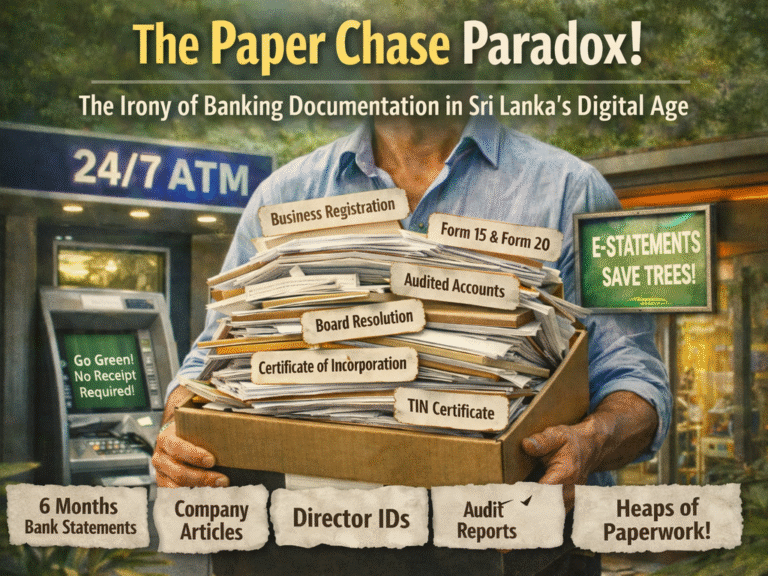
When Loans Turn Non-Performing: Why Financial Institutions Must Secure Governance Rights Beyond Traditional Collateral
Global Tourism & Hospitality Strategist | Entrepreneur | Chairman – Global Cooperation Private Limited
The modern banking and financial ecosystem has evolved rapidly over the past two decades. However, one major challenge continues to threaten financial institutions, investors, shareholders, depositors, and national economies alike: the increasing volume of non-performing loans (NPLs).
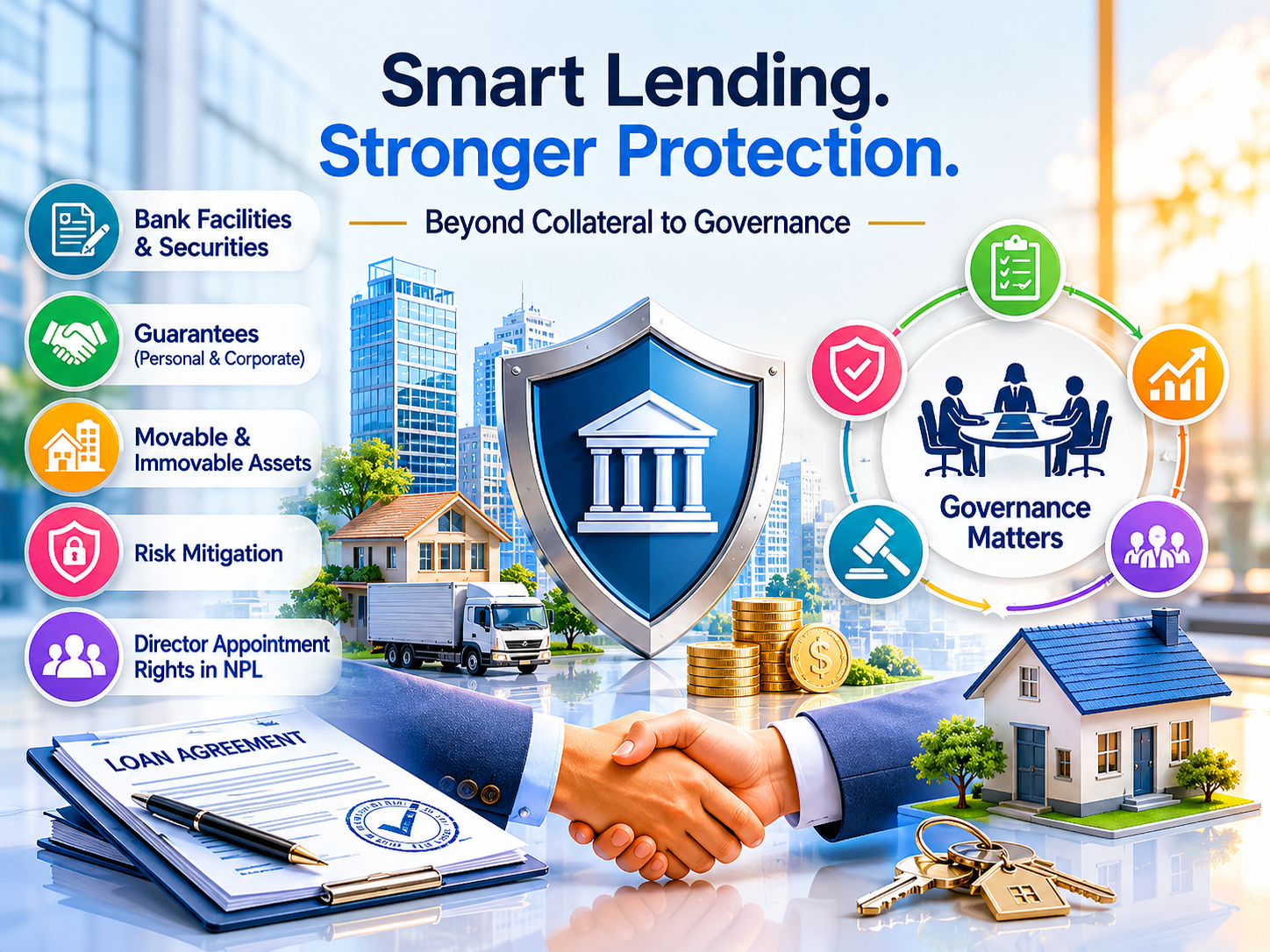
While banks traditionally rely on securities, mortgages, personal guarantees, corporate guarantees, and movable or immovable assets to protect lending exposure, experience across multiple industries demonstrates that collateral alone is no longer sufficient in complex corporate lending environments.
Today, governance risk has become equally important as financial risk.
In my professional opinion, one strategic mechanism that deserves serious consideration by lending institutions is the ability to amend Articles of Association to permit the appointment of lender-nominated directors once a loan facility becomes non-performing or materially distressed.
This concept may appear aggressive to some stakeholders initially. Nevertheless, from a corporate governance and banking risk management perspective, it is increasingly becoming a commercially rational discussion globally.
This article explores the legal, financial, ethical, governance, and operational dimensions of such a framework while analyzing international practices, case studies, statistics, and practical implications for financial institutions and corporate borrowers.
The Growing Global Crisis of Non-Performing Loans
Non-performing loans continue to represent one of the largest structural threats to banking systems worldwide.
According to international banking assessments and financial monitoring reports:
- Global NPL volumes exceeded USD 2 trillion in recent years.
- Several emerging economies recorded NPL ratios between 8%–20% within SME and tourism-related sectors after COVID-19.
- South Asian banking systems experienced elevated stress due to foreign exchange shortages, inflation, and declining business liquidity.
- Corporate defaults in hospitality, construction, retail, and real estate sectors increased significantly between 2020 and 2024.
Sri Lanka itself experienced severe financial sector pressure during the economic crisis period.
The situation highlighted several weaknesses:
- Weak corporate governance
- Overleveraged businesses
- Improper financial disclosure
- Political and market instability
- Poor debt restructuring practices
- Excessive dependence on short-term cash flows
Importantly, many banks discovered that traditional securities alone could not prevent asset deterioration or management failures once facilities became distressed.
This is where governance intervention becomes critically important.
Traditional Banking Securities: Are They Still Enough?
Historically, financial institutions relied on several protective mechanisms before granting facilities:
Common Lending Securities
1. Personal Guarantees
Directors or shareholders personally guarantee repayment obligations.
2. Corporate Guarantees
Group companies or related entities provide repayment support.
3. Movable Assets
- Machinery
- Vehicles
- Inventory
- Equipment
- Receivables
4. Immovable Assets
- Land
- Buildings
- Hotels
- Factories
- Commercial properties
5. Cash Margins and Deposits
Cash-backed security structures.
6. Share Pledges
Borrower shares pledged to lenders.
However, practical realities reveal major limitations.
In distressed situations:
- Asset values decline rapidly
- Forced sales produce lower recoveries
- Litigation consumes years
- Directors may transfer assets improperly
- Cash flows disappear
- Companies become operationally unstable
Therefore, relying solely on collateral recovery often becomes reactive rather than preventive.
Banks need earlier intervention rights.
The Governance Gap in Corporate Lending
One of the biggest weaknesses in many lending structures is the absence of governance oversight after loan disbursement.
Once funds are released:
- Banks usually become passive observers
- Directors continue full operational control
- Financial reporting may become manipulated
- Risk exposure increases silently
By the time a facility officially becomes non-performing:
- Operational damage may already be severe
- Financial leakages may have occurred
- Employees may leave
- Suppliers may lose confidence
- Customers may shift to competitors
Consequently, recovery becomes significantly harder.
This raises an important strategic question:
Should lenders have limited governance intervention rights when borrowers materially default?
In my assessment, the answer deserves serious professional debate.
The Proposal: Lender-Nominated Director Rights
A practical solution could involve:
Amending Articles of Association at the Initial Lending Stage
At the time facilities are granted, borrowing companies may agree contractually that:
- If specified default triggers occur;
- If facilities become non-performing;
- If covenant breaches continue beyond defined thresholds;
Then:
- The lender gains the right to appoint one or more independent or observer directors to the board.
This would not necessarily mean hostile takeover control.
Instead, the objective would be:
- Governance stabilization
- Financial monitoring
- Operational transparency
- Asset preservation
- Business continuity
- Stakeholder confidence restoration
Importantly, this mechanism could operate under clearly defined legal and ethical boundaries.
Why This Concept Matters More Today
Modern banking risks are no longer limited to repayment failures.
Banks now face:
- Governance failures
- ESG risks
- Fraud exposure
- Reputation damage
- Regulatory pressure
- Systemic financial instability
Consequently, early governance intervention can produce several advantages.
Key Benefits to Financial Institutions
Improved Transparency
Banks receive direct operational visibility.
Faster Risk Detection
Irregularities can be identified earlier.
Asset Preservation
Risky asset transfers may be prevented.
Better Restructuring Outcomes
Boards can make informed turnaround decisions.
Reduced Litigation
Collaborative governance may reduce legal disputes.
Improved Recovery Ratios
Businesses may survive rather than collapse.
Depositor Protection
Ultimately, banking stability protects public confidence.
Case Study 1 — The Asian Hospitality Sector Collapse During COVID-19
The tourism and hospitality industry provides one of the clearest examples of governance failures during financial distress.
Many hotels across Asia:
- Obtained large development loans
- Relied heavily on tourism inflows
- Operated with thin liquidity buffers
When international travel stopped:
- Revenue collapsed almost overnight
- Loan repayments became impossible
However, recovery outcomes varied dramatically.
Properties where lenders actively monitored management decisions often survived through:
- Structured restructuring
- Operational cost control
- Asset preservation
- Strategic reopening plans
Meanwhile, poorly governed properties experienced:
- Staff losses
- Vendor disputes
- Asset deterioration
- Legal conflicts
This demonstrated that governance involvement can materially influence recovery success.
Case Study 2 — International Airline Restructuring Models
Several international airlines undergoing financial distress adopted creditor-board oversight structures.
In many restructuring situations:
- Creditors obtained observer rights
- Independent restructuring directors were appointed
- Financial controls strengthened
These interventions:
- Improved operational accountability
- Reduced financial leakages
- Enhanced restructuring negotiations
Most importantly, governance reforms helped restore stakeholder confidence.
Case Study 3 — Construction Sector Defaults
Globally, the construction industry has historically recorded high corporate default rates.
Key reasons include:
- Cost overruns
- Poor cash flow management
- Weak project governance
- Delayed receivables
Banks financing large construction projects increasingly require:
- Project monitoring committees
- Independent quantity surveyors
- Board-level reporting obligations
Some institutions also negotiate governance intervention rights upon covenant breaches.
This trend reflects growing recognition that financial risk and governance risk are inseparable.
Case Study 4 — Family-Owned Businesses and Governance Conflicts
Many family-owned companies experience distress not because of market conditions alone, but due to:
- Internal disputes
- Lack of succession planning
- Weak financial discipline
Banks often face difficulties because:
- Decision-making becomes emotional
- Financial reporting lacks transparency
- Directors resist restructuring
In certain international cases, independent lender-supported directors helped stabilize governance and rebuild creditor confidence.
Case Study 5 — Real Estate Sector Failures
Real estate markets can change rapidly.
When projects slow down:
- Cash flow freezes
- Investor confidence declines
- Contractors stop work
In distressed developments, lenders sometimes appoint:
- Receivers
- Monitoring accountants
- Restructuring advisors
However, earlier governance participation could potentially prevent deeper deterioration.
Case Study 6 — SME Financial Distress in Emerging Economies
Small and medium enterprises represent the backbone of many economies.
Yet SMEs frequently suffer from:
- Poor governance systems
- Limited financial controls
- Informal management structures
Banks that provide only collateral-based lending may face high recovery risks.
Meanwhile, institutions that combine lending with governance oversight often achieve stronger long-term portfolio performance.
Case Study 7 — Banking Crises and Systemic Risk
History shows that uncontrolled NPL growth can destabilize entire economies.
Past financial crises demonstrated:
- Poor governance accelerates bank losses
- Weak monitoring increases systemic exposure
- Delayed intervention worsens recovery outcomes
Consequently, regulators worldwide increasingly emphasize:
- Corporate governance
- Risk monitoring
- Early warning systems
- Responsible lending frameworks
Ethical and Legal Considerations
This discussion must remain balanced and responsible.
Lender-appointed director structures should never become tools for abuse or hostile interference.
Several safeguards are essential.
Recommended Governance Safeguards
Independent Director Standards
Appointees should meet professional competency and ethical standards.
Clear Trigger Events
Appointment rights should activate only under predefined conditions.
Limited Authority Framework
Roles must be clearly defined legally.
Regulatory Compliance
Structures must comply with company law, banking regulations, and shareholder rights.
Minority Shareholder Protection
Governance intervention must not unfairly prejudice shareholders.
Transparency Requirements
All parties should understand the mechanism before facility approval.
Potential Concerns and Criticisms
Naturally, some business owners may oppose such frameworks.
Common concerns include:
- Fear of losing control
- Confidentiality worries
- Potential conflicts of interest
- Reduced entrepreneurial flexibility
These concerns are understandable.
Therefore, the objective should not be excessive lender domination.
Instead, the goal should be:
“Stabilization before collapse.”
If structured properly, lender governance rights can become protective rather than punitive.
Why This Matters Especially in Emerging Markets
Emerging economies often experience:
- Higher market volatility
- Currency instability
- Political risk
- Weaker corporate governance standards
Therefore, banks face greater recovery uncertainty.
In such environments:
- Governance monitoring becomes more valuable
- Early intervention becomes more critical
- Board-level accountability becomes increasingly important
Sri Lanka and similar economies can benefit from modernized lending governance discussions.
The Future of Corporate Lending
The future banking model may evolve beyond traditional collateral frameworks.
Tomorrow’s lending systems may increasingly include:
- Governance-linked lending
- ESG-based financing
- Digital monitoring systems
- AI-supported risk detection
- Board oversight triggers
- Dynamic covenant monitoring
Financial institutions globally are already moving toward integrated risk management models.
The separation between governance and lending risk is disappearing.
My Professional Perspective
As an entrepreneur involved in corporate strategy, hospitality, business development, and international commercial engagement across multiple sectors and jurisdictions, I believe modern lending requires a more sophisticated risk management framework.
Collateral recovery alone is no longer enough.
Financial institutions must focus on:
- Prevention rather than reaction
- Governance rather than litigation
- Stabilization rather than liquidation
If businesses survive responsibly:
- Employees are protected
- Investors are protected
- Banks reduce losses
- Economies remain stronger
Therefore, structured governance intervention rights deserve careful discussion among:
- Regulators
- Banks
- Legal professionals
- Corporate leaders
- Shareholders
- Policymakers
This is not about removing entrepreneurial freedom.
It is about strengthening accountability in an increasingly complex financial world.
Conclusion
The global rise of non-performing loans demands innovative thinking.
Traditional securities such as:
- Personal guarantees
- Corporate guarantees
- Movable assets
- Immovable assets
remain important.
However, they are no longer sufficient on their own.
The future of responsible lending may depend increasingly on governance-linked protections that enable earlier intervention before businesses collapse entirely.
Allowing lender-appointed directors under clearly regulated conditions could become one of the most important strategic developments in modern corporate lending and restructuring.
The discussion should now move from theory to practical policy dialogue.
Because ultimately, protecting financial stability protects entire economies.
Disclaimer
This article has been authored and published in good faith by Dr. Dharshana Weerakoon, DBA (USA), based on publicly available financial, corporate governance, banking, and commercial risk management concepts, together with professional industry observations and international business exposure across multiple sectors and jurisdictions.
The article is intended solely for educational, professional discussion, journalistic commentary, and public awareness purposes. It does not constitute legal, banking, financial, regulatory, investment, or restructuring advice, nor should it be interpreted as a recommendation directed toward any specific institution, company, regulator, or individual.
All opinions expressed are personal, analytical, and independent. The discussion is presented in a generalized governance and risk management context without reference to any confidential institution, borrower, or ongoing dispute.
Readers are encouraged to obtain independent legal, financial, and regulatory advice before implementing any governance, lending, restructuring, or corporate control mechanisms discussed herein.
This article is intended to comply with applicable corporate governance principles, ethical publication standards, intellectual property protections, and professional commentary practices under relevant Sri Lankan and international legal frameworks.
✍ Authored independently through professional expertise, strategic analysis, and original thought leadership.
Further Reading: https://www.linkedin.com/newsletters/outside-of-education-7046073343568977920/
Further Reading: https://dharshanaweerakoon.com/sri-lankan-banking-apps-and-otp-problems/