The Silence Economy: Why Sri Lanka Should Build Monastic Cognitive Reset Retreats for Global Business and Technology Leaders
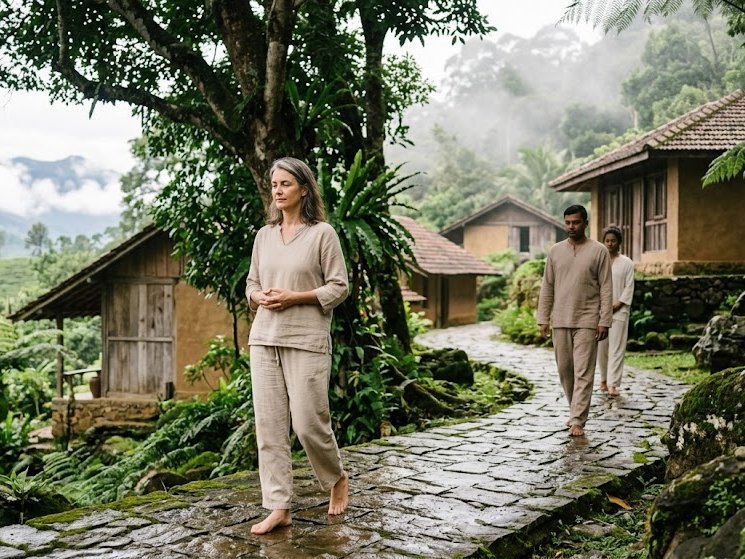
Rethinking wellness tourism in an age of cognitive overload
The Next Luxury Is Not Another Five-Star Resort—It Is Silence.
For decades, global tourism has evolved by offering bigger resorts, more luxurious accommodation, better cuisine, and increasingly personalised experiences. Yet the world’s most influential business leaders are now searching for something money alone cannot easily buy: uninterrupted silence, deep reflection, and genuine mental clarity.
We live in an era where attention has become one of the world’s most valuable commodities. Executives, entrepreneurs, investors, innovators, and technology leaders operate in an environment of constant digital interruption. Emails, video meetings, social media, artificial intelligence, financial markets, and twenty-four-hour connectivity have created unprecedented levels of cognitive fatigue.
Ironically, while technology has made people more connected than ever before, it has also made genuine mental disconnection increasingly rare.
This shift presents an opportunity that Sri Lanka has barely begun to explore.
Rather than competing solely through beaches, wildlife, or luxury hotels, Sri Lanka could position itself as one of the world’s leading destinations for Monastic Cognitive Reset Tourism—a premium tourism segment centred on authentic silence, disciplined reflection, mindfulness, and temporary withdrawal from the modern attention economy.
This is not traditional wellness tourism.
It is not simply meditation.
It is not spa tourism.
It is a carefully designed experience that enables accomplished individuals to step away from relentless information overload and reconnect with clarity, purpose, and disciplined thinking.
The World Is Experiencing an Attention Crisis
Every generation faces its own defining challenge.
For previous generations, it was access to information.
Today, the challenge is escaping it.
Research consistently shows that professionals are interrupted dozens of times during a typical working day. Many knowledge workers spend most of their working hours switching between emails, meetings, messaging platforms, and multiple digital applications. Even brief interruptions can require significant time to regain full concentration, reducing productivity and increasing mental exhaustion.
At the same time, the World Health Organization has recognised burnout as an occupational phenomenon, reflecting growing international concern about chronic workplace stress.
The global wellness economy has expanded into a multi-trillion-dollar industry, while wellness tourism has become one of its fastest-growing sectors. Yet much of today’s wellness offering remains commercially predictable—luxury spas, yoga retreats, detox programmes, and fitness holidays.
Many affluent travellers are now seeking something fundamentally different.
They are searching for environments where silence itself becomes the experience.
The Rise of the “Silence Economy”
Throughout history, silence was never considered a luxury.
It was simply part of everyday life.
Today, silence has become increasingly scarce.
As urbanisation accelerates and digital dependency grows, environments free from continuous noise, notifications, and commercial distraction are becoming exceptionally valuable.
I believe this represents the emergence of what may be called the Silence Economy—an economic space where individuals willingly invest significant resources to regain mental clarity, emotional balance, focused thinking, and uninterrupted reflection.
Unlike conventional luxury tourism, the value proposition is not built upon excess.
Instead, it is built upon intentional simplicity.
No constant notifications.
No endless meetings.
No social pressure.
No digital competition.
Only structured time, disciplined routines, nature, contemplation, and silence.
This is becoming a premium experience rather than a basic human condition.
Why Sri Lanka Is Uniquely Positioned
Many countries can build luxury resorts.
Few can authentically offer centuries of living contemplative tradition.
Sri Lanka possesses internationally recognised Buddhist heritage, centuries-old forest monasteries, rich meditation traditions, remarkable biodiversity, tropical landscapes, Ayurveda, village culture, and hospitality that naturally supports slow living.
Importantly, these strengths already exist.
They do not need to be artificially created.
The country’s competitive advantage lies not in commercialising monastic life, but in respectfully developing carefully designed retreat experiences adjacent to these traditions while preserving their spiritual integrity.
Such experiences should always remain voluntary, culturally respectful, professionally managed, and separate from the daily religious practices of resident monastic communities.
Authenticity—not entertainment—would become the defining characteristic.
That distinction could become Sri Lanka’s greatest competitive advantage.
Moving Beyond Traditional Wellness Tourism
Global wellness tourism is becoming increasingly competitive.
Almost every destination now promotes yoga retreats, luxury spas, healthy cuisine, and mindfulness programmes.
As more destinations imitate one another, differentiation becomes increasingly difficult.
Sri Lanka therefore needs tourism products that competitors cannot easily replicate.
Monastic Cognitive Reset Retreats could represent exactly that.
Imagine internationally accredited programmes lasting five, seven, or ten days.
Participants voluntarily surrender digital devices.
Daily routines emphasise silence, mindful walking, healthy local food, reading, contemplation, nature immersion, and guided reflection rather than constant activity.
The objective is not religious conversion.
Nor is it clinical therapy.
Instead, it is creating the conditions for deeper thinking, better decision-making, improved creativity, and sustainable leadership performance.
For many global executives, entrepreneurs, researchers, policymakers, and technology innovators, this may become one of the most valuable investments they make—not in business, but in themselves.
Global Signals: The Market Is Already Moving
Although “Monastic Cognitive Reset Tourism” is not yet recognised as a formal tourism category, many international travel trends point in the same direction. Across the world, affluent travellers are increasingly seeking experiences that prioritise silence, simplicity, reflection, and digital disconnection over luxury consumption.
This shift is not driven by fashion. It is driven by fatigue.
The global wellness economy is now valued at well over USD 6 trillion, with wellness tourism representing one of its fastest-growing sectors. Meanwhile, luxury travel continues to evolve beyond material comfort toward transformational experiences. Executive coaching, digital detox programmes, nature immersion, and mindfulness retreats have all grown as professionals search for ways to restore cognitive performance rather than simply escape work.
For Sri Lanka, this changing demand creates an opportunity to develop a premium tourism niche before it becomes mainstream.
The objective should never be to commercialise religion.
Instead, it should be to respectfully create authentic experiences inspired by the country’s contemplative heritage while safeguarding its cultural and spiritual integrity.
Seven Global Case Studies Worth Studying
1. Bhutan – High Value Instead of High Volume
Bhutan has demonstrated that tourism success does not necessarily depend on visitor numbers. Through a carefully managed high-value tourism model, the country attracts travellers seeking authenticity, culture, spirituality, and environmental responsibility.
The lesson for Sri Lanka is clear: premium experiences often generate greater economic value than mass tourism.
2. Japan – Zen Retreats and Temple Stays
Across Japan, temple accommodation has evolved into a respected niche tourism product. Visitors willingly exchange luxury amenities for disciplined routines, quiet surroundings, vegetarian cuisine, and opportunities for reflection.
The appeal lies not in comfort but in authenticity.
Sri Lanka possesses centuries of monastic heritage that could inspire similarly respectful experiences while remaining uniquely Sri Lankan.
3. Finland – Selling Silence
Finland has successfully marketed its forests, lakes, and tranquillity as tourism assets. Rather than competing with crowded destinations, it promotes peaceful environments where visitors can disconnect from urban life.
Silence has become part of the tourism product.
Sri Lanka’s forests, reservoirs, mountain regions, and rural landscapes offer comparable potential with a distinct cultural dimension.
4. South Korea – Reflection Through Simplicity
South Korea’s well-known “Prison Inside Me” programme allows participants to voluntarily experience highly structured isolation without technology or external distractions.
Although the concept differs significantly from monastic retreats, its popularity demonstrates an important reality: many successful professionals are actively searching for environments that reduce decision fatigue and information overload.
5. Spain – The Digital Detox Movement
Across Europe, digital detox retreats have become increasingly popular among entrepreneurs, executives, and professionals who wish to temporarily disconnect from smartphones, laptops, and constant notifications.
These programmes recognise that true luxury is increasingly measured by uninterrupted attention rather than unlimited connectivity.
6. Corporate Leadership Retreats
Many multinational organisations now invest heavily in executive retreats designed to improve strategic thinking, leadership effectiveness, and innovation.
Most of these programmes include structured reflection, nature-based activities, coaching sessions, and protected thinking time.
Sri Lanka could provide an alternative that is deeper, quieter, culturally authentic, and more memorable than conventional executive retreats.
7. Forest Therapy and Nature-Based Wellbeing
Countries including Japan and several European nations have embraced forest immersion experiences as part of preventive wellbeing.
Scientific interest in spending time in natural environments continues to grow, with research linking nature exposure to reduced stress and improved psychological wellbeing.
Sri Lanka’s rainforests, dry-zone forests, mountains, lakes, and wildlife landscapes provide a remarkable foundation for integrating nature with contemplative tourism.
Sri Lanka’s Untapped Competitive Advantage
Sri Lanka often competes directly with destinations that possess larger marketing budgets and more extensive tourism infrastructure.
However, successful tourism destinations are rarely built by copying competitors.
They succeed by offering experiences that cannot easily be replicated elsewhere.
Sri Lanka’s strengths are unusually complementary:
- A living Buddhist heritage spanning more than two millennia.
- Thousands of temples and meditation centres.
- Diverse ecosystems within relatively short travel distances.
- Ayurveda and indigenous wellness traditions.
- A culture that values hospitality, humility, and simplicity.
- Strong English-language capability within the tourism sector.
- International air connectivity to Asia, Europe, and the Middle East.
Individually, these assets are valuable.
Combined, they create a tourism proposition that few destinations can match.
From Wellness Tourism to Cognitive Performance Tourism
Traditional wellness tourism asks one question:
“How can visitors feel healthier?”
Monastic Cognitive Reset Tourism asks a different question:
“How can visitors think more clearly?”
This distinction matters.
Increasingly, business leaders are measured not only by their energy but also by the quality of their judgement, creativity, resilience, and strategic decision-making.
Mental clarity is becoming an economic asset.
Consequently, tourism products that improve cognitive performance may eventually command premium prices.
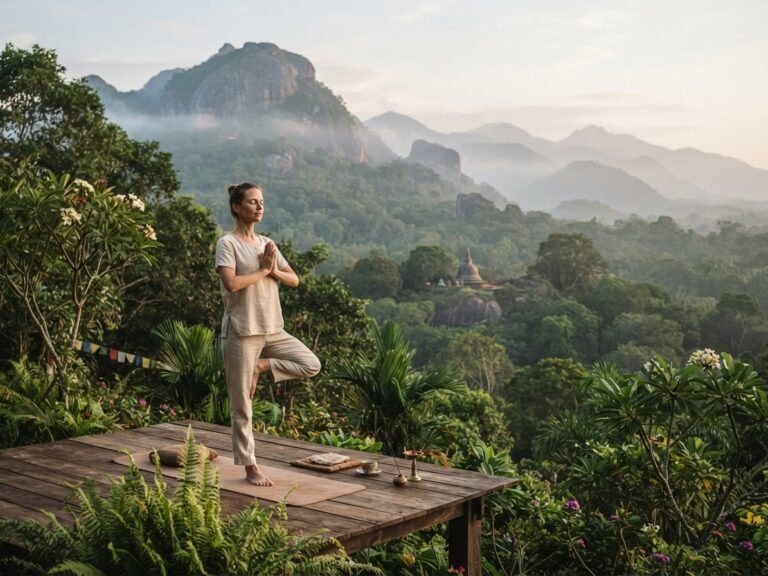
Imagine a programme where participants spend seven days without digital devices, unnecessary meetings, or commercial distractions.
Instead, they experience:
- Structured periods of silence.
- Guided reflective practices.
- Mindful walking in natural surroundings.
- Nutritious local cuisine.
- Reading and journaling.
- Nature immersion.
- Ethical leadership discussions.
- Time for uninterrupted thinking.
This is not about escaping reality.
It is about returning to it with greater clarity.
Protecting Authenticity Must Come First
Any discussion of monastic-inspired tourism must begin with respect.
Sri Lanka’s monasteries are first and foremost places of religious practice, learning, and spiritual discipline. They should never become commercial attractions or entertainment venues.
Therefore, any future tourism model should be developed alongside religious authorities, cultural experts, conservation professionals, tourism regulators, and local communities.
Retreat facilities could be located near—not within—active monastic environments, drawing inspiration from traditional principles without disrupting religious life.
If authenticity is compromised, the concept loses its value.
If authenticity is protected, Sri Lanka could create one of the world’s most distinctive premium tourism experiences.
A Strategic Blueprint for Sri Lanka
If Sri Lanka chooses to pursue this niche, success will depend on thoughtful planning rather than rapid expansion. The goal should not be to maximise visitor numbers, but to establish a globally respected standard for authentic cognitive reset experiences.
A practical framework could include:
- Develop a national quality standard for cognitive reset retreats, ensuring authenticity, participant safety, ethical practices, and environmental sustainability.
- Partner with religious and cultural authorities so that programmes respect Sri Lanka’s Buddhist heritage while preserving the sanctity of active monasteries.
- Create purpose-built retreat centres adjacent to suitable natural environments rather than commercialising places of worship.
- Train specialist facilitators with expertise in hospitality, psychology, mindfulness, leadership development, and intercultural communication.
- Integrate local communities through sustainable employment, local sourcing, traditional food, handicrafts, and cultural experiences.
- Position the product internationally through premium tourism campaigns aimed at business leaders, entrepreneurs, academics, policymakers, innovators, and high-performing professionals.
Such an approach would strengthen Sri Lanka’s tourism portfolio while protecting the authenticity that gives the concept its value.
The Economic Opportunity
The future of tourism will not be defined solely by visitor arrivals.
It will increasingly be measured by visitor value.
A seven-day premium cognitive reset programme could generate substantially higher economic returns per guest than many traditional tourism products, while requiring fewer physical resources and placing less pressure on popular destinations.
Unlike mass tourism, this model encourages:
- Longer average stays.
- Higher visitor expenditure.
- Lower environmental impact.
- Greater use of rural destinations.
- Year-round demand rather than seasonal peaks.
- Stronger links with local communities.
Equally important, it complements Sri Lanka’s national ambition to transition from competing on volume to competing on value.
In an increasingly crowded global tourism market, differentiation is one of the country’s most valuable assets.
Challenges That Must Be Addressed
Every innovative tourism concept brings responsibility.
Several important issues require careful consideration before implementation:
- Commercial interests must never compromise religious or cultural values.
- Participation should always be voluntary, respectful, and inclusive.
- Retreats must never be presented as medical, psychological, or therapeutic treatment unless supported by appropriately qualified professionals and relevant regulatory approvals.
- Environmental sustainability should remain central to all developments.
- Local communities should receive meaningful economic and social benefits.
- Marketing should avoid sensationalism and instead emphasise authenticity, respect, and personal reflection.
If these principles guide development, Sri Lanka can create a tourism product that is commercially successful while remaining culturally responsible.
Looking Beyond Tourism
The broader significance of this idea extends beyond tourism itself.
As artificial intelligence automates routine tasks and digital technologies continue to accelerate the pace of modern life, the ability to think deeply may become one of humanity’s greatest competitive advantages.
The destinations that help people regain focus, creativity, emotional balance, and strategic clarity may become as valuable as those that once offered only sunshine and beaches.
Sri Lanka already possesses many of the essential ingredients: a rich contemplative heritage, extraordinary biodiversity, authentic hospitality, and a culture that values simplicity and reflection.
The opportunity is not to imitate what other destinations have already built.
It is to lead a category that has yet to be fully defined.
That is the essence of innovation.
Final Thoughts
Tourism has always evolved alongside changing human needs.
There was a time when travellers sought adventure.
Later, they sought luxury.
Today, many seek wellbeing.
Tomorrow, they may seek something even more fundamental—the ability to pause, reflect, and think without interruption.
If that future is approaching, Sri Lanka has an opportunity to become more than another beautiful destination.
It can become a place where the world’s decision-makers, entrepreneurs, researchers, and innovators come not simply to relax, but to regain perspective.
The country’s greatest tourism asset may not be another resort or attraction.
It may be something that has existed here for centuries.
Silence.
Disclaimer
This article has been prepared and published in good faith by Dr. Dharshana Weerakoon, DBA (USA). It reflects independent professional analysis based on publicly available industry information, established tourism trends, international market observations, and the author’s extensive experience in tourism, hospitality, business strategy, and destination development.
The purpose of this article is to encourage informed discussion on innovative, sustainable, and culturally respectful tourism opportunities for Sri Lanka. It does not constitute legal, financial, investment, medical, psychological, or government policy advice.
The concepts presented are strategic proposals intended for academic discussion and industry dialogue. Any future implementation should be undertaken in consultation with relevant government authorities, religious leaders, cultural institutions, environmental experts, tourism professionals, and local communities, while complying with all applicable laws, regulations, ethical standards, and heritage conservation requirements.
All opinions expressed are solely those of the author.
© Dr. Dharshana Weerakoon, DBA (USA). All Rights Reserved.
Further Reading: https://dharshanaweerakoon.com/the-untold-reality-of-the-hospitality-industry/
Further Reading: https://www.linkedin.com/newsletters/outside-of-education-7046073343568977920/