
Why Are Maldives Resort Rates So Expensive?
A Decade of Insights from the Front Lines of Island Hospitality Development
Global Tourism & Hospitality Strategist | Entrepreneur | Chairman – Global Cooperation Private Limited
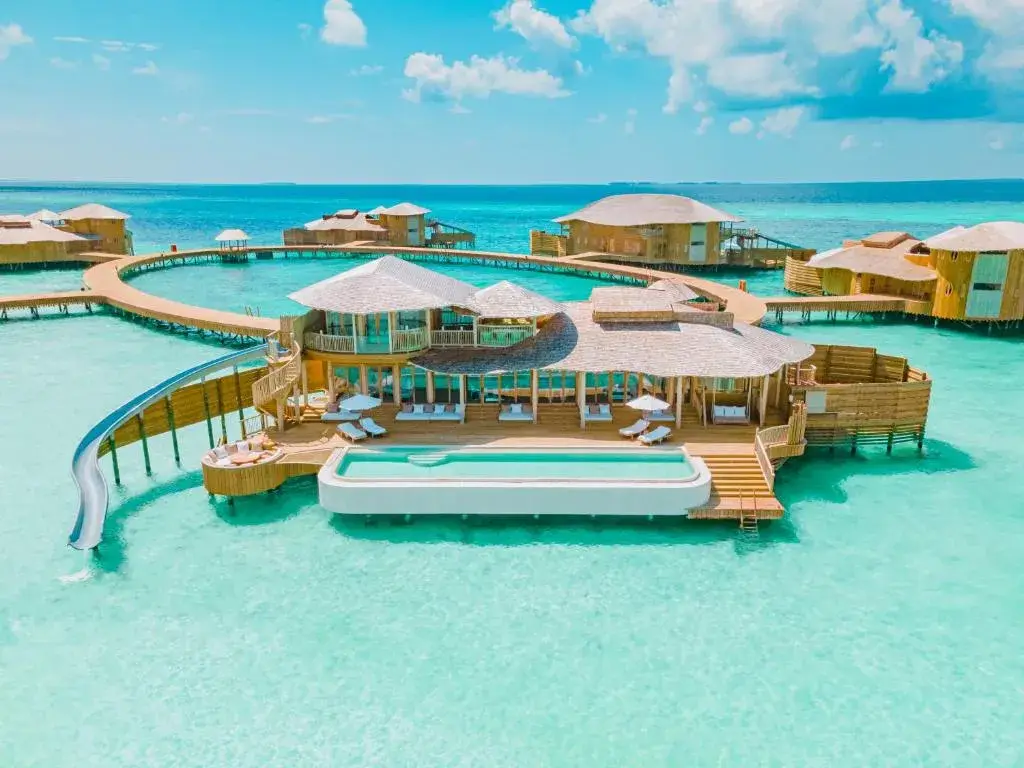
Every year, millions of travelers dream of visiting the Maldives. Crystal-clear lagoons, overwater villas, private islands, world-class diving, and unparalleled luxury have positioned the country as one of the world’s most aspirational tourism destinations.
Yet one question continues to surface among travelers, travel agents, and even hospitality professionals:
Why are Maldives resort rates so expensive?
Having worked in and around the Maldives tourism sector for nearly a decade, I have often encountered misconceptions regarding resort pricing. Many assume that the high rates are driven solely by luxury branding or profit maximization. In reality, the economics behind Maldives resort operations are significantly more complex.
The answer lies in a combination of geography, infrastructure, financing, taxation, logistics, operational challenges, market positioning, and long-term investment recovery.
This article explores the real business dynamics behind Maldives resort pricing and why maintaining profitability in paradise is far more challenging than many imagine.
Understanding the Maldives Tourism Model
Unlike most tourism destinations, many Maldives resorts operate on individual islands.
Today, the country hosts more than 170 operational tourist resorts and receives approximately two million international visitors annually. Tourism contributes more than one-quarter of the national GDP directly and significantly more through indirect economic activity.
While guests experience tranquility and luxury, owners and operators face a continuous battle against costs, risks, and market pressures.
Every room sold must contribute toward recovering massive capital investments while supporting one of the most expensive hospitality operating environments in the world.
1. Construction Costs Begin the Pricing Story
One of the biggest drivers of room rates starts long before the first guest checks in.
Most resort islands require extensive preparation before development can even begin.
Developers must often invest in:
- Land reclamation
- Coastal protection systems
- Jetties and harbors
- Staff accommodation facilities
- Desalination plants
- Sewerage treatment systems
- Power generation facilities
- Fuel storage systems
- Internal transportation infrastructure
Unlike urban hotels, virtually every component must be transported to remote islands.
A luxury resort development can easily exceed USD 1 million per key, while ultra-luxury properties may surpass USD 2 million per room.
Consequently, room rates must support recovery of these substantial capital expenditures over time.
2. Import Dependency Creates Permanent Cost Pressure
The Maldives imports the majority of materials used in resort construction and operations.
These include:
- Cement
- Steel
- Timber
- Furniture
- Kitchen equipment
- Guest supplies
- Luxury amenities
- Specialized technology systems
Furthermore, many premium food and beverage items are imported from Europe, the Middle East, Asia, and Australia.
As a result, fluctuations in global shipping costs, exchange rates, fuel prices, and supply chain disruptions can significantly impact resort operating expenses.
Unlike mainland destinations, alternative sourcing options are limited.
Therefore, many resorts maintain higher pricing structures to absorb future supply chain uncertainties.
3. Logistics: The Cost Guests Rarely See
A resort located in a city can receive deliveries by truck within hours.
A Maldives resort often requires:
- International shipping
- Port handling
- Domestic transportation
- Barge transfers
- Speedboat logistics
- Seaplane operations
Every movement of goods involves additional handling costs.
Even replacing a simple air-conditioning component can involve significant logistical expenses and delays.
Consequently, inventory management becomes a strategic necessity rather than a routine operational function.
4. Procurement and Project Management Risks
Large-scale hospitality developments involve multiple contractors, consultants, suppliers, and subcontractors.
Industry professionals recognize that procurement inefficiencies, design modifications, construction delays, change orders, and supply chain disruptions can substantially increase project costs.
In some developments globally, poor contract management may lead to cost overruns that exceed original budgets.
Therefore, investors frequently build financial contingencies into future pricing models to protect long-term returns.
These realities are not unique to the Maldives but are amplified by the country’s geographical challenges.
Case Study 1: Delayed Island Development
A resort originally projected to open in three years experiences a twelve-month delay due to material shortages and weather disruptions.
The delay increases financing costs, contractor expenses, and opportunity costs.
Upon opening, management must recover these additional expenditures through operational revenues.
Room pricing inevitably reflects this reality.
5. Island Lease and Rental Obligations
A significant cost component often overlooked by travelers is island lease expenditure.
Developers typically commit to long-term lease agreements that require substantial annual payments.
These obligations continue regardless of occupancy levels.
Whether the resort operates at 90% occupancy or 30% occupancy, lease commitments remain.
As a result, room rates must contribute toward these fixed costs.
Case Study 2: The Low Occupancy Challenge
A resort operating at 40% occupancy during a global downturn still faces:
- Lease payments
- Staff salaries
- Utility expenses
- Debt repayments
- Maintenance costs
The inability to reduce many fixed costs forces operators to maintain pricing discipline.
6. Financing and Bank Loans Shape Pricing Decisions
Most resorts are not built entirely using investor equity.
Large-scale hospitality developments often depend heavily on commercial financing.
Debt servicing becomes a critical business consideration.
Investors and lenders evaluate:
- Return on Investment (ROI)
- Payback Period
- Gross Operating Profit (GOP)
- EBITDA Performance
- Debt Coverage Ratios
Consequently, room rates are often designed to support financial sustainability rather than merely cover operational costs.
A luxury villa may appear expensive to a guest, yet from an investment perspective it may be necessary to meet financing obligations.
Case Study 3: The Debt Recovery Model
Consider a USD 150 million resort development financed partly through debt.
Even modest interest obligations can translate into millions of dollars annually.
Room revenue becomes the primary mechanism for meeting these commitments.
7. Owner-Operator Agreements and Brand Economics
Many investors partner with internationally recognized hospitality brands.
The rationale is simple:
- Stronger distribution networks
- Higher average daily rates
- Global loyalty programs
- Enhanced credibility
- Professional management expertise
However, brand partnerships introduce additional expenses including:
- Management fees
- Incentive fees
- Marketing contributions
- Reservation system costs
- Brand compliance requirements
Although these partnerships may increase revenue potential, they also influence pricing structures.
Case Study 4: Luxury Brand Positioning
Two resorts may offer similar physical products.
Yet the globally recognized brand commands significantly higher rates due to international distribution strength and customer trust.
The market ultimately pays for perceived value.
8. Operational Costs Never Stop
Running a Maldives resort resembles operating a small self-sufficient community.
Management must provide:
- Electricity
- Fresh water
- Waste management
- Employee accommodation
- Transportation
- Healthcare support
- Security
- Recreation facilities
Many islands operate independent infrastructure systems 24 hours a day.
Unlike city hotels that rely on municipal services, resorts must create and maintain these systems internally.
These costs directly influence room pricing.
Case Study 5: Utility Cost Exposure
When fuel prices rise globally, resort utility costs can increase substantially.
Generators, transport vessels, and logistics operations all become more expensive.
Operators must absorb or recover these increases.
9. Staffing Challenges in Remote Environments
Resorts depend on large multicultural workforces.
Staff recruitment often involves international sourcing.
Employers must provide:
- Accommodation
- Meals
- Medical support
- Transportation
- Training
- Recreation facilities
Employee welfare standards have increased significantly across the industry.
These investments improve service quality but also increase operating expenses.
10. Renovation Cycles Are Extremely Expensive
Luxury hospitality is highly competitive.
Guest expectations continue to evolve.
As a result, many resorts undertake significant renovations every five to seven years.
These may include:
- Villa upgrades
- Restaurant redesigns
- Technology improvements
- Sustainability enhancements
- New wellness facilities
Failure to reinvest can weaken competitiveness.
Case Study 6: The Renovation Imperative
A resort that postpones renovations may experience declining guest satisfaction and lower average daily rates.
Therefore, many owners budget future renovations into current pricing strategies.
11. Taxation Significantly Influences Rates
Guests often focus on room prices without considering taxation.
Various tourism-related taxes and fees contribute to the final price paid.
These charges support national development and public services while increasing overall vacation costs.
Consequently, headline rates rarely represent the full revenue retained by owners.
12. Competition Still Matters
Despite high operating costs, resorts cannot simply charge any rate they desire.
Pricing strategies must consider:
- Competitor positioning
- Market demand
- Brand strength
- Seasonality
- Distribution channels
- Customer perceptions
Revenue management teams constantly balance occupancy and average daily rate performance.
Case Study 7: The Competitive Pricing Dilemma
During a market slowdown, aggressive discounting may boost occupancy.
However, excessive price reductions can damage brand positioning and profitability.
Therefore, many resorts prefer strategic value additions over dramatic rate cuts.
13. Capital Appreciation: The Long-Term Investment Perspective
An often-overlooked aspect of resort development is long-term asset value creation.
Successful resort properties may appreciate significantly over time.
After years of debt repayment, operational stabilization, and brand establishment, investors may choose to:
- Refinance
- Expand
- Bring in equity partners
- Sell the asset
In many cases, substantial returns arise from capital appreciation rather than annual operating profits alone.
This reality influences initial investment decisions and pricing strategies from the very beginning.
So Why Are Maldives Resort Rates Expensive?
The answer is not a single factor.
Rather, it is the cumulative impact of:
✓ High construction costs
✓ Import dependency
✓ Complex logistics
✓ Island lease obligations
✓ Debt servicing requirements
✓ Brand-related expenses
✓ Operational infrastructure costs
✓ Workforce investments
✓ Renovation cycles
✓ Taxation
✓ Competitive market pressures
✓ Long-term investment recovery expectations
When viewed collectively, the economics become easier to understand.
What guests perceive as an expensive room rate often reflects a highly complex business ecosystem operating in one of the world’s most geographically challenging hospitality environments.
Final Thoughts
After nearly a decade of observing Maldives tourism development and operations, I have come to appreciate that running a successful resort is far more than selling rooms in paradise.
It requires balancing investor expectations, guest satisfaction, operational realities, environmental responsibilities, and market competition—simultaneously.
For travelers, the Maldives represents a dream destination.
For owners, developers, lenders, operators, and hospitality professionals, it represents a continuous exercise in strategic financial management.
The next time you see a Maldives resort rate that appears expensive, remember that behind every villa lies a sophisticated business model shaped by investment risk, operational complexity, and long-term value creation.
In many respects, paradise is not expensive because it is luxurious.
Paradise is expensive because creating and maintaining it is extraordinarily challenging.
Disclaimer
This article has been authored and published in good faith by Dr. Dharshana Weerakoon, DBA (USA), drawing upon publicly available industry information, professional observations, hospitality development principles, and extensive international tourism and hotel management experience accumulated across multiple regions over many years.
The article is intended solely for educational, journalistic, professional discussion, and industry awareness purposes. It does not constitute legal, financial, accounting, investment, valuation, development, or business advice. All examples, case studies, and scenarios are illustrative in nature and are included to explain broader industry concepts rather than comment on any specific individual, company, project, operator, owner, contractor, lender, government agency, or destination.
Views expressed are entirely personal and analytical. Readers should conduct their own due diligence and obtain professional advice before making any commercial, investment, development, operational, or financial decisions.
The author accepts no responsibility for any interpretation, reliance, adaptation, or use of the information contained herein.
© Dr. Dharshana Weerakoon, DBA (USA). All Rights Reserved.
Further Reading: https://dharshanaweerakoon.com/beyond-arrivals/
Further Reading: https://www.linkedin.com/newsletters/outside-of-education-7046073343568977920/