The Sovereign Lease Model: Can Sri Lanka Transform Forgotten Colonial Assets into the World’s Next Generation of Ultra-Luxury Heritage Enclaves?
Introduction: Sri Lanka’s Untapped Heritage Economy
Tourism is no longer only about attracting visitors; it is about creating extraordinary experiences, preserving national identity, and generating long-term economic value.
Sri Lanka possesses one of the richest tourism assets in Asia: a unique combination of colonial architecture, ancient kingdoms, biodiversity, wellness traditions, beaches, mountains, and cultural heritage. However, many historically significant properties, government-owned estates, colonial buildings, and remote heritage locations remain underutilised or economically inactive.
The question we must ask is:
Can Sri Lanka transform these forgotten assets into globally recognised ultra-luxury destinations without losing ownership of its national heritage?
One possible answer is the Sovereign Lease Model — a strategic approach where carefully selected state-owned heritage properties are offered through transparent long-term leases to internationally recognised hospitality investors while maintaining government ownership, conservation obligations, and community benefits.
This is not a sale of national assets.
It is a partnership model designed to unlock hidden value.
The Challenge: Valuable Assets Without Economic Activation
Sri Lanka’s tourism industry has enormous potential. Before the pandemic, tourism generated over USD 4.3 billion in annual foreign exchange earnings in 2018, with nearly 2.3 million international tourist arrivals. After the pandemic and economic crisis, tourism has become one of the country’s fastest pathways to foreign currency recovery.
However, Sri Lanka’s tourism model has historically focused heavily on increasing visitor numbers.
The future must focus on:
Higher-value tourism. Longer stays. Premium experiences. Greater foreign exchange generation.
A single luxury traveller staying for two weeks in a heritage wellness resort can contribute significantly more to the economy than several mass-market visitors.
Countries that have successfully developed luxury tourism understood one important principle:
Rare assets create premium value.
Sri Lanka already owns many rare assets.
The missing element is strategic activation.
Understanding the Sovereign Lease Model
A Sovereign Lease Model allows the government to retain ownership of valuable heritage properties while granting a long-term operational lease, potentially up to 50 or 99 years, to qualified international hospitality operators.
The private partner would be responsible for:
- Restoration and conservation
- International branding
- Tourism operations
- Employment creation
- Global marketing
- Sustainable development standards
The government would receive:
- Lease income
- Foreign investment inflows
- Increased tourism revenue
- Tax contributions
- Community development benefits
The property remains a national asset.
The investor receives operational rights — not ownership.
This model creates a balance between heritage protection and economic development.
Why Sri Lanka Should Consider This Opportunity
Sri Lanka has several advantages:
1. Unique Heritage Assets
Unlike many destinations that must create artificial attractions, Sri Lanka already possesses:
- Colonial-era buildings
- Tea estates
- Ancient cities
- Wildlife reserves
- Ayurveda traditions
- Buddhist cultural heritage
- Scenic mountain landscapes
These cannot be replicated elsewhere.
2. Global Demand for Experiential Luxury
Modern luxury travellers are increasingly seeking:
- Authentic culture
- Nature-based experiences
- Wellness
- Privacy
- Sustainability
- Heritage stays
The future luxury traveller does not only want a five-star room.
They want a five-century story.
International Case Studies: Lessons Sri Lanka Can Learn
1. Scotland – Heritage Castles and Luxury Tourism
Scotland transformed many historic castles and estates into premium tourism experiences.
Instead of allowing heritage properties to deteriorate, private investment was encouraged through responsible management models.
Today, Scottish castles contribute significantly to cultural tourism, weddings, hospitality, and international visitor spending.
Lesson for Sri Lanka:
Historic buildings can become economic engines when professionally managed.
2. Portugal – Pousadas Heritage Model
Portugal developed the famous Pousadas concept, converting historic castles, monasteries, and government properties into luxury hotels.
The government maintained heritage value while creating commercially successful tourism products.
Lesson for Sri Lanka:
National heritage and private hospitality investment can successfully coexist.
3. India – Palace Hotels
India converted royal palaces and historic properties into luxury hotels.
Properties such as former Maharaja residences became internationally recognised destinations.
This model created:
- Employment
- Foreign exchange
- Cultural preservation
- Global branding
Lesson for Sri Lanka:
Heritage does not have to remain frozen in history; it can generate future prosperity.
4. Maldives – Long-Term Island Development Model
The Maldives developed its tourism industry through long-term lease arrangements for islands.
This enabled international hotel brands to invest billions of dollars into luxury resorts while maintaining state ownership of land.
Today, Maldives is one of the world’s strongest examples of high-value tourism.
Lesson for Sri Lanka:
Strategic leasing can attract global capital without transferring national ownership.
5. United Arab Emirates – Creating Global Luxury Destinations
Dubai and Abu Dhabi transformed their tourism sectors by partnering with international hospitality brands.
Through investor-friendly policies, they created destinations that attract millions of high-spending travellers.
Lesson for Sri Lanka:
A clear investment framework can convert ambitious tourism visions into reality.
6. Italy – Heritage Conservation Through Tourism
Italy has successfully integrated historic buildings, villas, monasteries, and rural estates into tourism experiences.
Private operators often restore properties while preserving cultural identity.
Lesson for Sri Lanka:
Conservation and commercial sustainability can support each other.
A Sri Lankan Sovereign Lease Framework
A successful Sri Lankan model should include strict safeguards.
1. Transparent Selection Process
Only properties with tourism potential should be considered.
Each project should undergo:
- Heritage assessment
- Environmental assessment
- Community consultation
- Investment evaluation
2. International Quality Standards
Operators should meet global standards in:
- Sustainability
- Hospitality management
- Employment practices
- Cultural preservation
3. Community Participation
Local communities must become beneficiaries.
A successful model should create:
- Local employment
- Small business opportunities
- Artisan markets
- Agricultural partnerships
- Cultural experiences
Tourism should not replace communities.
It should empower them.
Moving Sri Lanka From Volume Tourism to Value Tourism
Sri Lanka’s tourism future should not only be measured by arrivals.
The key question should be:
How much economic value does each visitor create?
Luxury heritage tourism can increase:
- Average tourist spending
- Length of stay
- Foreign currency earnings
- International visibility
A carefully designed sovereign lease programme could create a new category:
“Sri Lanka Heritage Enclaves”
Private, exclusive, sustainable destinations combining:
- Colonial elegance
- Ayurveda and wellness
- Nature
- Culture
- Local communities
Sri Lanka could position itself alongside destinations such as Bhutan, Maldives, Italy, and Switzerland in the premium tourism market.
Protecting National Interest
Any long-term lease model must avoid mistakes made in some countries where uncontrolled development damaged local identity.
Therefore:
- Ownership must remain with Sri Lanka
- Heritage protection must be mandatory
- Environmental limits must be respected
- Local communities must benefit
- Agreements must be transparent
A 99-year lease should never mean surrendering national heritage.
It should mean creating a responsible partnership between generations.
Conclusion: Turning Forgotten Assets Into Global Icons
Sri Lanka does not lack tourism assets.
Sri Lanka lacks a bold mechanism to unlock their value.
The Sovereign Lease Model is not about selling history.
It is about preserving history by giving it a sustainable economic future.
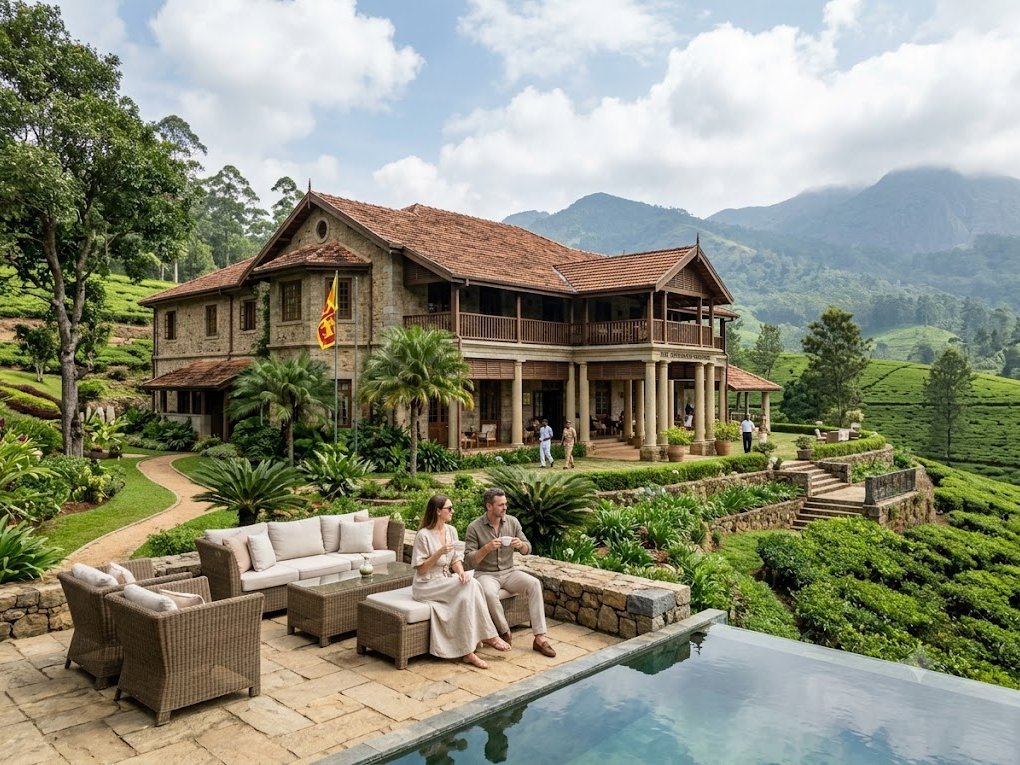
A forgotten colonial building can become a luxury retreat.
An abandoned estate can become a global wellness destination.
A remote heritage location can become a symbol of Sri Lanka’s excellence.
The world is searching for authentic experiences.
Sri Lanka already owns the stories.
Now we need the vision, governance, and partnerships to share those stories with the world.
The future of Sri Lankan tourism may not only be built with new developments. It may also be hidden inside the treasures we already possess.
Disclaimer
This article has been authored and published in good faith by Dr. Dharshana Weerakoon, DBA (USA), Global Tourism & Hospitality Strategist, based on professional experience, industry knowledge, publicly available tourism information, and independent analysis.
The views expressed are entirely personal and intended for educational, strategic, and public discussion regarding sustainable tourism development models. This article does not represent government policy, investment advice, legal advice, or a commercial proposal.
Any implementation of a Sovereign Lease Model should be subject to Sri Lankan laws, transparent government procedures, environmental regulations, heritage protection requirements, community consultation, and internationally recognised ethical standards.
The author accepts no responsibility for any interpretation or application of these ideas beyond their intended purpose of encouraging constructive dialogue on tourism innovation and national economic development.
© Dr. Dharshana Weerakoon, DBA (USA). All rights reserved.
Further Reading: https://www.linkedin.com/newsletters/outside-of-education-7046073343568977920/
Further Reading: https://dharshanaweerakoon.com/monastic-cognitive-reset-tourism/