Why a Roadside “Petti Kade” Sometimes Creates More Happiness Than a Five-Star Hotel
The Authentic Tourism Experience That Luxury Cannot Always Replicate
Introduction
As a hotelier who has spent decades working in luxury resorts, city hotels, island destinations, safari lodges, and tourism developments across Sri Lanka, the Maldives, Zanzibar, Rwanda, Saudi Arabia, and the UAE, I have often asked myself a simple question:
Why do some of the most memorable travel experiences happen in the most ordinary places?
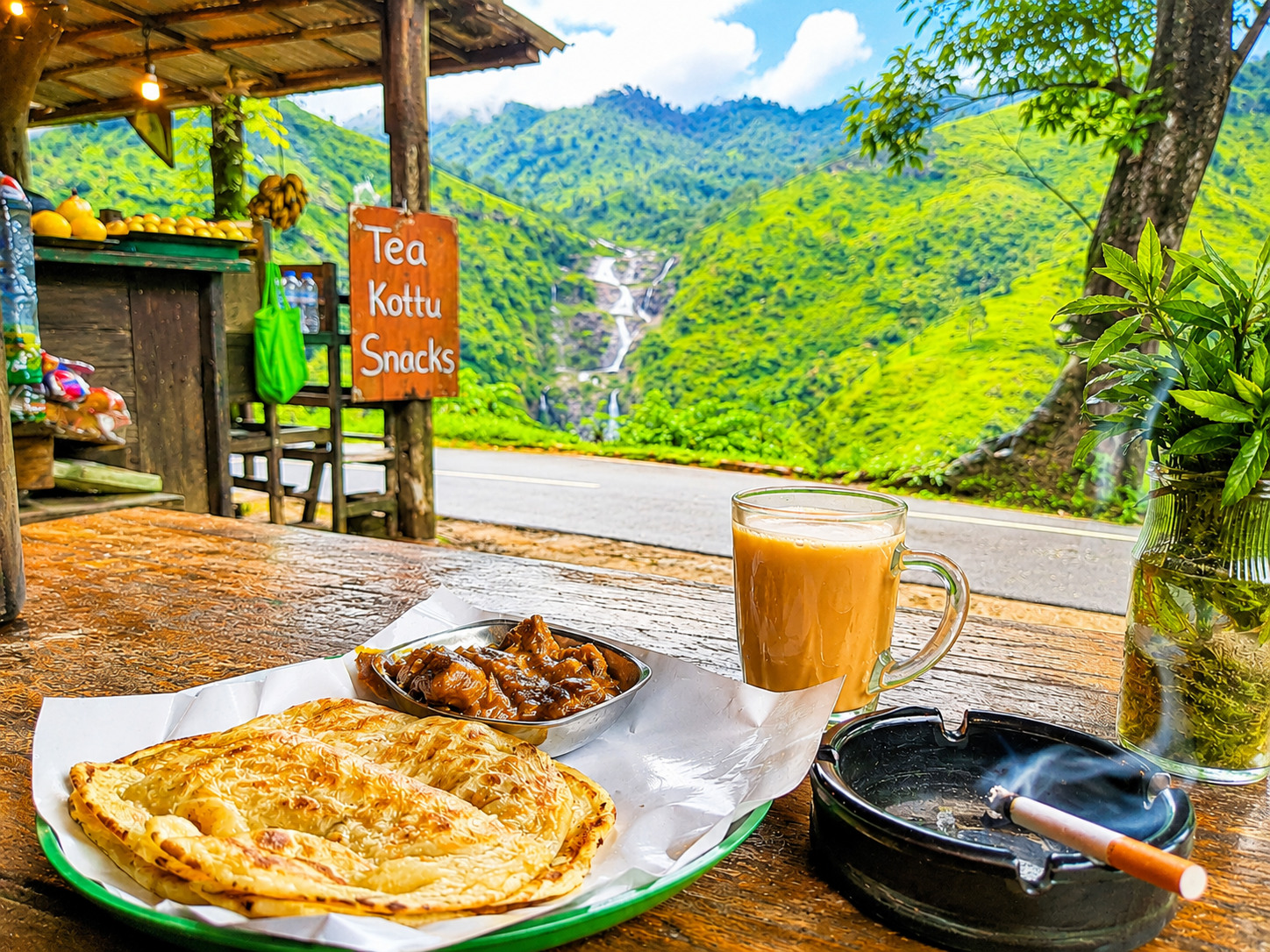
Recently, while travelling through Sri Lanka’s hill country, I stopped at a small roadside petti kade along a scenic route similar to the Bandarawela–Belihuloya road.
The setting was simple.
No chandeliers.
No imported furniture.
No Michelin-trained chefs.
No luxury branding.
Just a wooden bench, a breathtaking mountain view, freshly made pol roti, a spicy pork curry prepared using a family recipe, a hot cup of ginger tea, and a few minutes of complete peace while watching the mist roll across the mountains.
At that moment, I realized something that many tourism professionals often overlook:
The emotional value of an experience is not determined by its price tag.
In fact, some experiences that travelers remember for decades cannot be purchased in a luxury hotel regardless of how much money is spent.
This article explores why authentic local experiences continue to outperform luxury offerings in emotional impact, how global tourism trends support this reality, and what the future of Sri Lankan tourism can learn from the humble roadside petti kade.
The Great Tourism Myth: Luxury Equals Happiness
For decades, the tourism industry measured success through tangible assets:
- Number of rooms
- Star classification
- Restaurant standards
- Imported products
- Luxury facilities
- Capital investment
While these factors remain important, global tourism research increasingly suggests that travelers seek something deeper.
Modern tourists are not merely purchasing accommodation.
They are purchasing:
- Stories
- Memories
- Emotions
- Human connections
- Authenticity
Numerous international tourism studies have shown that experiential travel is one of the fastest-growing segments of the global tourism industry.
Travelers today increasingly value:
- Local food
- Cultural interaction
- Community experiences
- Nature-based encounters
- Traditional lifestyles
Consequently, a roadside tea stall overlooking a waterfall may create stronger emotional memories than a luxury hotel lobby costing millions of dollars.
The reason is simple.
People remember how a place made them feel.
Why the “Petti Kade” Experience Is So Powerful
A roadside eatery offers something many luxury establishments struggle to create:
Authenticity.
Nothing is staged.
Nothing is scripted.
Nothing is manufactured.
The experience is real.
The owner cooks because that is how they have always cooked.
The tea tastes different because the water comes from nearby springs.
The conversations are genuine because they are not part of customer-service training manuals.
The mountain view is not designed by an architect.
Nature created it.
These elements combine to create what tourism psychologists refer to as “authentic emotional engagement.”
This emotional connection often becomes the highlight of an entire journey.
Case Study 1: Sri Lanka’s Hill Country Roadside Culture
Many travelers driving between Bandarawela, Haputale, Belihuloya, Ella, and Nuwara Eliya regularly stop at roadside food stalls.
Interestingly, visitors often share photographs of:
- Tea kiosks
- Roadside fruit vendors
- Traditional breakfast outlets
- Local cooking demonstrations
These social media posts frequently receive higher engagement than photographs of luxury hotel rooms.
Why?
Because they tell a story.
A luxury room can be found anywhere in the world.
A roadside pol roti breakfast in Sri Lanka cannot.
Case Study 2: Vietnam’s Street Food Tourism Revolution
Vietnam has become one of Asia’s most successful tourism destinations partly because of its street-food culture.
Many visitors intentionally seek out small local eateries instead of luxury restaurants.
The appeal is not luxury.
The appeal is authenticity.
Travelers want to experience local life exactly as residents experience it.
As a result, food tourism contributes significantly to Vietnam’s tourism economy while preserving cultural identity.
Sri Lanka possesses similar opportunities through its village food culture, tea stalls, and roadside dining experiences.
Case Study 3: Italy’s Family-Run Trattorias
Italy receives millions of visitors annually.
Yet many tourists rank small family-owned restaurants among their most memorable experiences.
Visitors remember:
- Homemade pasta
- Family recipes
- Local wine
- Conversations with owners
Not because these experiences are expensive.
Because they are genuine.
The lesson is universal:
Authenticity often generates stronger emotional value than luxury.
The Psychology Behind the Experience
Human beings naturally seek belonging.
When travelers visit a roadside stall, they momentarily become part of local life.
They are no longer tourists.
They become participants.
This feeling creates:
- Emotional attachment
- Stronger memories
- Positive word-of-mouth marketing
- Repeat visitation intentions
Luxury hotels can provide comfort.
However, comfort alone does not always create unforgettable memories.
Case Study 4: Rwanda’s Community Tourism Model
Rwanda successfully integrated community-based tourism into its national tourism strategy.
Visitors engage with local communities, cultural experiences, and traditional lifestyles.
Many guests report that interactions with local people become the most memorable part of their journey.
This demonstrates that tourism success increasingly depends on meaningful experiences rather than physical infrastructure alone.
Case Study 5: New Zealand’s Farm Experiences
New Zealand transformed ordinary farming activities into premium tourism products.
Visitors willingly pay to:
- Feed animals
- Learn local traditions
- Experience rural lifestyles
The success lies in authenticity.
Travelers want experiences that feel real.
What Luxury Hotels Can Learn
This is not an argument against luxury hotels.
I have spent most of my professional career within the luxury hospitality sector and firmly believe that high-quality hotels remain essential for tourism development.
However, luxury properties can learn several lessons from roadside experiences:
1. Authenticity Matters
Guests increasingly value local identity.
2. Storytelling Creates Memories
Every destination should tell a unique story.
3. Local Food Has Power
Traditional cuisine often becomes a destination’s strongest ambassador.
4. Simplicity Can Be Premium
Not everything valuable must be expensive.
5. Human Connection Wins
Guests remember people more than buildings.
Case Study 6: Japan’s Rural Tourism Success
Across rural Japan, small family-operated inns attract visitors seeking traditional experiences.
Many travelers intentionally avoid large hotels.
Instead, they choose local accommodations offering authentic cultural immersion.
These establishments demonstrate that emotional value often outweighs physical luxury.
Case Study 7: Sri Lanka’s Future Tourism Opportunity
Sri Lanka possesses thousands of authentic tourism experiences that remain underutilized:
- Roadside food stalls
- Village breakfasts
- Tea estate communities
- Traditional cooking
- Local storytelling
- Agricultural experiences
Collectively, these experiences could form a powerful tourism ecosystem supporting rural livelihoods while enhancing visitor satisfaction.
The Future of Tourism Is Not Bigger. It Is More Authentic.
The future traveler is changing.
Tomorrow’s visitor will not simply ask:
“How luxurious is the hotel?”
Instead, they will ask:
“How authentic is the experience?”
The humble roadside petti kade teaches us an important lesson.
Tourism is not merely about accommodation.
Tourism is about emotion.
It is about memories.
It is about human connection.
Sometimes, a plate of pol roti, a spicy pork curry, a cup of ginger tea, and a breathtaking mountain view can create a level of happiness that no five-star property can replicate.
That is not a failure of luxury.
It is a reminder that authenticity remains tourism’s most valuable asset.
The greatest experiences are not always found behind grand hotel doors.
Sometimes, they are waiting beside a winding mountain road.
Disclaimer: This article has been authored and published in good faith by Dr. Dharshana Weerakoon, DBA (USA), drawing upon publicly available tourism industry information, international hospitality trends, professional observations, and decades of operational and leadership experience across Sri Lanka, the Maldives, Rwanda, Tanzania, the UAE, Saudi Arabia, and other global tourism destinations. The article is intended solely for educational, professional, journalistic, and public discussion purposes relating to tourism, hospitality, destination development, traveler behavior, and authentic tourism experiences. The views expressed are personal, analytical, and independent, and should not be interpreted as legal, financial, investment, or policy advice. Every effort has been made to ensure fairness, accuracy, and respect toward all stakeholders within the tourism ecosystem. Any references to destinations, tourism models, hospitality practices, or traveler experiences are illustrative in nature. The author accepts no responsibility for any interpretation, adaptation, or application of the contents. This article is intended to comply with applicable laws, ethical standards, intellectual property protections, and principles of responsible tourism and professional publishing.
© Dr. Dharshana Weerakoon, DBA (USA). All Rights Reserved.
Further Reading: https://dharshanaweerakoon.com/travelers-not-tourists/
Further Reading: https://www.linkedin.com/newsletters/outside-of-education-7046073343568977920/