The End of Mass Tourism? Why Sri Lanka Should Charge More, Welcome Fewer Visitors, and Protect Sigiriya & Yala for Future Generations
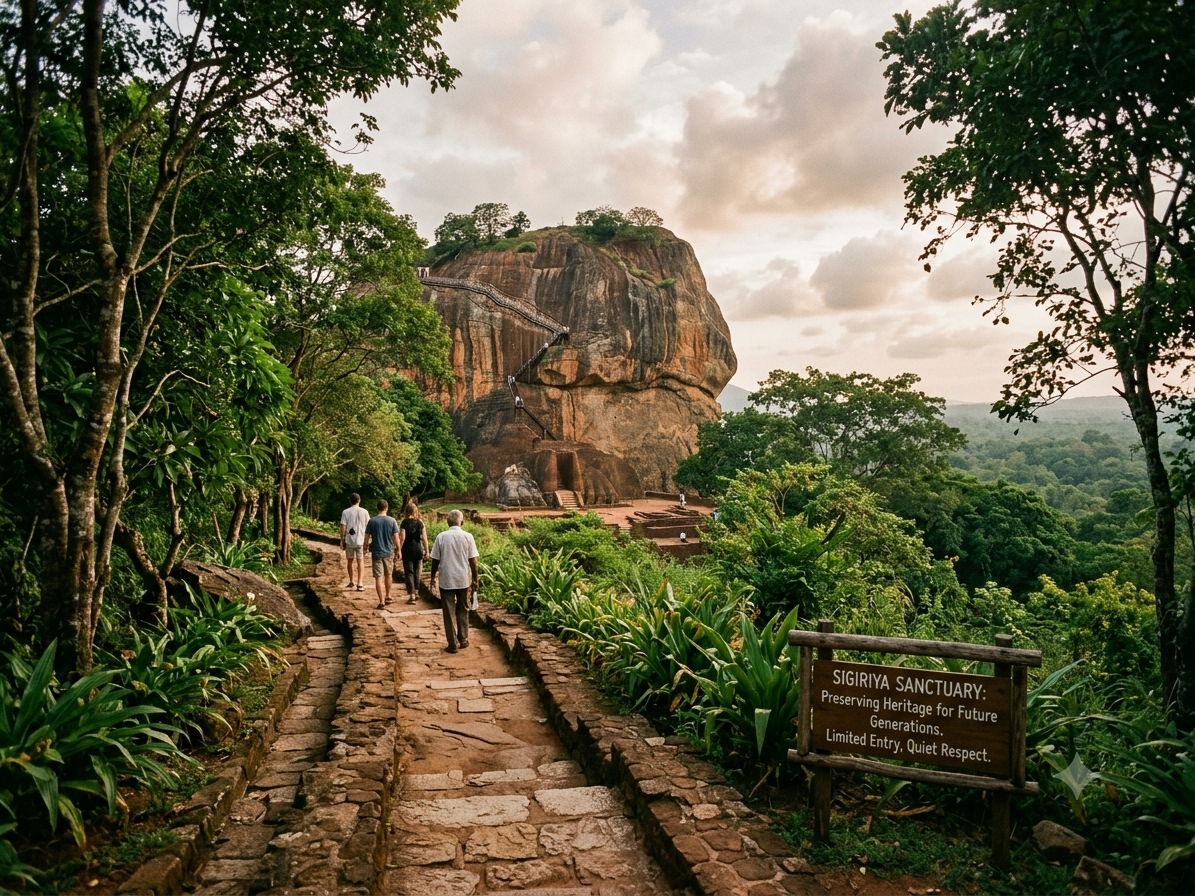
The real luxury of a destination is not how many people can enter—it is how well it can be preserved.
Are We Measuring Tourism Success the Wrong Way?
For decades, the tourism industry has celebrated one statistic above all others—the number of arrivals. Governments announce new records, airports become busier, hotels report higher occupancy, and attractions receive ever-growing crowds. On paper, this appears to represent success.
However, I believe the time has come to ask a far more important question.
Does welcoming more visitors automatically create greater national prosperity?
The answer, increasingly, is no.
Around the world, leading tourism destinations are moving away from measuring success by visitor numbers alone. Instead, they are focusing on visitor value, conservation, resident satisfaction, and long-term sustainability.
Sri Lanka possesses some of the world’s most extraordinary tourism assets. Yet we continue to expose many of them to excessive daily visitation while charging entrance fees that often fail to reflect their true international value.
This article presents a proposition that may initially appear controversial but deserves serious national discussion:
Sri Lanka should introduce scientifically determined daily visitor caps at selected heritage and wildlife attractions while substantially increasing entrance fees for international visitors.
The objective is not to reduce tourism.
The objective is to improve it.
Quantity Has Become an Outdated Tourism Strategy
For many years, tourism strategies across developing economies have concentrated on increasing arrivals.
Five million visitors.
Ten million visitors.
Record-breaking numbers.
These targets create attractive headlines but frequently ignore a fundamental economic principle:
Higher volume does not necessarily generate higher value.
If infrastructure becomes overwhelmed, heritage deteriorates, wildlife experiences decline, residents become frustrated, and visitor satisfaction decreases, then increasing numbers can actually reduce the overall economic return per tourist.
Tourism should no longer be evaluated by counting people.
It should be evaluated by measuring the value each visitor contributes to the country.
Sigiriya and Yala Are Not Unlimited Resources
Sri Lanka is fortunate to possess globally recognised attractions that cannot be replicated elsewhere.
Sigiriya is not simply an archaeological monument.
It is a masterpiece of engineering, architecture, urban planning, landscape design, hydraulic innovation, and royal history spanning more than 1,500 years.
Similarly, Yala National Park is far more than a safari destination.
It is one of Asia’s most important protected ecosystems and among the world’s best locations for observing the elusive Sri Lankan leopard.
Unlike hotels, airports or shopping centres, these attractions cannot simply be expanded to accommodate unlimited demand.
Every additional visitor contributes, however slightly, to cumulative pressure.
This pressure may include:
- Physical erosion of ancient stairways
- Congestion at narrow heritage pathways
- Increased maintenance costs
- Disturbance to wildlife behaviour
- Greater vehicle emissions
- Reduced visitor satisfaction
- Increased waste management requirements
The challenge therefore is not simply conservation.
It is economic optimisation.
The Economics of Scarcity
One of the most powerful concepts in economics is scarcity.
When something is limited, its perceived value increases.
Luxury hotels understand this.
Private island resorts understand this.
Exclusive golf clubs understand this.
Yet tourism authorities often continue treating national treasures as though unlimited access is always desirable.
Imagine two possible scenarios.
Model A
- 8,000 visitors per day
- Standard admission pricing
- Heavy congestion
- Shorter visitor experience
- Higher maintenance costs
Model B
- 2,000 visitors per day
- Premium pricing
- Calm visitor experience
- Better conservation
- Lower environmental pressure
- Greater visitor satisfaction
Although Model B welcomes fewer people, it may generate similar—or even greater—economic returns while significantly improving sustainability.
The principle is straightforward.
Less pressure. Higher value. Better experiences. Stronger national brand.
Should Sri Lanka Increase Entry Fees?
This question often creates immediate concern.
Many assume higher prices will discourage tourists.
International evidence suggests otherwise.
Travellers crossing continents to experience a UNESCO World Heritage Site rarely make their decision based solely on a modest difference in admission fees.
They travel because the experience is unique.
If the experience becomes more exclusive, less crowded, and better preserved, the attraction often becomes even more desirable.
Rather than competing on affordability alone, Sri Lanka should compete on quality.
Premium destinations rarely apologise for charging premium prices.
A Thought Experiment: What If Entrance Fees Increased by 500%?
This proposal is intentionally bold.
It should not be interpreted as an immediate policy recommendation but rather as a framework for national discussion.
Suppose visitor numbers were reduced by approximately 70–80%, while admission prices increased substantially for international visitors.
The outcome might include:
- Similar or higher gross revenue
- Less congestion
- Lower conservation expenditure
- Better wildlife protection
- Greater visitor satisfaction
- Longer destination life cycle
- Higher global prestige
Equally important, local citizens could continue enjoying preferential pricing, educational access, and community programmes to ensure that Sri Lanka’s heritage remains accessible to its own people.
The objective is not exclusion.
It is responsible stewardship.
Case Study 1 – Bhutan: High Value Before High Volume
Perhaps the world’s most recognised example of value-based tourism is Bhutan.
Rather than maximising arrivals, Bhutan deliberately limits tourism through a premium pricing model supported by sustainability contributions.
The country’s philosophy has never been centred on attracting the largest possible number of visitors.
Instead, it seeks visitors who appreciate culture, nature, and responsible travel.
The result has been stronger destination positioning, environmental protection, and one of the world’s most distinctive tourism brands.
Bhutan demonstrates that exclusivity can strengthen—not weaken—a tourism economy.
Case Study 2 – The Galápagos Islands: Conservation Through Controlled Access
The Galápagos Islands are among the planet’s most environmentally sensitive destinations.
Authorities recognised decades ago that unlimited tourism would threaten fragile ecosystems found nowhere else on Earth.
Strict visitor controls, licensed operators, regulated itineraries, conservation fees, and scientific monitoring have helped protect biodiversity while maintaining the islands’ international appeal.
Visitors generally accept premium costs because they understand they are contributing to conservation.
The experience becomes more meaningful precisely because access is carefully managed.
Case Study 3 – Machu Picchu: Protecting a World Wonder
Peru’s Machu Picchu experienced years of overcrowding as global popularity surged.
Eventually, authorities introduced daily visitor limits, timed entry tickets, designated routes, and stricter visitor management after concerns were raised about preservation of the archaeological site.
Although these measures initially generated debate, they have significantly improved visitor flow while helping protect one of humanity’s greatest cultural treasures.
The lesson is simple.
Popularity should never outweigh preservation.
Sri Lanka’s Competitive Advantage Is Not Cheap Tourism
Sri Lanka cannot compete with every destination on price.
Nor should it try.
Our comparative advantage lies elsewhere.
We possess extraordinary biodiversity within a relatively small geographic area.
We have UNESCO World Heritage Sites, rainforests, mountains, wildlife, Ayurveda, tea, spirituality, living culture, and warm hospitality.
These are premium assets.
Therefore, our tourism strategy should increasingly reflect premium positioning.
Instead of asking,
“How many tourists can we attract?”
we should begin asking,
“How much value can each visitor create while leaving the smallest possible environmental footprint?”
That single shift in thinking could redefine Sri Lanka’s tourism future.
Case Study 4 – Rwanda: Premium Pricing to Protect Wildlife
Rwanda transformed its tourism industry by repositioning mountain gorilla trekking as one of the world’s most exclusive wildlife experiences.
Instead of encouraging large visitor volumes, authorities adopted a model centred on limited permits and premium pricing. The strategy generates significant conservation funding while reducing disturbance to endangered gorillas.
Importantly, tourism revenue also supports surrounding communities, creating a direct link between conservation and local economic development.
Rwanda demonstrates that visitors are willing to pay substantially more for an authentic, well-managed experience that contributes to protecting a globally significant natural asset.
Case Study 5 – Venice: Managing Overtourism
Few destinations illustrate the consequences of overtourism more clearly than Venice.
For years, the city struggled with overcrowded streets, pressure on public infrastructure, and concerns from residents about declining quality of life.
In response, authorities introduced measures including visitor management initiatives, restrictions on large cruise ships, and an entry fee system for certain day visitors.
While debate continues over the effectiveness of these policies, one lesson is evident: once overcrowding becomes the defining image of a destination, restoring balance becomes significantly more difficult.
Tourism success should enhance the character of a place—not overwhelm it.
Case Study 6 – The Inca Trail: Protecting Experience Through Limits
The Inca Trail to Machu Picchu is one of the world’s most sought-after trekking experiences.
Access is strictly controlled through a daily permit system, licensed guides, and advance reservations.
Demand regularly exceeds available permits, yet this scarcity has increased the trail’s global prestige.
Visitors often plan months in advance because they recognise the privilege of experiencing a carefully protected heritage route.
The Inca Trail demonstrates that controlled access can strengthen both visitor demand and destination reputation.
Case Study 7 – Komodo National Park: Conservation Before Convenience
Indonesia’s Komodo National Park has periodically introduced visitor restrictions, revised pricing structures, and conservation-focused management to safeguard the habitat of the Komodo dragon.
Although some proposals generated public debate, the broader objective remained consistent: protecting an irreplaceable ecosystem while ensuring tourism contributes to long-term conservation rather than short-term exploitation.
The key lesson is that visitor management should always be guided by ecological carrying capacity rather than commercial pressure.
What Could a Sri Lankan Premium Visitor Model Look Like?
This discussion should not be interpreted as a call for an immediate or arbitrary increase in prices. Instead, it highlights the need for a structured, evidence-based framework informed by scientific studies, stakeholder consultation, and careful policy design.
A possible long-term model could include:
- Scientific assessment of the carrying capacity of Sigiriya, Yala, and other environmentally or culturally sensitive sites.
- Daily visitor caps based on conservation requirements rather than peak demand.
- Dynamic pricing during high-demand periods to encourage better distribution of visitors throughout the year.
- Preferential pricing for Sri Lankan citizens, students, researchers, and educational institutions.
- Mandatory advance online reservations for selected attractions.
- Greater investment of tourism revenue into conservation, restoration, and visitor facilities.
- Transparent reporting showing how entrance fees support heritage preservation and wildlife protection.
Such a model would place sustainability at the centre of tourism management while maintaining accessibility for local communities.
Why This Is About Value—Not Exclusivity
Some may argue that higher entrance fees could make world-class attractions less accessible to international travellers.
That concern deserves careful consideration.
However, the purpose of premium pricing is not to discourage visitors simply because they are unwilling to pay more. Rather, it is to align the economic value of exceptional experiences with the cost of protecting them for future generations.
Sri Lankan citizens should continue to enjoy affordable access to their own heritage through concessionary pricing and educational initiatives.
International visitors, meanwhile, increasingly recognise that entrance fees are an investment in preserving the destinations they have travelled to experience.
Ultimately, the true cost of tourism is not measured by the price of admission but by the long-term condition of the places we leave behind.
The Hidden Cost of Cheap Tourism
When entrance fees remain artificially low despite increasing demand, several hidden costs emerge:
- Accelerated deterioration of heritage structures.
- Higher maintenance and restoration expenditure.
- Greater pressure on wildlife habitats.
- Increased traffic congestion around protected areas.
- Reduced visitor satisfaction caused by overcrowding.
- Shorter average time spent enjoying attractions.
- Greater environmental management costs for public authorities.
These costs are rarely reflected in ticket prices, yet society ultimately bears them.
A sustainable pricing strategy seeks to balance economic return with environmental responsibility.
Measuring Success Differently
For decades, many tourism strategies have been measured by arrivals alone.
The next generation of tourism policy should also evaluate:
- Average visitor spending.
- Revenue generated per visitor.
- Visitor satisfaction.
- Conservation outcomes.
- Community benefits.
- Employment quality.
- Heritage preservation.
- Biodiversity protection.
- Destination reputation.
These indicators provide a more complete picture of tourism’s contribution to national development.
A Different Vision for Sri Lanka
Sri Lanka has every opportunity to become one of Asia’s leading examples of sustainable, high-value tourism.
Our competitive strength lies not in attracting the largest crowds but in delivering authentic, meaningful experiences rooted in exceptional natural and cultural heritage.
If we continue to judge success primarily by visitor numbers, we risk placing unnecessary pressure on the very assets that distinguish us from competing destinations.
If, instead, we focus on value, conservation, and quality, Sri Lanka can position itself as a destination where tourism supports heritage rather than compromises it.
The question, therefore, is not whether fewer visitors are better.
The more important question is whether we have the courage to manage our most valuable places in a way that ensures they remain extraordinary for generations yet to come.
That conversation is no longer optional.
It is essential.
Final Reflection
Every nation inherits places that cannot be recreated once damaged.
Sigiriya.
Yala.
Sinharaja.
The Sacred City of Kandy.
These are not simply tourism attractions. They are part of Sri Lanka’s identity and a legacy entrusted to us.
The choices we make today will determine whether future generations inherit landmarks that inspire pride—or cautionary examples of unmanaged success.
The future of Sri Lankan tourism should not be defined by how many footsteps we count each day.
It should be defined by how well those footsteps are managed.
Disclaimer
This article has been authored and published in good faith by Dr. Dharshana Weerakoon, DBA (USA), drawing upon publicly available information, internationally recognised tourism management practices, professional experience, and personal analysis of sustainable destination development.
The views expressed are solely those of the author and are intended to encourage informed discussion on tourism policy, heritage conservation, environmental sustainability, and long-term destination competitiveness. The article does not advocate for the immediate implementation of any specific government policy, nor should it be interpreted as legal, regulatory, financial, or investment advice.
Any references to pricing models, visitor management frameworks, or international examples are presented for comparative and educational purposes only. Policy decisions relating to protected areas, national parks, archaeological sites, and public assets should be based on comprehensive scientific research, stakeholder consultation, environmental impact assessments, and applicable laws and regulations of Sri Lanka.
The author accepts no responsibility for any unauthorised reproduction, misinterpretation, or misuse of the contents of this publication.
© Dr. Dharshana Weerakoon, DBA (USA). All Rights Reserved.
Further Reading: https://www.linkedin.com/newsletters/outside-of-education-7046073343568977920/
Further Reading: https://dharshanaweerakoon.com/monastic-cognitive-reset-tourism/