Why Comfortable Public Transport Is No Longer a Luxury—It Is a National Economic Necessity
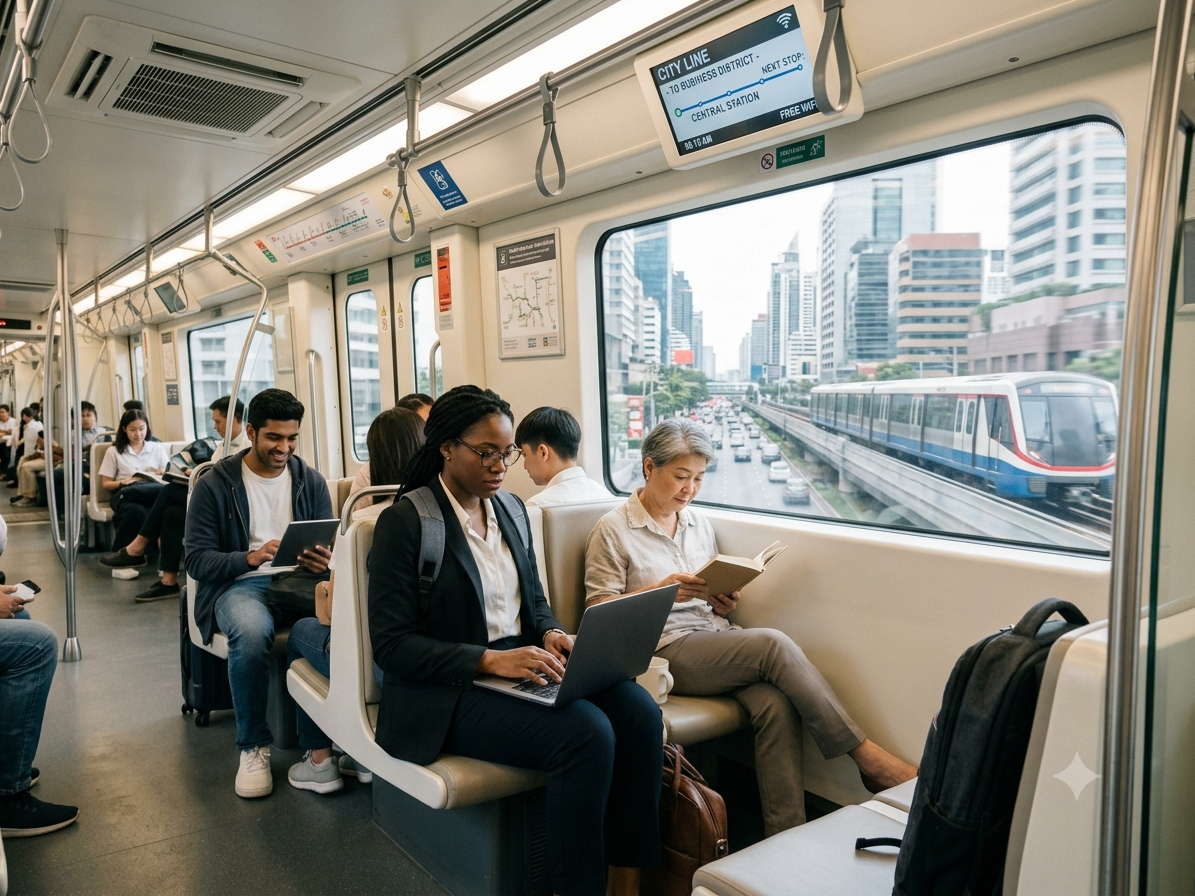
For decades, public transport has largely been viewed as a means of moving people from one place to another. However, the expectations of today’s society have changed dramatically.
People no longer seek only affordability.
They seek comfort, reliability, dignity, safety, cleanliness, and peace of mind.
Whether travelling by train or bus, every citizen deserves a journey that is calm, quiet, comfortable, and air-conditioned whenever possible. Public transport should reduce stress—not become part of it.
For this reason, I welcome Sri Lanka’s recent introduction of Metro Bus services and the expansion of luxury and super-luxury bus operations. These initiatives represent more than new vehicles; they signal a positive shift towards modern public transportation.
The question now is whether Sri Lanka is prepared to make this the national standard rather than the exception.
Public Transport Is Part of National Productivity
Every day, millions of Sri Lankans travel to work, schools, universities, hospitals and businesses.
If each commuter spends two to four hours daily in uncomfortable, overcrowded conditions, the country loses far more than time.
It loses:
- employee productivity
- mental wellbeing
- physical health
- family time
- workplace performance
International research consistently suggests that long, stressful daily commutes contribute to increased fatigue, reduced concentration, higher absenteeism, and lower job satisfaction.
A comfortable journey allows people to begin work with energy instead of exhaustion.
Comfort Is an Investment—Not an Expense
Many policymakers still view premium public transport as an unnecessary luxury.
I respectfully disagree.
Comfortable public transport generates economic returns through:
- higher passenger demand
- reduced private vehicle usage
- lower fuel imports
- decreased traffic congestion
- improved public health
- greater labour productivity
- stronger tourism competitiveness
Countries investing in quality public transport consistently experience long-term economic benefits that extend far beyond the transport sector.
What Today’s Passengers Actually Want
Modern commuters are remarkably consistent in their expectations.
They want:
- Air-conditioned vehicles
- Clean interiors
- Comfortable seating
- Quiet journeys
- Professional drivers
- Reliable schedules
- Digital ticketing
- Safe environments
- Respectful passenger behaviour
These expectations are no longer limited to high-income travellers.
They are increasingly becoming universal.
Sri Lanka’s Metro Bus Initiative Deserves Recognition
The introduction of Metro Bus services is a positive step in modernising urban mobility.
Likewise, luxury and super-luxury bus services demonstrate that there is genuine demand for higher-quality travel experiences.
Rather than viewing these services as products for a small segment of society, policymakers should consider them pilot projects for the future of public transport.
If successful, similar standards can gradually extend across the wider network.
Public Transport Also Shapes Tourism
As someone working extensively in global tourism and hospitality, I often observe that visitors evaluate a destination long before they check into a hotel.
Their experience begins the moment they arrive.
A country’s transport system communicates:
- organisation
- cleanliness
- efficiency
- safety
- professionalism
Countries renowned for tourism generally invest heavily in quality public transportation because it becomes part of the visitor experience.
Domestic passengers deserve the same standard.
Global Case Studies
1. Singapore
Singapore transformed public transport through integrated planning, modern buses, clean MRT systems, digital ticketing, and exceptional reliability. Today, public transport is preferred by a large share of commuters despite widespread car ownership.
2. Japan
Japanese railway systems demonstrate that punctuality, cleanliness, quietness, and passenger respect can become national culture rather than premium services.
Millions travel comfortably every day.
3. Switzerland
Swiss trains consistently rank among the world’s most comfortable public transport systems.
Passengers enjoy clean coaches, quiet cabins, accurate schedules and seamless connectivity between transport modes.
4. South Korea
Seoul invested heavily in modern buses alongside metro expansion.
Real-time passenger information, integrated payment systems and climate-controlled vehicles significantly increased commuter satisfaction.
5. United Arab Emirates
Dubai’s investment in air-conditioned metro stations, luxury buses and modern public transport significantly enhanced both resident satisfaction and international visitor perceptions.
6. Germany
Many German cities successfully combine buses, regional trains and urban rail systems while maintaining high standards of cleanliness, accessibility and passenger comfort.
The result is reduced dependence on private vehicles.
7. Sri Lanka
The emergence of Metro Bus services and premium intercity buses illustrates that Sri Lankan passengers appreciate quality transport when it is available.
This presents an opportunity for gradual nationwide improvement.
Numbers That Matter
Globally:
- More than 55% of the world’s population now lives in urban areas.
- Urban populations are expected to approach 70% by 2050.
- Millions rely on public transport every day for education, employment and healthcare.
- Large metropolitan transport systems collectively move tens of millions of passengers daily, demonstrating that efficient, comfortable mobility is fundamental to economic growth.
Although infrastructure differs by country, one principle remains constant:
Comfort increases public transport usage.
The Future Is Not Just Faster—It Is Better
When discussing transport, conversations often focus on speed.
However, passengers remember comfort more than travel time.
A 45-minute peaceful journey is often preferable to a 35-minute stressful one.
This is particularly important for:
- elderly passengers
- children
- pregnant mothers
- persons with disabilities
- tourists
- professionals travelling daily
Public transport should be designed around people—not simply vehicles.
A Vision for Sri Lanka
I believe Sri Lanka can gradually develop a transport system that is:
- comfortable
- clean
- quiet
- air-conditioned where practical
- digitally connected
- professionally managed
- environmentally responsible
- accessible to everyone
Such a system would not merely improve transport.
It would improve national wellbeing.
Final Thoughts
Public transport is not simply about buses and trains.
It reflects how a nation values its people.
A calm commute creates calmer citizens.
Comfortable transport supports productive employees.
Reliable mobility strengthens tourism.
Modern transport enhances national competitiveness.
Therefore, I support the continued expansion of Metro Bus services and premium public transport options in Sri Lanka. I hope these initiatives become catalysts for broader improvements across the country’s transport network, ensuring that quality travel becomes increasingly accessible to all.
After all, a nation’s journey toward development begins with the daily journeys of its people.
Disclaimer
This article has been authored and published in good faith by Dr. Dharshana Weerakoon, DBA (USA), drawing on publicly available transport and urban mobility trends, established international practices, professional observations, and extensive experience in tourism, hospitality, and business strategy. It is intended solely for educational, analytical, and public discussion purposes. The views expressed are the author’s personal opinions and should not be interpreted as legal, financial, engineering, or government policy advice. Any references to transport systems or international examples are provided for comparative analysis only. This article is written with respect for applicable laws, ethical standards, and principles of constructive public discourse.
© Dr. Dharshana Weerakoon, DBA (USA). All Rights Reserved.
Further Reading: https://dharshanaweerakoon.com/culinary-ancestry-de-extinction/
Further Reading: https://www.linkedin.com/newsletters/outside-of-education-7046073343568977920/