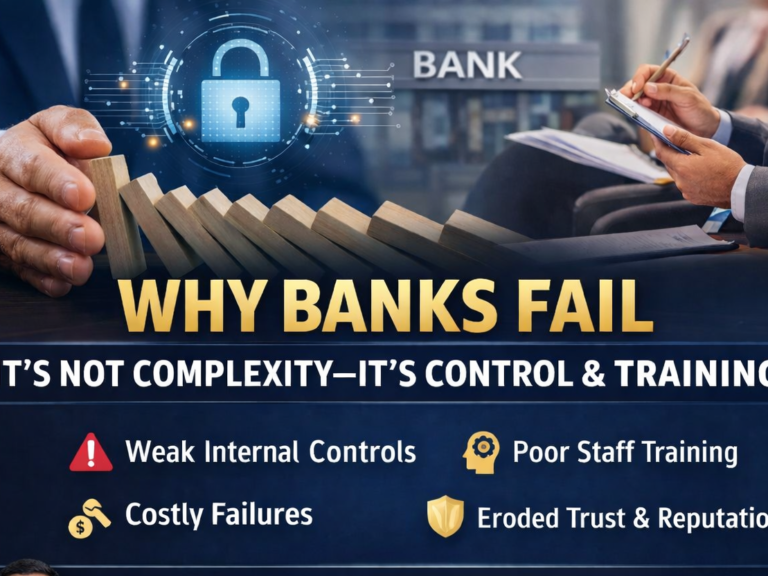
The Non-Negotiable Responsibilities of Accountants and External Auditors: The First Line of Defence Against Financial Fraud, Tax Evasion, and Corporate Collapse

Every financial scandal begins with numbers.
Every corporate collapse leaves behind balance sheets.
Every tax investigation follows documents.
However, behind every document stands a professional.
That professional is usually an accountant or an external auditor.
Recent public discussions in Sri Lanka concerning alleged customs and tax-related investigations involving well-known businesses have once again highlighted an important question—not whether companies should comply with the law, because that is obvious—but whether finance professionals fully understand the enormous responsibility they carry.
This article is not about any individual company or ongoing investigation. It is about the profession itself.
Because financial integrity is not negotiable.
The Accountant Is Not Merely a Bookkeeper
Modern accountants are custodians of public trust.
Their work affects:
- shareholders
- employees
- customers
- suppliers
- banks
- investors
- regulators
- governments
- society
A single manipulated invoice, altered valuation, or intentionally misleading financial statement can trigger millions in tax losses, regulatory penalties, damaged reputations, and even imprisonment for individuals responsible.
Accounting is therefore no longer an administrative function.
It is a governance function.
External Auditors Are Guardians—Not Rubber Stamps
Many people mistakenly believe external auditors exist simply to “approve the accounts.”
That belief is dangerous.
Independent auditors are expected to exercise professional scepticism.
They must evaluate:
- internal controls
- accounting estimates
- unusual transactions
- related-party dealings
- revenue recognition
- inventory valuation
- tax provisions
- fraud risk indicators
Their responsibility extends beyond ticking checklists.
Their opinion influences investor confidence and financial market stability.
The Cost of Financial Misconduct
According to global occupational fraud studies, organisations lose approximately 5% of annual revenue to fraud.
The Association of Certified Fraud Examiners has consistently found that billing fraud, invoice manipulation, procurement fraud, payroll fraud and financial statement fraud account for billions of dollars in annual losses worldwide.
Meanwhile, the World Bank estimates that corruption and financial crimes cost the global economy trillions of US dollars every year.
These are not merely accounting problems.
They are economic problems.
Seven Lessons from International Corporate Failures
Rather than focusing on ongoing local matters, history offers valuable lessons.
1. Enron (USA)
One of the largest accounting scandals in history demonstrated how manipulated financial reporting destroyed billions in shareholder value.
Lesson:
Ethics must always override management pressure.
2. WorldCom (USA)
Capital expenditure was deliberately misclassified to inflate profits.
Lesson:
Professional judgement must never be compromised.
3. Wirecard (Germany)
Billions of euros in reported assets were later found to be unsupported.
Lesson:
Independent verification is essential.
4. Toshiba (Japan)
Years of overstated profits damaged one of Asia’s most respected corporations.
Lesson:
Corporate culture influences financial reporting.
5. Satyam Computer Services (India)
One of Asia’s biggest corporate frauds involved fabricated cash balances and overstated revenues.
Lesson:
Strong governance protects investors.
6. Carillion (United Kingdom)
Aggressive accounting practices contributed to one of the UK’s largest corporate failures.
Lesson:
Transparency protects stakeholders.
7. Luckin Coffee (China)
Fabricated sales significantly misled investors before the fraud was uncovered.
Lesson:
Growth should never come before integrity.
What Every Accountant Should Remember
An accountant owes duties to:
✔ the employer
✔ shareholders
✔ regulators
✔ tax authorities
✔ the public interest
These responsibilities are inseparable.
Professional qualifications are not simply academic achievements.
They represent a commitment to honesty, independence and accountability.
What Every External Auditor Must Never Forget
External auditors should never become too familiar with clients.
Professional scepticism must remain throughout every engagement.
Auditors should question:
- unusually low invoices
- related-party transactions
- unexplained inventory movements
- significant year-end adjustments
- inconsistent supplier documentation
- abnormal profit margins
- sudden valuation changes
When warning signs appear, further investigation is not optional—it is a professional obligation.
Technology Has Changed Accounting Forever
Artificial intelligence, data analytics and digital audit tools now enable auditors to detect anomalies that traditional sampling may miss.
Yet technology alone cannot replace professional ethics.
An unethical professional with sophisticated software remains unethical.
Integrity still begins with people.
Building a Stronger Corporate Sri Lanka
Sri Lanka’s ambition to attract quality foreign investment depends not only on economic reforms but also on financial credibility.
Investors seek environments where:
- financial reporting is transparent
- taxation is fair
- governance is strong
- audits are independent
- professional ethics are respected
Countries build investment confidence through trust—not merely incentives.
My Final Reflection
Throughout my professional journey across business, investment, tourism and corporate strategy, I have learned one enduring lesson:
Buildings can be rebuilt.
Brands can recover.
Markets can return.
But trust, once lost, is extraordinarily difficult to restore.
Every accountant signs more than financial statements.
Every external auditor signs more than an audit opinion.
They sign their professional reputation.
And that signature should never be negotiable.
Disclaimer
This article has been authored and published in good faith by Dr. Dharshana Weerakoon, DBA (USA). It presents general professional observations on accounting ethics, corporate governance, financial reporting, auditing standards and regulatory compliance, informed by publicly available information, internationally recognised corporate governance principles, and the author’s professional experience. References to publicly discussed events are made solely to illustrate broader governance considerations and should not be interpreted as commentary on the guilt, innocence, liability or legal position of any individual, organisation or matter that is subject to investigation or judicial proceedings. The views expressed are entirely personal and are intended exclusively for education, professional discussion and public awareness. Nothing contained herein constitutes legal, accounting, auditing, taxation or investment advice. Readers should seek independent professional guidance relevant to their specific circumstances.
© Dr. Dharshana Weerakoon, DBA (USA). All rights reserved.
Further Reading: https://dharshanaweerakoon.com/premium-tourism-in-sri-lanka/
Further Reading: https://www.linkedin.com/newsletters/outside-of-education-7046073343568977920/