Beyond Traditional Tourism: Can Sri Lanka Become a Medical Tourism Destination for Africa?
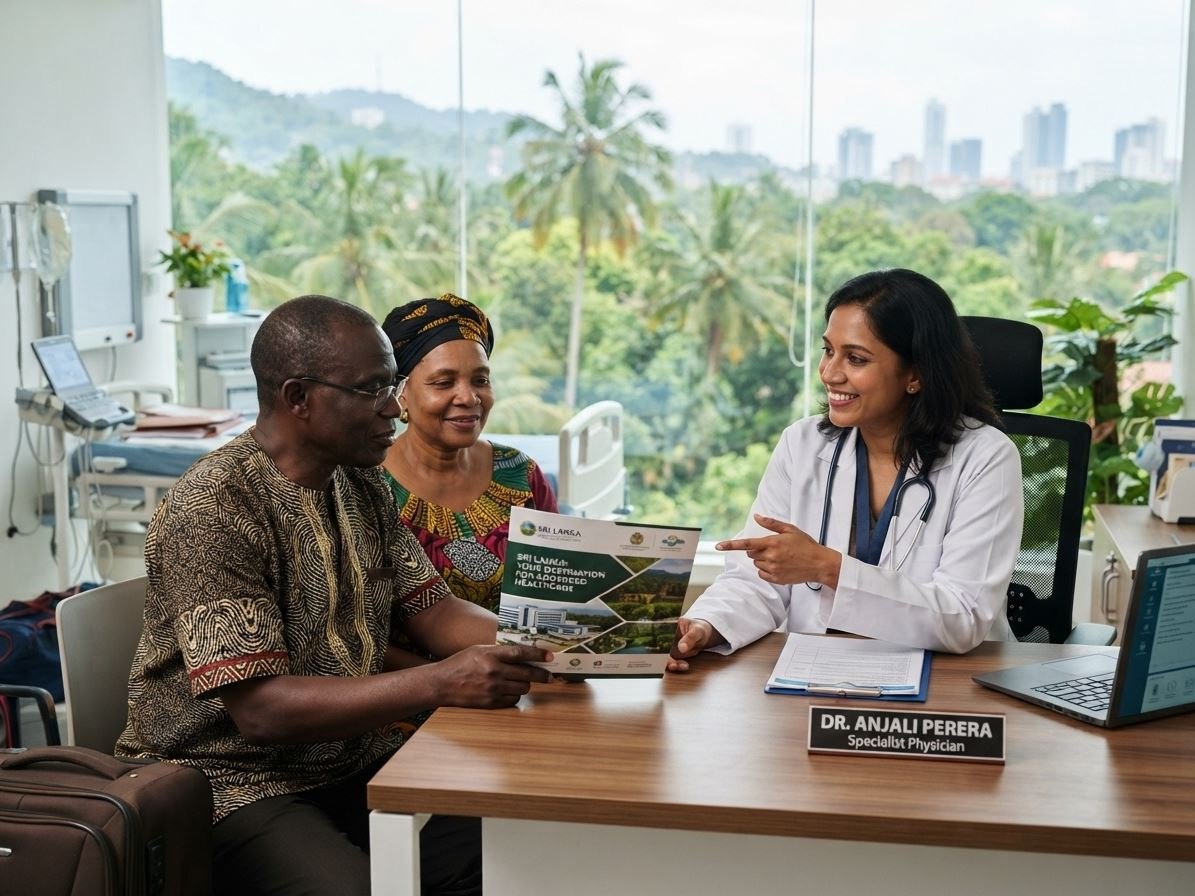
An emerging opportunity to connect healthcare, international partnerships and hospitality
By Dr. Dharshana Weerakoon, DBA (USA)
Global Tourism & Hospitality Strategist | Entrepreneur | Chairman – Global Cooperation (Private) Limited | Managing Director – International Hospitality Ventures (Private) Limited
1. A new opportunity beyond traditional tourism
When we discuss the future of Sri Lankan tourism, we should look beyond conventional leisure travel, sightseeing and hotel accommodation.
There are opportunities in specialised tourism segments that can generate economic value, attract international partnerships and create new employment opportunities.
One such opportunity is medical tourism.
Across Africa, patients and their families sometimes travel internationally to access specialist consultations, diagnostic services, surgical procedures and treatments that may not be readily available, accessible or suitable in their home countries.
This creates an opportunity for Sri Lanka.
Could Sri Lanka position itself as an additional destination for African patients seeking appropriate overseas medical care?
I believe this is a market opportunity worth examining seriously.
However, success will require more than promotional campaigns. It will require credible hospitals, qualified medical professionals, transparent pricing, international partnerships and a professionally coordinated patient journey.
Most importantly, it must be built around patient welfare rather than simply tourism revenue.
2. Why should Sri Lanka consider the African market?
Africa is not one uniform healthcare market. Each country has different healthcare systems, income levels, specialist capabilities, insurance arrangements and international travel requirements.
Nevertheless, several markets deserve attention.
Potential initial markets include:
- Nigeria: Specialist diagnostics, oncology, cardiology and selected surgical services.
- Ghana: Specialist consultations, diagnostics and selected surgical procedures.
- Kenya: Advanced diagnostics, oncology and specialist healthcare partnerships.
- Tanzania: Specialist consultations, orthopaedics and selected surgical services.
- Uganda: Specialist treatment referrals and diagnostic services.
- Botswana: Selected specialist treatments and international healthcare partnerships.
- Zambia: Oncology, cardiology and specialist medical referrals.
- Malawi: Specialist diagnostics and selected surgical services.
- Angola: Specialist surgery, cardiology and diagnostic services.
- Senegal: Specialist consultations, diagnostics and selected treatments.
These are prospective market segments, not claims that every patient in these countries needs overseas treatment. Actual demand must be established through discussions with healthcare institutions, physicians, patient organisations and relevant authorities.
The commercial opportunity lies in identifying genuine unmet needs and matching patients with appropriately qualified healthcare providers.
3. The international medical tourism market has already demonstrated its potential
Sri Lanka does not need to invent medical tourism. Several countries have already developed substantial healthcare travel industries.
Consider the following figures:
- India: Recorded 644,387 foreign tourist arrivals for medical purposes in 2024, according to its Bureau of Immigration.
- Malaysia: Welcomed more than 1.60 million healthcare travellers in 2024, generating approximately RM2.70 billion in healthcare travel revenue.
- Türkiye: Reported 1,506,442 people receiving healthcare services through its health tourism sector in 2024, generating approximately USD 3.02 billion.
These figures demonstrate that international healthcare travel can become a significant economic activity when supported by coordinated national strategies, healthcare infrastructure and international marketing.
Sri Lanka, meanwhile, recorded 2,362,521 tourist arrivals in 2025, demonstrating the country’s broader tourism recovery and international visitor-handling potential.
The question is not whether Sri Lanka can copy these countries. It is whether we can develop a distinctive, credible and sustainable model suited to our healthcare capabilities and international markets.
4. Seven international lessons Sri Lanka should examine
Case Study 1 – India: Building an international patient network
India demonstrates the importance of connecting specialist hospitals, international patient departments, medical visas and overseas referral networks.
Its 644,387 medical-purpose arrivals in 2024 illustrate the scale that an established medical travel ecosystem can achieve.
Lesson for Sri Lanka: Build direct relationships with African hospitals, physicians, healthcare facilitators and medical referral organisations.
Case Study 2 – Malaysia: Healthcare and hospitality integration
Malaysia’s healthcare travel model combines medical services with organised international patient support and destination hospitality.
Its 2024 healthcare travel revenue of approximately RM2.70 billion demonstrates the economic value of an integrated approach.
Lesson for Sri Lanka: The patient experience should extend beyond the hospital, incorporating accommodation, transportation, family support and recovery arrangements where clinically appropriate.
Case Study 3 – Türkiye: International healthcare positioning
Türkiye has developed a recognisable international health tourism identity, supported by hospitals, specialist services and destination marketing.
Its 2024 figures demonstrate the importance of sustained international positioning.
Lesson for Sri Lanka: Develop a recognisable national medical tourism proposition rather than promoting individual hospitals in isolation.
Case Study 4 – Thailand: Medical services combined with destination appeal
Thailand provides an established example of how international healthcare services can coexist with a strong hospitality and tourism industry.
Lesson for Sri Lanka: A suitable medical travel package can coordinate clinical appointments with accommodation, transportation and carefully approved recovery arrangements.
Case Study 5 – Singapore: Reputation and confidence
Singapore illustrates the importance of healthcare reputation, specialist expertise, institutional credibility and transparent service standards.
Lesson for Sri Lanka: Trust must come before marketing. Hospital credentials, treatment information and professional accountability should be independently verifiable.
Case Study 6 – South Korea: Specialist healthcare positioning
South Korea demonstrates the potential of building international demand around recognised areas of specialist healthcare and advanced medical technology.
Lesson for Sri Lanka: Focus on demonstrable clinical strengths rather than promising every possible treatment to every international market.
Case Study 7 – United Arab Emirates: International connectivity
The UAE illustrates how international connectivity, multilingual services, hospitality infrastructure and international business partnerships can support healthcare-related travel.
Lesson for Sri Lanka: Accessibility, airport assistance, family accommodation and coordinated international services can influence a patient’s destination experience.
These seven examples are strategic market lessons, not claims that their healthcare systems are identical or that their clinical outcomes can be replicated in Sri Lanka.
5. Where could Sri Lanka create a competitive advantage?
Sri Lanka has an opportunity to develop a carefully selected medical tourism portfolio, subject to the actual capabilities and credentials of participating hospitals.
Potential service categories include:
- Oncology consultations and selected cancer treatments.
- Cardiology consultations and appropriate cardiac procedures.
- Orthopaedic consultations and joint-related procedures.
- Specialist diagnostics and health screening.
- Selected surgical procedures.
- Dental care.
- Fertility consultations and eligible treatments.
- Rehabilitation and clinically supervised recovery.
- Preventive health and wellness programmes.
However, the country must distinguish between treatments it can currently deliver to international standards and services that may require further investment or partnerships.
No international patient should be encouraged to travel based solely on a promotional claim.
A qualified medical professional must determine treatment suitability, expected outcomes, risks and post-treatment requirements.
6. The role of International Hospitality Ventures (IHV)
This is where I see a practical opportunity for International Hospitality Ventures (Private) Limited.
As Managing Director of IHV, I believe that medical tourism should be approached through a structured international partnership model rather than simply advertising hospitals overseas.
IHV aims to develop international tourism and hospitality partnerships connecting overseas markets with Sri Lankan service providers.
Within this opportunity, IHV can explore becoming a non-clinical international medical travel and hospitality coordination partner.
Our proposed areas of cooperation include:
International healthcare partnerships
Establishing relationships with African hospitals, medical institutions, physicians, patient referral organisations and healthcare facilitators.
Patient travel coordination
Supporting the non-clinical travel arrangements of patients and accompanying family members, subject to the relevant medical and travel requirements.
Hospital and healthcare connections
Facilitating introductions between prospective international patients and appropriately qualified Sri Lankan healthcare institutions.
Accommodation and hospitality
Coordinating suitable accommodation for patients and accompanying family members, subject to medical recommendations and individual requirements.
Airport assistance and ground transportation
Organising airport transfers, local transportation and related hospitality services.
Medical travel documentation support
Providing administrative guidance and coordination concerning appointment documentation and applicable visa procedures. Visa approval remains entirely with the relevant authorities.
International representation and partnerships
Developing B2B relationships with African healthcare institutions, international representatives and relevant tourism stakeholders.
IHV would not diagnose, prescribe, recommend clinical treatment or make medical decisions. Those responsibilities remain exclusively with qualified and appropriately authorised healthcare professionals.
7. A practical partnership opportunity for African institutions
I would particularly welcome discussions with:
- Private and public hospitals.
- Specialist medical centres.
- Oncology and cardiology institutions.
- Medical associations.
- Healthcare referral organisations.
- Insurance and healthcare administrators.
- Medical tourism facilitators.
- International healthcare representatives.
The proposed model is straightforward.
An African healthcare institution identifies a patient who may require an overseas specialist consultation or treatment. With the patient’s informed consent, relevant medical information is provided directly to an appropriately selected Sri Lankan healthcare provider through secure and authorised channels.
The Sri Lankan healthcare provider independently evaluates the case, determines whether it can offer an appropriate service and communicates the clinical and financial information directly to the patient.
If the patient chooses to travel, IHV can coordinate the agreed non-clinical travel and hospitality arrangements.
This creates a potential partnership between African healthcare institutions, Sri Lankan hospitals and an international tourism and hospitality company.
8. Building trust must come before commercial expansion
Medical tourism involves human lives, personal medical information and significant financial decisions.
Therefore, ethical standards must be central to this initiative.
Sri Lanka must prioritise:
- Verified hospital registrations and professional qualifications.
- Transparent treatment estimates and written quotations.
- Informed patient consent.
- Secure handling of medical information.
- Clear disclosure of all coordination fees and commissions.
- Appropriate medical insurance and travel arrangements.
- Continuity of care and communication with the patient’s home-country physician.
- Appropriate arrangements for complications and post-treatment follow-up.
- No misleading claims about treatment outcomes or guaranteed recovery.
Furthermore, patients should be encouraged to obtain independent medical opinions where appropriate.
The objective should be to create long-term confidence, not short-term bookings.
9. My proposal: Position Sri Lanka as a trusted medical travel partner for Africa
I believe there is room for Sri Lanka to develop a new international tourism segment through carefully structured medical travel partnerships.
Rather than immediately targeting the entire African continent, we should begin with a few priority countries, identify genuine healthcare requirements, select suitably qualified hospitals and establish measurable partnership programmes.
The initial approach could involve:
- Identifying five priority African markets.
- Establishing partnerships with selected healthcare institutions.
- Identifying Sri Lankan hospitals with demonstrable specialist capabilities.
- Developing transparent treatment and hospitality coordination procedures.
- Appointing responsible international representatives.
- Conducting professional B2B meetings and institutional presentations.
- Evaluating patient experience, service quality and partnership performance.
This approach would allow Sri Lanka to build credibility progressively.
For IHV, it also represents an opportunity to diversify its international B2B tourism partnerships and establish relationships with a new category of overseas institutions.
10. An invitation to African healthcare institutions and international partners
I would like to invite hospitals, healthcare institutions, medical associations, specialist practitioners and international healthcare facilitators across Africa to explore potential cooperation with International Hospitality Ventures (Pvt) Ltd.
Our objective is to explore responsible partnerships that connect African patients with suitable Sri Lankan healthcare providers while coordinating the necessary international travel and hospitality arrangements.
I believe that Sri Lanka should look at medical tourism not merely as another tourism product, but as an opportunity to create meaningful international cooperation between healthcare, hospitality and tourism.
The future of tourism is not limited to where people travel. It is also about why they travel, the services they need and the value that responsible partnerships can create.
Sri Lanka has an opportunity to become part of that conversation.
And I believe we should start building those partnerships now.
About the Author
Dr. Dharshana Weerakoon, DBA (USA) is a Global Tourism & Hospitality Strategist, entrepreneur and international hospitality professional with more than three decades of professional experience across multiple countries and international hospitality environments.
He is the Chairman of Global Cooperation (Private) Limited and the Managing Director of International Hospitality Ventures (Private) Limited, a Sri Lankan B2B global tourism partnership company.
His professional interests include international tourism development, hospitality management, destination partnerships, medical tourism, sustainable tourism and cross-border business cooperation.
Disclaimer
This article has been prepared and published in good faith by Dr. Dharshana Weerakoon, DBA (USA), drawing on publicly available information from national and international tourism and healthcare authorities, industry reports, and professional experience.
The article is intended solely for educational, professional, business-development and public-awareness purposes. The market examples and proposed partnership opportunities represent strategic observations and potential business opportunities, not guarantees of commercial success, patient demand or clinical outcomes.
International Hospitality Ventures (Pvt) Ltd is presented in the context of non-clinical tourism, travel coordination and hospitality services. It does not provide medical diagnosis, treatment, clinical advice or guarantees of healthcare outcomes. All clinical decisions remain the responsibility of appropriately qualified and authorised healthcare professionals and institutions.
Any proposed cooperation is subject to applicable Sri Lankan and overseas laws, healthcare regulations, professional licensing requirements, immigration rules, patient consent, confidentiality and data-protection obligations. No partnership, accreditation, hospital endorsement or regulatory approval should be inferred unless formally confirmed.
The views expressed are the author’s own professional and analytical opinions and do not constitute medical, legal, financial or investment advice.
© Dr. Dharshana Weerakoon, DBA (USA). All rights reserved.
Further Reading: https://dharshanaweerakoon.com/lpg-availability-in-sri-lanka/
Further Reading: https://www.linkedin.com/newsletters/outside-of-education-7046073343568977920/