Sri Lanka: Are We Becoming a Nation of Borrowers? From Credit Cards and Housing Loans to Vehicle Leasing and Microfinance – Has Debt Become a Way of Life
Is There a Single Sri Lankan Without Debt?
Let me begin with a simple question.
Is there a single Sri Lankan adult who does not have a credit card?
Is there a family that has purchased a house entirely from savings without obtaining a housing loan?
Is there a vehicle owner who has never used a lease facility to acquire a car, van, motorcycle, three-wheeler, or commercial vehicle?
Is there a small business owner who has never used an overdraft, working capital loan, supplier credit, or a bank facility to keep operations running?
Is there a household that has never pawned jewellery, borrowed from relatives, obtained a personal loan, purchased goods on credit, or owed money to the neighbourhood boutique?
Such individuals and businesses certainly exist.
However, they are becoming increasingly rare.
Today, borrowing has become one of the defining characteristics of modern economic life in Sri Lanka.
Whether we are employees, entrepreneurs, professionals, farmers, traders, manufacturers, or corporate executives, debt has become an integral part of our financial journey.
For many people, debt is no longer an emergency solution.
It has become a lifestyle.
The New Reality: A Nation Built on Credit
Several decades ago, borrowing was often viewed as a last resort.
Families saved for years before constructing a house.
Vehicles were purchased only after accumulating sufficient capital.
Businesses expanded gradually using retained earnings.
People generally preferred living within their means.
Today, the situation is significantly different.
Modern financial products have made credit accessible to almost everyone.
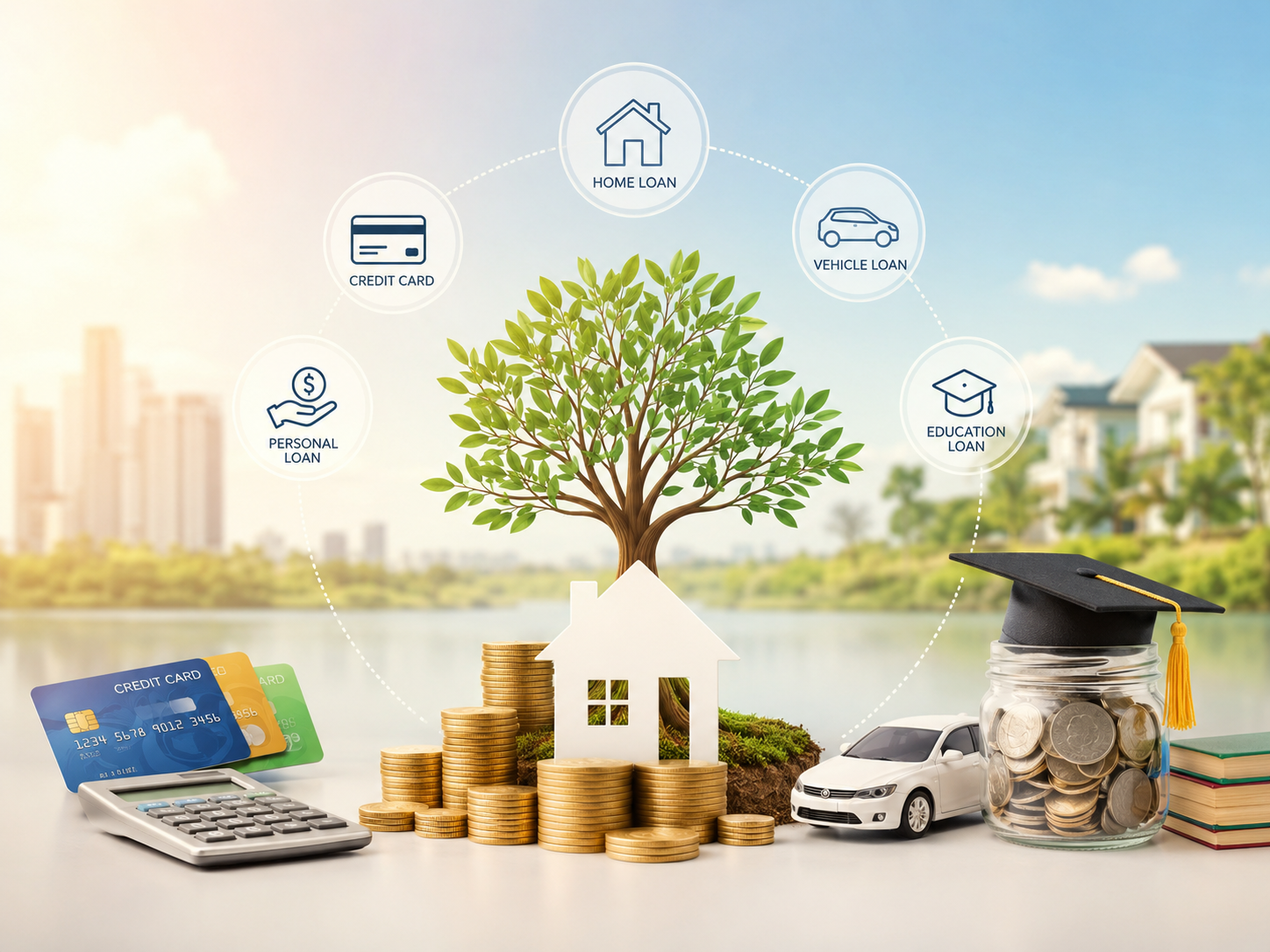
Banks offer housing loans, personal loans, educational loans, overdrafts, and credit cards.
Finance companies provide leasing facilities and consumer financing.
Microfinance institutions extend credit to rural communities and small entrepreneurs.
Digital lending platforms are emerging rapidly.
As a result, borrowing has become easier than ever before.
Unfortunately, for some individuals, borrowing has also become easier than saving.
Debt Is Not the Enemy
Before proceeding further, it is important to clarify one point.
Debt itself is not the problem.
In fact, debt plays a critical role in economic development.
Without access to credit:
- Many families would never own a home.
- Many students would struggle to finance higher education.
- Many entrepreneurs would never start a business.
- Many companies would be unable to expand.
- Many farmers would be unable to invest in production.
Responsible borrowing creates opportunities.
It can generate wealth.
It can improve living standards.
It can stimulate economic growth.
The real concern arises when borrowing shifts from productive investment to everyday survival.
That is where the conversation becomes important.
Productive Debt vs Lifestyle Debt
There is a significant difference between productive debt and lifestyle debt.
Productive Debt
Productive debt creates future value.
Examples include:
- Housing loans for long-term ownership.
- Business expansion loans.
- Agricultural financing.
- Educational loans.
- Industrial investments.
- Tourism infrastructure development.
Such borrowing has the potential to generate future income and economic benefits.
Lifestyle Debt
Lifestyle debt finances consumption.
Examples include:
- Luxury purchases through credit cards.
- Expensive gadgets beyond affordability.
- Frequent borrowing for holidays and entertainment.
- Personal loans used to settle previous debts.
- Financing lifestyles that exceed actual income.
Lifestyle debt often creates temporary satisfaction but long-term financial pressure.
When debt is used repeatedly to fund consumption rather than investment, financial vulnerability increases significantly.
The Debt Ladder: How It Begins
For many Sri Lankans, the debt journey follows a predictable pattern.
A young graduate obtains a credit card.
Several years later, a vehicle lease is acquired.
A housing loan follows.
Educational expenses for children increase.
Unexpected medical expenses emerge.
Personal loans fill temporary gaps.
Occasional gold pawning provides emergency liquidity.
Additional credit facilities become necessary.
Eventually, multiple financial commitments coexist simultaneously.
Each individual loan may appear manageable.
However, collectively they can consume a substantial portion of monthly income.
The danger is not a single loan.
The danger is the accumulation of multiple obligations.
Case Study 1: The Credit Card Convenience Trap
A young executive receives his first credit card.
Initially, it serves as a convenient payment tool.
Dining expenses, online purchases, travel bookings, subscriptions, and lifestyle spending gradually increase.
The minimum payment option appears attractive.
Months become years.
The outstanding balance remains largely unchanged while interest continues to accumulate.
What started as convenience gradually becomes a long-term financial burden.
The lesson is simple.
Credit cards are excellent servants but dangerous masters.
Case Study 2: The Dream Vehicle
A middle-income family acquires a vehicle through leasing.
The monthly instalment seems affordable.
Initially, everything proceeds smoothly.
Then fuel prices increase.
School fees rise.
Medical expenses emerge.
Utility bills climb.
The lease payment remains unchanged while disposable income declines.
A symbol of success slowly becomes a source of financial stress.
Case Study 3: The Housing Loan Reality
Owning a home is one of life’s greatest achievements.
Yet many homeowners spend twenty to thirty years servicing housing loans.
During this period, unexpected economic events, inflation, interest rate fluctuations, and employment uncertainties can significantly affect household finances.
The dream remains worthwhile.
However, it often comes with decades of financial commitment.
Case Study 4: The Pawned Gold Cycle
Gold loans have traditionally served as an emergency financial safety net.
Many families use jewellery to obtain short-term liquidity.
The challenge emerges when gold is repeatedly redeemed and re-pledged.
Instead of solving financial problems, the facility becomes part of a continuous cycle of borrowing.
The symptom is treated.
The underlying issue remains.
Case Study 5: The Small Business Owner
A small retailer experiences temporary cash flow difficulties.
An overdraft facility provides support.
Supplier credit bridges short-term gaps.
Additional borrowing sustains inventory.
Initially, these facilities help the business survive.
However, if revenue growth fails to keep pace with financing costs, debt gradually becomes a permanent operating requirement rather than a temporary solution.
Case Study 6: The Corporate Borrowing Model
Large corporations also rely heavily on debt.
Overdrafts, syndicated loans, trade finance facilities, working capital arrangements, and leasing structures are common business tools.
Used wisely, these instruments support growth.
However, excessive leverage can create vulnerability during economic downturns.
Even major corporations are not immune to debt-related risks.
Case Study 7: The Multi-Generational Debt Household
In some households, debt exists across multiple generations.
Parents service housing loans.
Adult children manage vehicle leases and personal loans.
Family businesses carry working capital facilities.
Educational expenses require additional financing.
Debt therefore becomes embedded within the family structure itself.
Instead of wealth being transferred between generations, financial obligations are transferred alongside it.
Who Benefits From a Borrowing Society?
This is perhaps the most controversial question.
Banks, finance companies, leasing providers, and microfinance institutions perform an essential role in the economy.
Without them, economic growth would slow significantly.
At the same time, financial institutions generate income from:
- Interest payments.
- Leasing income.
- Credit card charges.
- Service fees.
- Processing fees.
- Penalties.
- Financial service charges.
Every loan represents an asset for the lender and a liability for the borrower.
There is nothing inherently wrong with this relationship.
It is the foundation of modern banking.
However, an important question remains.
If households and businesses are borrowing increasingly to meet daily financial pressures rather than to create productive assets, is the financial system becoming more prosperous than the people it serves?
That is a question worth debating.
Are We Teaching Borrowing More Than Saving?
Financial literacy remains one of the most important challenges facing modern societies.
Many people understand how to obtain a loan.
Far fewer understand:
- Compound interest.
- Long-term debt costs.
- Retirement planning.
- Emergency funds.
- Wealth creation.
- Investment diversification.
- Financial independence.
As a result, borrowing often grows faster than financial knowledge.
The outcome is predictable.
A society becomes increasingly dependent on debt while savings remain inadequate.
The Hidden Cost of Debt
Debt affects more than bank accounts.
It affects mental wellbeing.
It affects family relationships.
It affects decision-making.
It affects entrepreneurship.
It affects quality of life.
When a significant portion of monthly income is committed to repayments, individuals often experience greater stress and reduced financial flexibility.
The financial impact is measurable.
The emotional impact is often invisible.
A Nation of Borrowers or a Nation of Builders?
Sri Lanka does not need less credit.
Sri Lanka needs smarter credit.
We need:
- More financial literacy.
- Higher savings rates.
- Greater productivity.
- Stronger entrepreneurship.
- Responsible lending.
- Responsible borrowing.
- Long-term wealth creation.
Credit should remain a tool.
It should never become a permanent way of life.
The objective is not to eliminate borrowing.
The objective is to ensure that borrowing creates value rather than dependency.
Perhaps the most important question facing Sri Lanka today is not:
“How much more can we borrow?”
Instead, it is:
“How many citizens can achieve genuine financial freedom without becoming permanently dependent on debt?”
The answer to that question may determine the financial future of the nation.
Disclaimer
This article has been authored and published in good faith by Dr. Dharshana Weerakoon, DBA (USA), based on publicly available economic information, industry observations, professional experience, and independent analysis. It is intended solely for educational, journalistic, research, and public awareness purposes. The views expressed are personal and analytical and do not constitute legal, financial, banking, investment, accounting, or professional advice. No institution, lender, company, or individual is specifically criticized, targeted, or endorsed. Readers should seek professional advice before making financial decisions.
© Dr. Dharshana Weerakoon, DBA (USA). All Rights Reserved.
Further Reading: https://dharshanaweerakoon.com/when-loans-turn-non-performing/
Further Reading: https://www.linkedin.com/newsletters/outside-of-education-7046073343568977920/