Beyond Bookkeeping: Why Accountants Must Evolve or Become Obsolete by 2030
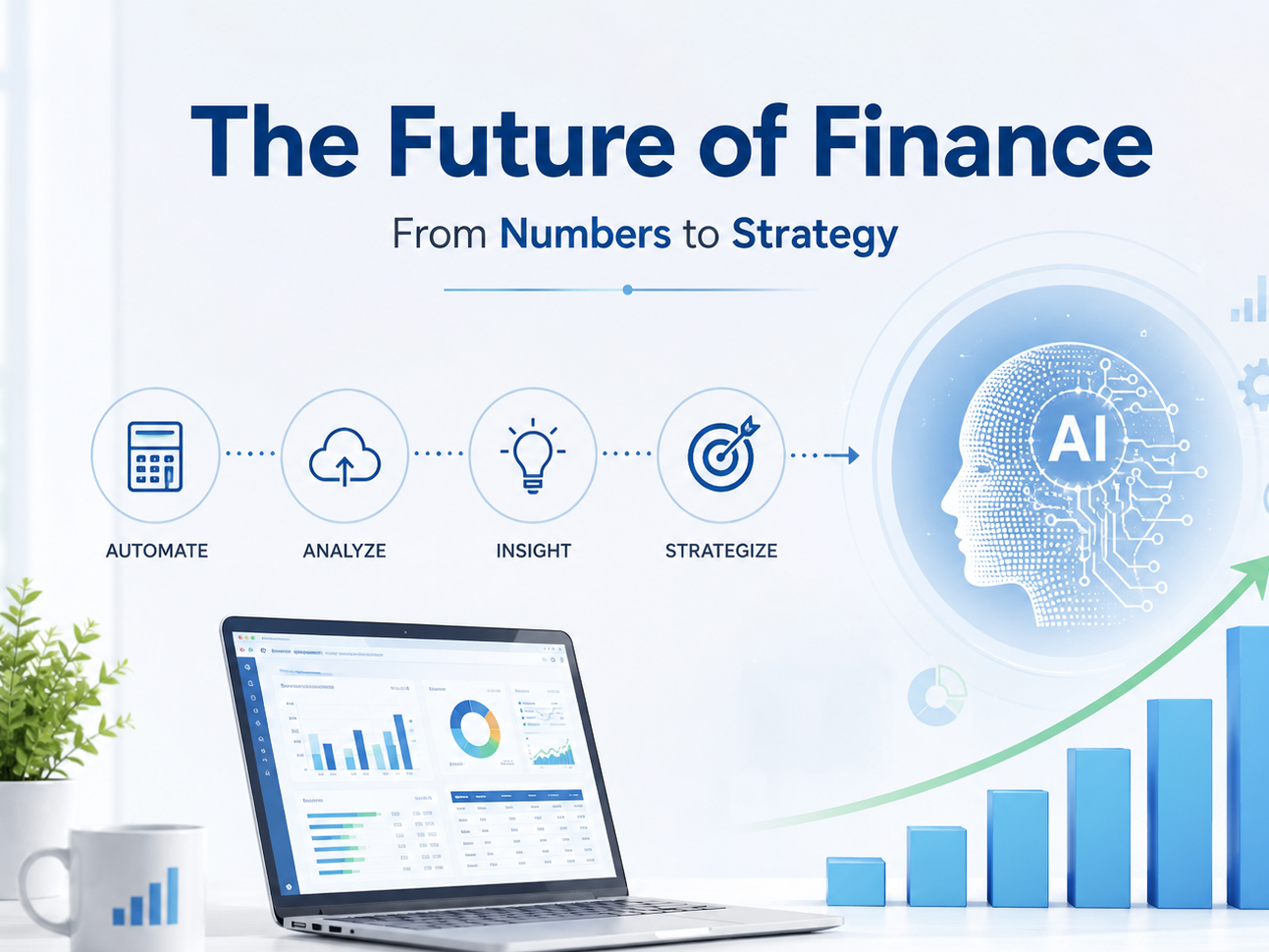
The Real Question Is Not Whether Accounting Will Survive — But Whether Traditional Accountants Will
Do We Really Need Accountants and Bookkeepers Any More?
Or Did the Future Already Arrive Quietly?
This is not a provocative question. It is a necessary one.
For decades, accountants and bookkeepers were considered the backbone of every business. They maintained ledgers, prepared accounts, processed payrolls, handled taxation, reconciled statements, and produced financial reports. Entire economies depended on them.
However, the world has changed faster in the last five years than it changed during the previous fifty.
Artificial Intelligence is now writing reports. Cloud systems are now reconciling accounts automatically. Banking APIs are already connected directly into accounting software. Tax filings are increasingly automated. Invoice recognition systems process documents within seconds. Fraud detection algorithms can identify anomalies faster than human auditors.
Therefore, the uncomfortable reality is this:
The traditional accountant and the traditional bookkeeper are disappearing.
Not because accounting itself is dying.
But because repetitive accounting work is becoming machine work.
The profession is not collapsing. Instead, it is mutating.
The people who survive beyond 2030 will not merely be accountants. They will become financial strategists, AI-integrated advisors, business intelligence interpreters, risk architects, governance specialists, and commercial decision-makers.
Meanwhile, those who still believe data entry is a career will face extinction.
This transformation is already visible across the world.
Global accounting technology spending surpassed USD 70 billion recently, while AI adoption in finance functions continues to accelerate across corporations, banks, tourism groups, retail chains, and governments. At the same time, millions of hours previously handled manually are now being executed automatically through robotic process automation (RPA), machine learning systems, and cloud accounting ecosystems.
The shift is irreversible.
The question is no longer:
“Can AI do accounting?”
The real question is:
“Whom do businesses actually need by 2030?”
And the answer may shock many professionals.
The Death of Traditional Bookkeeping
Let us speak honestly.
Traditional bookkeeping is one of the most automatable professions in the modern economy.
The reason is simple.
Most bookkeeping functions are repetitive, rules-based, pattern-oriented, and data-driven. Machines excel in exactly those environments.
Today, modern accounting platforms can:
- Automatically import bank transactions
- Categorize expenses using AI
- Match invoices and receipts
- Process payrolls
- Generate VAT reports
- Produce profit-and-loss statements
- Detect duplicate payments
- Forecast cash flow trends
- Identify suspicious transactions
- Reconcile thousands of entries within minutes
What previously required an entire accounting department can now be handled by a small finance intelligence team supported by software.
Even small businesses are rapidly moving toward cloud-based ecosystems.
A restaurant owner in Colombo, Dubai, Singapore, London, or Sydney can now manage inventory, payroll, accounting, taxation, supplier payments, and customer analytics from a mobile phone.
The old accounting model built around filing cabinets, spreadsheets, and manual reconciliation is disappearing.
Furthermore, governments themselves are accelerating automation.
Digital tax ecosystems, electronic invoicing, online banking integrations, and real-time compliance reporting are becoming standard.
Therefore, by 2030, the demand for purely transactional accounting roles will decline significantly.
This is not emotional.
This is economic reality.
Businesses will always choose:
- Faster systems
- Lower costs
- Fewer errors
- Real-time visibility
- Predictive intelligence
- Automated compliance
And machines deliver all six.
The Rise of AI-Integrated Finance
Although many fear Artificial Intelligence, most people misunderstand its actual impact.
AI will not completely eliminate finance professionals.
Instead, it will eliminate low-value finance work.
That distinction matters.
A calculator did not eliminate mathematicians.
Spreadsheets did not eliminate CFOs.
Likewise, AI will not eliminate intelligent finance professionals.
However, it will eliminate professionals who add no strategic value beyond repetitive processing.
This is where the future becomes fascinating.
By 2030, successful finance professionals will operate at the intersection of:
- Financial intelligence
- Strategic decision-making
- Data analytics
- AI oversight
- Governance
- Business transformation
- Cybersecurity awareness
- Sustainability reporting
- Commercial advisory
- Behavioral economics
In simple words:
The accountant of 2030 must think like a business architect.
Not merely a ledger manager.
The future belongs to professionals who can interpret numbers rather than simply record them.
Machines can process data.
Humans must extract wisdom.
What Skills Will Matter by 2030?
The future finance leader will require a completely different skill architecture.
Technical accounting knowledge alone will no longer guarantee relevance.
Instead, businesses will prioritize professionals who can convert financial information into strategic business decisions.
The following capabilities will become essential:
1. Data Interpretation
Businesses generate massive amounts of data.
However, raw data itself is useless without interpretation.
The future finance professional must understand:
- Predictive analytics
- Trend analysis
- Business forecasting
- Consumer behavior patterns
- Market intelligence
- Performance indicators
The real value will come from explaining what numbers actually mean.
2. AI Supervision and Validation
AI systems themselves require oversight.
Someone must verify:
- Accuracy
- Ethical use
- Compliance integrity
- Bias risks
- Fraud manipulation
- Systemic vulnerabilities
Therefore, human intelligence will still remain essential.
However, the role changes from “doing accounting” to “controlling intelligent systems.”
3. Strategic Advisory Capability
Future finance professionals must become advisors.
Boards and CEOs will increasingly demand insights such as:
- Should we expand?
- Which markets are profitable?
- Where are operational leakages?
- What are the financial risks?
- Which investments generate real value?
- How do geopolitical changes affect us?
This requires strategic thinking.
Not data entry.
4. Technology Literacy
By 2030, finance professionals must understand:
- AI platforms
- ERP ecosystems
- Cybersecurity risks
- Cloud systems
- Blockchain concepts
- API integrations
- Digital taxation systems
- Automation workflows
Professionals who fear technology will become irrelevant.
Professionals who master technology will dominate industries.
5. Human Judgment
This is where humans still outperform machines.
Business decisions involve:
- Ethics
- Culture
- Politics
- Emotions
- Reputation
- Human behavior
- Leadership psychology
Machines process logic.
Humans understand consequences.
Therefore, judgment becomes the most valuable skill of all.
Case Study 1 – The Big Four Transformation
The world’s largest professional service firms have already accepted the future.
Major global consulting and audit organizations are investing billions into AI, automation, analytics, and advisory ecosystems.
Interestingly, their growth is no longer coming primarily from traditional auditing.
Instead, revenue increasingly comes from:
- Digital transformation consulting
- Cybersecurity
- ESG reporting
- Risk management
- AI advisory
- Business intelligence
- Regulatory consulting
- Strategic restructuring
This alone proves a major point.
Even the giants of accounting know the future is no longer traditional accounting.
Case Study 2 – Singapore’s Smart Finance Ecosystem
Singapore aggressively transformed its financial and regulatory ecosystem using digital integration.
Many businesses now operate with:
- Automated taxation
- Cloud bookkeeping
- Digital compliance reporting
- Integrated payroll systems
- AI-driven financial monitoring
As a result, finance departments became leaner but more strategic.
The professionals who survived were those capable of providing high-level insights rather than routine processing.
Singapore essentially became a preview of the future global finance ecosystem.
Case Study 3 – Amazon and Real-Time Financial Intelligence
Large corporations such as Amazon transformed financial management using real-time analytics.
Instead of waiting for month-end reports, businesses now monitor:
- Live revenue streams
- Consumer spending behavior
- Operational inefficiencies
- Supply chain costs
- Inventory movement
- Fraud indicators
in real time.
This changed the role of finance teams completely.
The modern finance professional became part analyst, part strategist, and part operational advisor.
Traditional bookkeeping alone became insufficient.
Case Study 4 – Tourism and Hospitality Industry Automation
The hospitality industry itself demonstrates this transformation clearly.
Modern hotel chains now use integrated systems connecting:
- Reservations
- Accounting
- Revenue management
- Payroll
- Inventory
- Customer analytics
- Procurement
- Tax reporting
A single integrated dashboard can monitor multiple hotels across multiple countries simultaneously.
This means tourism finance professionals increasingly require:
- Commercial intelligence
- Revenue optimization capability
- Strategic forecasting
- Global taxation awareness
- Sustainability analytics
Simple bookkeeping no longer creates competitive advantage.
Case Study 5 – Blockchain and Smart Contracts
Blockchain technology introduced entirely new concepts into finance.
Smart contracts can automatically execute payments once conditions are fulfilled.
This reduces:
- Manual verification
- Delays
- Intermediary risks
- Transaction disputes
- Administrative overheads
While blockchain adoption remains uneven globally, its long-term implications are enormous.
Future finance professionals must understand decentralized finance ecosystems, digital assets, verification systems, and smart transaction frameworks.
Otherwise, they risk becoming outdated.
Case Study 6 – Small Businesses Using AI Accounting
Even small entrepreneurs now use AI-powered accounting systems.
A business owner with minimal accounting knowledge can:
- Generate invoices
- Track expenses
- File taxes
- Monitor profitability
- Forecast cash flow
- Analyze customer spending
without employing large bookkeeping teams.
This is particularly visible among startups and digital businesses.
Many operate with very small finance departments supported heavily by automation.
The implication is obvious.
The demand for low-level bookkeeping work will continue shrinking.
Case Study 7 – Banking Sector Fraud Detection
Modern banks now use AI-driven fraud detection systems capable of analyzing millions of transactions instantly.
These systems identify:
- Unusual patterns
- Suspicious transfers
- Identity anomalies
- Transaction inconsistencies
- Behavioral deviations
far faster than human auditors.
This does not eliminate auditors.
However, it transforms their role from manual checking into investigative intelligence and governance oversight.
Again, the human role becomes strategic.
What Happens to Universities and Accounting Degrees?
This is another uncomfortable conversation.
Many universities are still teaching outdated finance models.
Students spend years memorizing accounting standards while receiving minimal exposure to:
- AI systems
- Analytics
- Commercial intelligence
- Digital finance
- Automation ecosystems
- Cyber risk
- Strategic advisory capability
That educational model is becoming dangerous.
Producing graduates for disappearing jobs is irresponsible.
Universities must urgently redesign accounting education.
The future curriculum should combine:
- Finance
- Data science
- AI literacy
- Strategic management
- Technology integration
- Risk governance
- Human psychology
- Communication capability
The finance professional of 2030 must be multidimensional.
Not mechanically technical.
The Psychological Crisis Coming to the Profession
One issue rarely discussed openly is the emotional impact of automation.
Many professionals built their identity around technical expertise.
Now, machines increasingly perform those technical tasks better, faster, and cheaper.
This creates:
- Fear
- Denial
- Resistance
- Professional insecurity
- Ego conflicts
- Generational tension
Unfortunately, some professionals still believe AI is merely a temporary trend.
That assumption is dangerous.
History repeatedly proves that technological revolutions do not wait for emotional readiness.
The printing press replaced scribes.
Digital photography destroyed film businesses.
Streaming platforms disrupted television.
E-commerce reshaped retail.
AI will reshape professional services.
Completely.
So Whom Do We Really Need by 2030?
This is the central question.
Businesses will not primarily need traditional accountants or traditional bookkeepers.
Instead, they will need:
Financial Strategists
Professionals capable of connecting finance with long-term business direction.
AI-Integrated Finance Managers
Professionals who can supervise intelligent systems and validate outputs.
Governance and Risk Specialists
Professionals who understand ethics, controls, compliance, fraud risks, and reputational exposure.
Business Intelligence Analysts
Professionals who convert data into actionable commercial insights.
Sustainability and ESG Advisors
As global regulation expands, environmental and social reporting becomes increasingly important.
Cyber-Aware Finance Leaders
Financial systems are now digital ecosystems vulnerable to cyber threats.
Commercial Decision Architects
Professionals capable of supporting CEOs and boards with high-level strategic decisions.
Human-Centered Advisors
Machines cannot fully replace empathy, negotiation, diplomacy, leadership influence, and stakeholder trust.
That is where human superiority still matters.
The Sri Lankan Context
Sri Lanka itself must pay attention carefully.
Our education systems, professional bodies, and corporate structures cannot continue operating under outdated assumptions.
Many organizations still glorify paperwork, hierarchy, and procedural bureaucracy instead of innovation and strategic capability.
However, global competition will not wait.
The younger generation is entering a radically different economy.
Remote work, AI tools, cloud ecosystems, global freelancing, and borderless digital services are reshaping professional opportunities.
A Sri Lankan finance professional in 2030 may work simultaneously for companies in Singapore, Dubai, Australia, Canada, and Europe without physically leaving Colombo.
That is the scale of transformation underway.
But survival requires reinvention.
Not complacency.
The Human Advantage That Machines Cannot Easily Replace
Despite all technological progress, humans still possess critical advantages.
Machines cannot truly replicate:
- Wisdom
- Moral judgment
- Emotional intelligence
- Strategic courage
- Leadership presence
- Negotiation capability
- Political sensitivity
- Cultural understanding
- Visionary thinking
Therefore, professionals should stop competing against machines in repetitive work.
That battle is already lost.
Instead, humans must dominate areas requiring:
- Creativity
- Judgment
- Relationships
- Strategy
- Innovation
- Human trust
That is where future relevance exists.
The Brutal Reality Most Professionals Ignore
A hard truth must be stated.
Many people are academically qualified.
But very few are commercially intelligent.
The future economy will reward:
- Adaptability
- Strategic thinking
- Multidisciplinary capability
- Technological confidence
- Communication skill
- Human intelligence
not merely certificates.
This is why some highly qualified professionals may still become professionally obsolete.
Meanwhile, adaptable individuals with broader intelligence may dominate industries.
The world is moving from qualification-based economies into capability-based economies.
That distinction changes everything.
Final Thoughts
Do we really need accountants and bookkeepers anymore?
Yes.
But not in the traditional sense.
The future does not eliminate accounting.
The future eliminates narrow thinking.
By 2030, repetitive financial work will increasingly belong to machines.
However, strategic financial intelligence will become more valuable than ever before.
Therefore, the finance professional who survives must evolve from:
- Processor → Strategist
- Bookkeeper → Intelligence Interpreter
- Accountant → Business Architect
- Auditor → Risk Visionary
- Data Handler → Decision Influencer
The profession is not dying.
It is being reborn.
And like every industrial revolution in history, those who adapt early will lead.
Those who resist change will eventually become irrelevant.
The future belongs neither to humans alone nor machines alone.
The future belongs to intelligent humans who know how to work with intelligent machines.
That is the real finance revolution of 2030.
Disclaimer
This article has been authored and published in good faith by Dr. Dharshana Weerakoon, DBA (USA), based on publicly available global industry trends, economic observations, professional experience across multiple sectors and countries, emerging developments in artificial intelligence, finance transformation models, digital business ecosystems, and ongoing strategic analysis of global workforce evolution. The article is intended solely for educational, analytical, journalistic, and public discussion purposes.
The views expressed are entirely personal, professional, and interpretative in nature and should not be construed as legal, regulatory, financial, investment, employment, taxation, or professional advisory guidance. While every reasonable effort has been made to ensure accuracy, completeness, and fairness of commentary at the time of writing, the author accepts no responsibility for any interpretation, decision, action, or consequence arising directly or indirectly from the use, adaptation, or reliance upon the contents of this publication.
This article is designed to comply fully with applicable ethical standards, intellectual property principles, professional integrity expectations, non-discrimination obligations, and responsible public communication practices. It has been independently authored through original professional insight, lived industry exposure, analytical interpretation, and human intellectual contribution.
Further Reading: https://www.linkedin.com/newsletters/outside-of-education-7046073343568977920/
Further Reading: https://dharshanaweerakoon.com/redefining-sri-lankas-future/