
When Students Fear the System: Why Sri Lankan Universities Need Independent Appeals, Ombudsman Services, and Transparent Academic Misconduct Policies
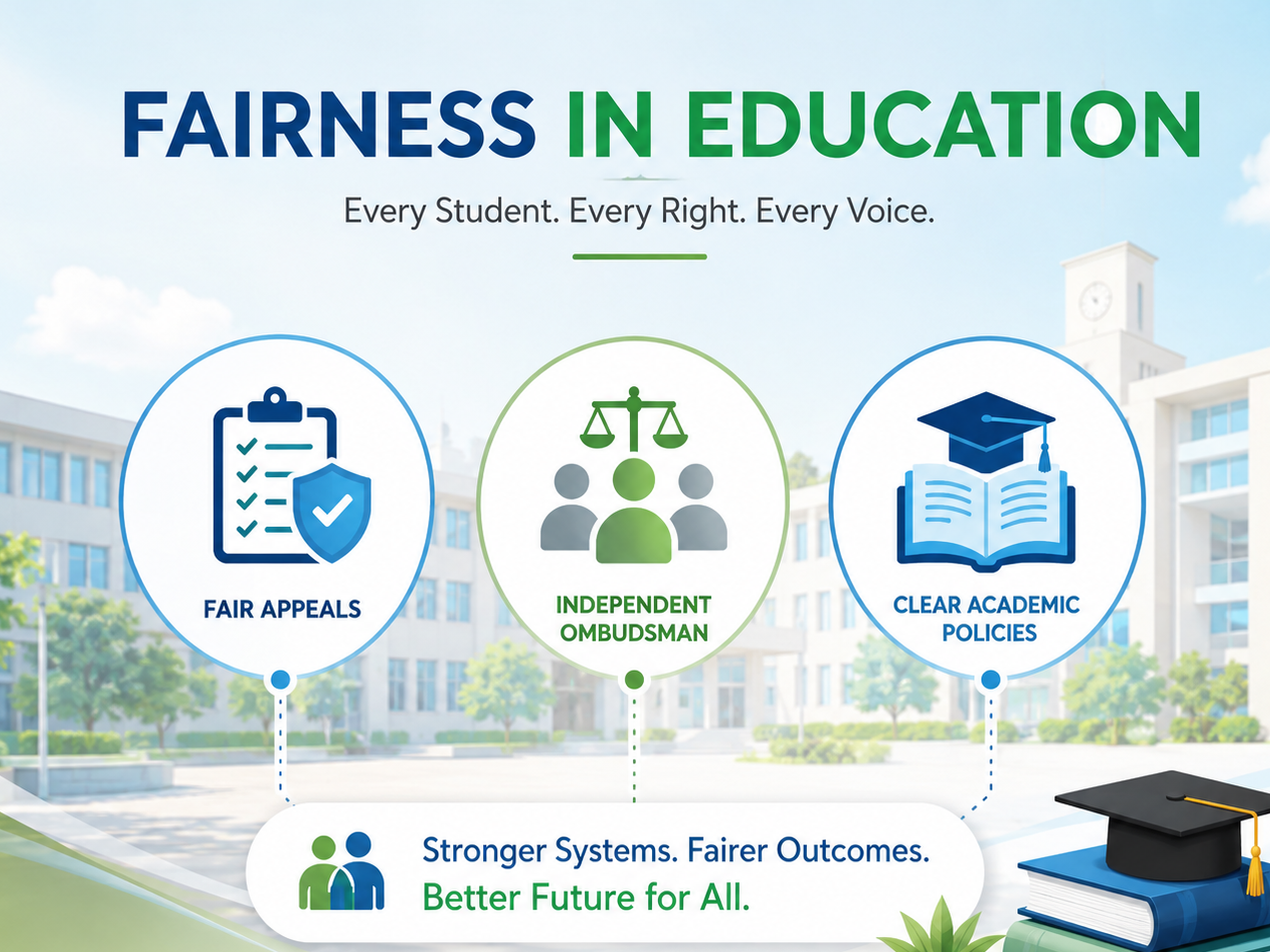
A Critical Examination of Fairness, Accountability, and Student Rights in Higher Education
Higher education institutions are expected to function not only as centers of academic excellence, but also as environments that uphold justice, fairness, intellectual freedom, and ethical governance. Across many developed educational systems, universities have gradually evolved into institutions where students possess clearly defined academic rights, transparent grievance mechanisms, and access to independent review structures when disputes arise.
However, in many parts of South Asia — including Sri Lanka — there remains a significant gap between institutional authority and student protection. While Sri Lankan universities have produced exceptional academics, researchers, professionals, and global leaders over decades, the administrative structures governing student rights have not evolved at the same pace as international higher education standards.
One of the most concerning gaps is the limited availability of transparent appeal procedures, independent ombudsman services, and widespread awareness of academic misconduct policies. In many instances, students are either unaware of their rights or discouraged from questioning academic decisions due to institutional culture, fear of retaliation, or lack of procedural clarity.
This issue is no longer merely administrative. It is deeply connected to educational integrity, student mental wellbeing, international reputation, graduate confidence, and the future competitiveness of Sri Lankan higher education.
The Global Shift Toward Student-Centered Academic Governance
Globally, higher education systems have undergone major reforms over the past three decades. Universities increasingly recognize that academic authority must coexist with procedural fairness.
In countries such as the United Kingdom, Australia, Canada, New Zealand, and parts of Europe, universities now operate under frameworks that emphasize:
- Independent academic appeals
- Procedural transparency
- Natural justice principles
- Anti-bias protections
- Academic integrity education
- Student advocacy mechanisms
- Ombudsman oversight
- Mental health-sensitive disciplinary systems
Importantly, modern universities do not automatically presume student guilt when concerns arise. Instead, the foundational principle is usually one of procedural fairness and proportional investigation.
According to international higher education governance studies conducted between 2021 and 2024:
- Over 82% of UK universities maintain independent academic appeal structures.
- Nearly 76% provide external ombudsman access.
- More than 90% publish formal academic misconduct procedures online.
- Approximately 68% now include mandatory academic integrity awareness training during student orientation.
- Student satisfaction regarding procedural fairness increased by nearly 24% in institutions with independent review systems.
These reforms emerged because universities recognized a crucial truth:
Students learn best in environments where they feel protected, respected, and heard.
The Sri Lankan Context: Authority Without Sufficient Accountability
Sri Lanka possesses a proud academic tradition. The country continues to produce highly capable graduates across medicine, engineering, law, management, science, hospitality, and research sectors. Yet despite these achievements, many students privately describe university administrative processes as intimidating, opaque, and heavily hierarchical.
In numerous institutions, questioning an academic decision is often culturally interpreted as disrespect rather than legitimate inquiry. Students may fear:
- Academic retaliation
- Supervisor hostility
- Delayed graduation
- Reputation damage
- Isolation within departments
- Being labeled “problematic”
- Mental stress and anxiety
This institutional culture discourages healthy academic dialogue.
Unfortunately, in some cases, academic disputes become highly personalized rather than professionally reviewed through transparent procedures. When mechanisms for independent evaluation are absent, power imbalances naturally emerge.
The issue becomes even more serious in postgraduate education, where supervisors often possess significant influence over research progression, publication approvals, thesis evaluations, and viva examinations.
Without structured safeguards, students can become vulnerable.
Why Academic Appeals Matter
An academic appeal system is not designed to undermine lecturers or universities. Instead, it exists to protect the integrity of the institution itself.
A strong appeal system ensures that:
- Decisions are evidence-based
- Bias can be reviewed
- Procedural mistakes are corrected
- Students maintain trust in the institution
- Universities avoid reputational damage
- Transparency replaces uncertainty
Importantly, appeals are not necessarily about changing grades. In many international universities, appeals focus primarily on whether proper procedures were followed fairly.
This distinction matters greatly.
Students should not fear appealing decisions where:
- Proper marking procedures were not followed
- Bias or conflict of interest may exist
- Academic misconduct allegations lack evidence
- Supervisory conduct becomes unreasonable
- Administrative errors occur
- Policies are inconsistently applied
A university confident in its governance should never fear accountability mechanisms.
Academic Misconduct Policies: Often Misunderstood and Poorly Communicated
One of the largest areas of confusion within higher education globally involves academic misconduct policies.
Academic misconduct can include:
- Plagiarism
- Contract cheating
- Data fabrication
- Collusion
- Unauthorized AI-assisted writing
- Exam misconduct
- Citation manipulation
However, internationally recognized universities increasingly distinguish between:
- Intentional misconduct
- Poor academic writing skills
- Language difficulties
- Citation mistakes
- First-time student misunderstandings
Modern educational systems acknowledge that not every similarity report automatically constitutes dishonesty.
Unfortunately, many students in developing academic systems misunderstand plagiarism software itself. Similarity percentages are frequently treated as definitive proof of misconduct, despite global academic guidance clearly stating that software reports require human interpretation.
A 2023 international academic integrity survey found:
- 61% of students globally misunderstood how plagiarism detection systems operate.
- 47% believed similarity scores automatically prove cheating.
- 39% of postgraduate students reported inadequate institutional guidance on academic integrity policies.
These statistics highlight a critical issue:
Education about academic integrity is often weaker than punishment mechanisms.
Case Study 1: The Postgraduate Thesis Dispute
A postgraduate student enrolled in a Sri Lankan institution affiliated with a foreign university submitted a detailed research thesis after nearly two years of work.
The thesis was reportedly rejected based primarily on suspicions regarding the student’s capability to produce work of that quality. The institution subsequently raised allegations of high plagiarism.
However:
- No detailed plagiarism analysis was initially provided
- No structured academic hearing occurred
- No clear procedural explanation was communicated
- The student was not adequately informed of appeal rights
Fortunately, the student independently researched the partner university’s academic regulations and contacted the international partnership office directly.
The outcome changed significantly after formal procedural review.
The case revealed several institutional weaknesses:
- Limited awareness of international appeal systems
- Overreliance on assumptions
- Weak procedural transparency
- Inadequate communication regarding student rights
Importantly, the situation demonstrated how informed students can protect themselves when systems fail.
Case Study 2: Mental Health and Academic Penalties
A final-year undergraduate student reportedly missed several deadlines during a severe mental health crisis following a family tragedy.
Instead of being directed toward counseling or compassionate academic review, the student initially faced disciplinary warnings and potential suspension.
Only after external advocacy did the institution reconsider the case.
Globally, universities increasingly integrate:
- Wellbeing considerations
- Compassionate extensions
- Trauma-sensitive academic reviews
- Student support interventions
Higher education cannot ignore psychological realities while claiming to support student development.
Case Study 3: International Students and Communication Gaps
Several foreign students studying in South Asia have reported confusion regarding academic integrity expectations.
Language barriers, citation unfamiliarity, and different educational cultures often contribute to unintentional academic mistakes.
International universities now increasingly provide:
- Mandatory integrity workshops
- Referencing support centers
- AI policy guidance
- Academic writing assistance
- Integrity orientation programs
Punishment without education rarely solves systemic issues.
Case Study 4: Supervisor Dominance in Research Degrees
In some postgraduate environments, supervisors effectively control:
- Publication approvals
- Thesis progress
- Conference access
- Recommendation letters
- Viva readiness
While most supervisors act ethically and professionally, the absence of oversight mechanisms can create unhealthy dependency structures.
Internationally, many universities now provide:
- Co-supervision systems
- Independent progress panels
- Research grievance channels
- Supervisor evaluation processes
- Postgraduate ombudsman offices
These mechanisms protect both students and supervisors from conflicts escalating unnecessarily.
Case Study 5: Misinterpretation of Similarity Reports
A student once received accusations of plagiarism due to a 28% similarity score.
Upon detailed analysis, the report primarily consisted of:
- Properly referenced quotations
- Methodology terminology
- Standard academic phrases
- Bibliographic similarities
After independent review, no misconduct was found.
This illustrates an important reality:
Similarity percentages alone cannot determine academic dishonesty.
Human academic judgment remains essential.
Case Study 6: Administrative Delays and Lost Appeals
In another reported case, a student attempted to challenge an academic decision but missed the appeal deadline because procedural information was unclear.
International universities increasingly avoid such problems by:
- Publishing timelines clearly
- Using digital student portals
- Providing appeal guidance teams
- Offering multilingual procedural explanations
Transparency reduces conflict before disputes escalate.
Case Study 7: Fear Culture Within Academic Departments
Perhaps the most troubling issue is the silent culture of fear that exists in some institutions.
Many students privately admit they avoid raising concerns because they believe:
- “Nothing will change”
- “The lecturer will remember me”
- “I may fail future modules”
- “The department will isolate me”
This fear damages academic culture itself.
Universities should cultivate critical thinking — not silent compliance.
The Growing Importance of Ombudsman Services
An ombudsman is an independent official or office that investigates complaints impartially.
Globally, university ombudsman systems help:
- Resolve disputes informally
- Reduce institutional hostility
- Protect confidentiality
- Prevent escalation
- Promote mediation
- Improve trust
Importantly, ombudsman offices usually function independently from academic departments.
This independence is essential.
Students are far more likely to raise concerns when they know a neutral body exists.
Countries with strong university ombudsman systems report:
- Reduced litigation
- Higher student satisfaction
- Faster dispute resolution
- Improved institutional transparency
- Better academic wellbeing outcomes
Sri Lankan universities could significantly benefit from adopting similar structures.
Why This Issue Matters for Sri Lanka’s Global Reputation
Sri Lanka increasingly positions itself as:
- A regional education destination
- A tourism and hospitality education hub
- A South Asian knowledge economy participant
- A destination for international partnerships
However, international academic collaboration increasingly depends on governance standards.
Global universities now evaluate:
- Student protection systems
- Academic integrity frameworks
- Appeals transparency
- Research ethics
- Institutional accountability
Weak governance structures can negatively impact:
- International credibility
- Foreign student recruitment
- Academic rankings
- Research partnerships
- Graduate employability
Educational reputation is no longer built solely on curriculum quality.
Governance matters equally.
The Rise of Artificial Intelligence and New Academic Integrity Challenges
The emergence of AI tools has dramatically complicated academic misconduct discussions worldwide.
Universities globally are struggling to define:
- Acceptable AI assistance
- Ethical AI usage
- AI-generated content boundaries
- Verification standards
- Detection reliability
Even leading international institutions disagree on policy approaches.
This uncertainty makes transparent procedures even more important.
Students must clearly understand:
- What is permitted
- What requires disclosure
- What constitutes misconduct
- How investigations occur
- What evidence standards apply
Without clarity, confusion becomes inevitable.
Key Reforms Sri Lankan Universities Should Consider
1. Establish Independent Appeal Structures
Every university should maintain:
- First-level review procedures
- Independent secondary appeals
- Clear procedural timelines
- Written outcome explanations
Transparency builds institutional credibility.
2. Introduce University Ombudsman Offices
Independent ombudsman services could:
- Mediate disputes
- Protect confidentiality
- Reduce hostility
- Improve student trust
- Prevent unnecessary escalation
3. Improve Academic Integrity Education
Instead of relying mainly on punishment, universities should prioritize:
- Workshops
- Orientation sessions
- Citation training
- AI ethics guidance
- Research writing support
Prevention is more effective than fear.
4. Train Academic Staff in Procedural Fairness
Lecturers and supervisors should receive training in:
- Conflict management
- Bias awareness
- Student communication
- Mental health sensitivity
- Academic ethics
- Procedural fairness
Strong institutions evolve continuously.
5. Digitize Policy Access
Students should easily access:
- Appeal procedures
- Misconduct regulations
- Submission policies
- Review timelines
- Complaint mechanisms
Complex systems create avoidable confusion.
6. Encourage Constructive Academic Dialogue
Questioning academic decisions should not automatically be perceived as disrespect.
Healthy universities encourage:
- Critical inquiry
- Debate
- Clarification
- Intellectual independence
Education thrives through dialogue.
A System Built on Fear Cannot Produce Innovative Thinkers
Innovation requires confidence.
Research requires intellectual courage.
Global leadership requires students who can question systems respectfully and think independently.
If students fear administrative retaliation simply for seeking clarification, universities risk producing graduates conditioned toward silence rather than analytical reasoning.
Modern education must move beyond rigid hierarchy toward collaborative intellectual culture.
The Way Forward
Sri Lanka has extraordinary academic potential.
Its universities possess talented lecturers, capable researchers, dedicated administrators, and highly resilient students. The goal is not to criticize institutions unfairly, but to encourage constructive evolution.
Reforming student protection systems does not weaken universities.
It strengthens them.
The implementation of:
- Transparent appeals
- Independent ombudsman services
- Academic integrity education
- Fair procedural standards
- Student-centered governance
would significantly improve trust, accountability, and international competitiveness within Sri Lankan higher education.
Most importantly, it would create educational environments where students and academics can engage with mutual respect rather than fear.
That transformation is essential if Sri Lanka wishes to position itself confidently within the global higher education landscape of the future.
Final Reflection
Education should never be based solely on authority.
It should be built upon fairness, integrity, dialogue, accountability, and trust.
Students are not enemies of institutions. They are the very reason institutions exist.
A university that listens fairly earns long-term respect.
A university that embraces transparency earns international credibility.
And a university that protects both academic standards and student dignity creates graduates truly prepared for the modern world.
Disclaimer
This article has been authored and published in good faith by Dr. Dharshana Weerakoon, DBA (USA), based on publicly available higher education frameworks, international academic governance practices, institutional policy observations, professional academic exposure across multiple jurisdictions, and ongoing independent research into global university systems. The content is intended solely for educational, analytical, journalistic, and public awareness purposes to encourage constructive dialogue regarding fairness, accountability, student rights, and institutional transparency within higher education.
The views expressed are entirely personal, professional, and analytical, and do not target, accuse, or defame any individual institution, university, lecturer, organization, or regulatory authority. Any examples or case references included are presented in generalized and anonymized form for discussion purposes only.
This article does not constitute legal advice, regulatory instruction, or formal academic policy guidance. Readers are encouraged to consult official institutional regulations, legal professionals, or accredited educational authorities for specific advice relating to academic disputes or governance matters.
The author accepts no responsibility for any misinterpretation, redistribution, or misuse of the content. This article is intended to support constructive reform discussions aligned with principles of fairness, academic integrity, non-discrimination, procedural justice, ethical governance, and responsible educational practice within the broader framework of Sri Lankan and international higher education standards.
Authored independently through lived professional experience, academic observation, and original analytical writing.
Further Reading: https://www.linkedin.com/newsletters/outside-of-education-7046073343568977920/
Further Reading: https://dharshanaweerakoon.com/future-of-accounting-2030/