
When Gas Reaches the Distributor but Not the Consumer: A Lesson in Customer Service and Distribution Management
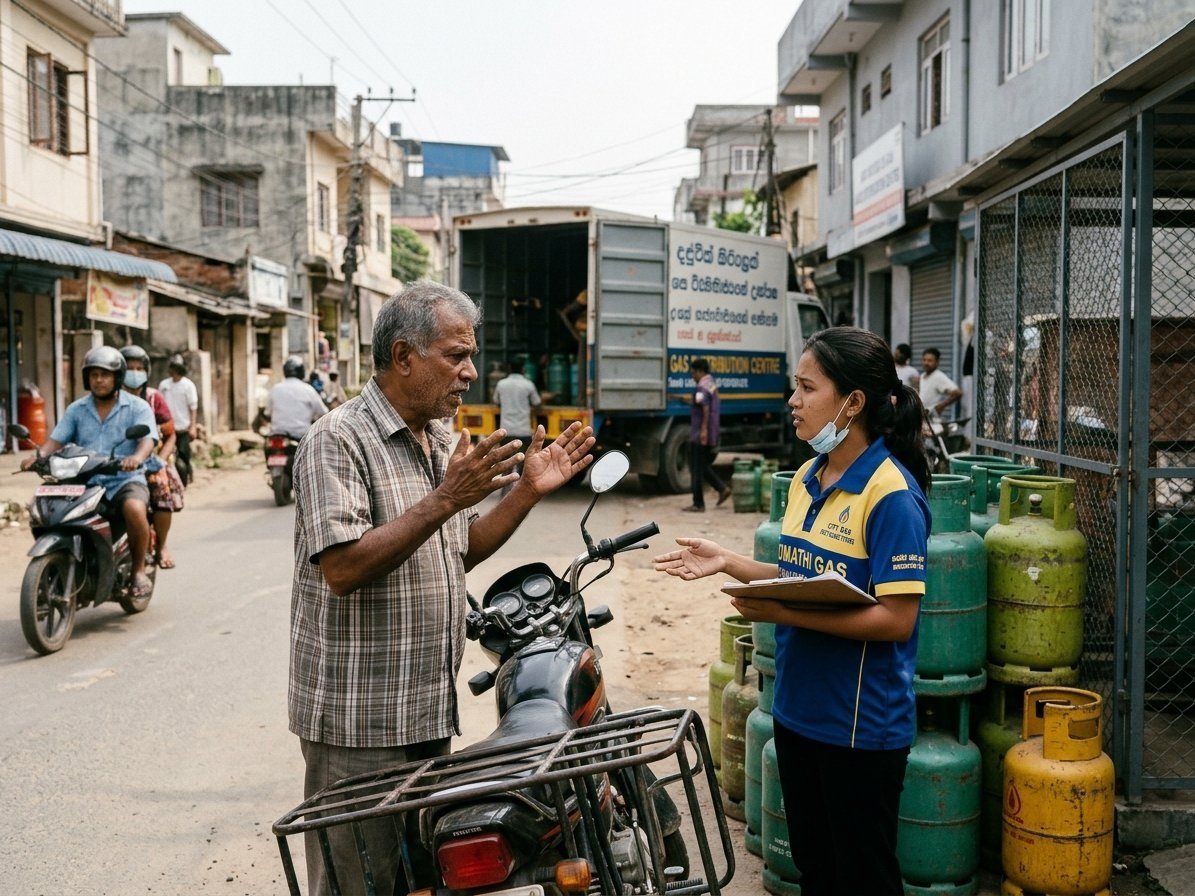
The real test is availability where customers need it
A product may have reached a distribution point, yet the customer may still be unable to purchase it. This simple distinction raises an important question for businesses across Sri Lanka: Are we measuring supply delivered, or the customer’s ability to obtain the product?
Recently, I experienced this issue while trying to purchase a 12.5 kg Litro Gas cylinder in the Bemmulla and Yakkala areas of Gampaha District.
Although I found several distributors in the surrounding area, the cylinders were unavailable when I visited. I was subsequently informed that the next delivery was expected on 1 November 2026.
I am sharing this experience not to accuse any company or individual, but to highlight a wider business lesson. When a customer cannot access an essential product, the problem deserves investigation, clear communication and a practical solution.
Why this matters to Sri Lanka
Sri Lanka’s 2024 Census recorded approximately 6.11 million households. Gas was the main cooking fuel for 42.4% of households nationally, while the figure for Gampaha District was 63.9%.
These figures demonstrate why dependable gas distribution matters to household routines and consumer confidence.
However, the reported absence of cylinders at several outlets does not, by itself, establish a nationwide shortage. Local stock availability, delivery schedules, demand patterns and replenishment arrangements must be examined before reaching that conclusion.
That distinction is important. Responsible public discussion should be based on evidence rather than assumptions.
Seven practical lessons from the distribution challenge
1. Measure availability at the point of purchase
A delivery recorded at a distributor is only one performance measure. The more meaningful question is whether customers can actually buy the product when they need it.
2. Improve local stock visibility
Customers should have a practical way to identify outlets with available cylinders before travelling from one distributor to another.
3. Match deliveries with local demand
Distribution planning should consider customer demand, previous sales, delivery frequency and local consumption patterns.
4. Communicate realistic delivery times
If stock is exhausted, customers need accurate information about the next delivery—not simply a general assurance that supplies are being distributed.
5. Establish a customer assistance channel
Where several outlets are out of stock, a customer service team should be able to direct consumers to a verified alternative outlet or provide a realistic replenishment time.
6. Monitor repeated local stockouts
If customers repeatedly encounter empty outlets, the distribution team should investigate whether the cause is insufficient allocation, unexpected demand, delivery timing or another operational issue.
7. Measure the complete customer experience
Businesses should assess not only deliveries and sales, but also product availability, customer waiting time, complaints and the time taken to resolve problems.
Seven practical examples: Turning the lessons into action
The following are illustrative scenarios, not verified incidents involving any named company.
- Local retail: A distributor receives stock in the morning, but it sells out before many customers arrive. Demand-based replenishment could help reduce the gap.
- Supermarkets: A central warehouse records sufficient stock, yet individual branches run out. Branch-level inventory monitoring can identify the problem earlier.
- Pharmacies: A product is available somewhere in the network but not at the nearest outlet. A verified referral system can save customers unnecessary journeys.
- Fuel distribution: Demand rises unexpectedly at selected locations. Local demand monitoring and transparent queue information can improve planning.
- E-commerce: An item is advertised as available, but the inventory record is outdated. Accurate stock synchronisation helps prevent disappointment.
- Hotels: A confirmed booking does not automatically guarantee a smooth guest experience. Service delivery must match the promise made to the customer.
- Public services: Publishing a service schedule is not enough if the service cannot be accessed in practice. Actual delivery must be monitored alongside announced targets.
These examples share one principle: operational performance must be assessed from the customer’s perspective as well as the organisation’s perspective.
What would a practical solution look like?
For the Bemmulla and Yakkala situation, a constructive response would include:
- Checking stock and recent deliveries at the affected outlets.
- Confirming the next replenishment schedule for 12.5 kg cylinders.
- Identifying an alternative outlet with verified stock, if available.
- Providing customers with a clear contact point for updates.
- Reviewing repeated stockouts and adjusting local distribution where necessary.
These are reasonable steps to request and investigate; they are not a claim that any particular party has breached its obligations.
A wider lesson for business leaders
Throughout my professional career in tourism, hospitality and business management, I have seen how customer confidence depends on the difference between a promise and the experience delivered.
A hotel can advertise excellent service, but the guest ultimately judges the stay. A travel company can confirm an itinerary, but the traveller judges the actual journey. Similarly, a supply chain can report successful deliveries, but consumers judge whether the product is available when they need it.
The same principle applies across industries: the customer experiences the final outcome, not the internal performance report.
For Sri Lanka, stronger demand forecasting, reliable local stock information, responsive customer service and transparent communication can help improve public confidence in essential supply networks.
My concern is straightforward. Customers should not have to visit outlet after outlet without knowing where a product is available or when it will arrive.
I welcome a constructive response from the relevant parties and hope this experience encourages a wider discussion about practical, customer-focused distribution management.
What do you believe would make the biggest difference: better stock visibility, more frequent replenishment, or a central system showing where products are available?
I welcome your views.
Disclaimer: This article reflects the author’s personal experience and professional analysis, shared in good faith for educational and public-awareness purposes. The local availability observations are based on the author’s visits and information communicated to him; they do not establish the cause, scale or duration of any wider supply problem. The illustrative scenarios are not allegations about specific organisations. No finding of misconduct or legal liability is intended. Any assessment of supply conditions should be based on independently verified information and responses from the relevant parties.
© Dr. Dharshana Weerakoon, DBA (USA). All rights reserved.
Further Reading: https://dharshanaweerakoon.com/sri-lanka-bank-call-centre-outsourcing/
Further Reading: https://www.linkedin.com/newsletters/outside-of-education-7046073343568977920/