Are Universities Afraid of Industry Experts Becoming Visiting Lecturers?
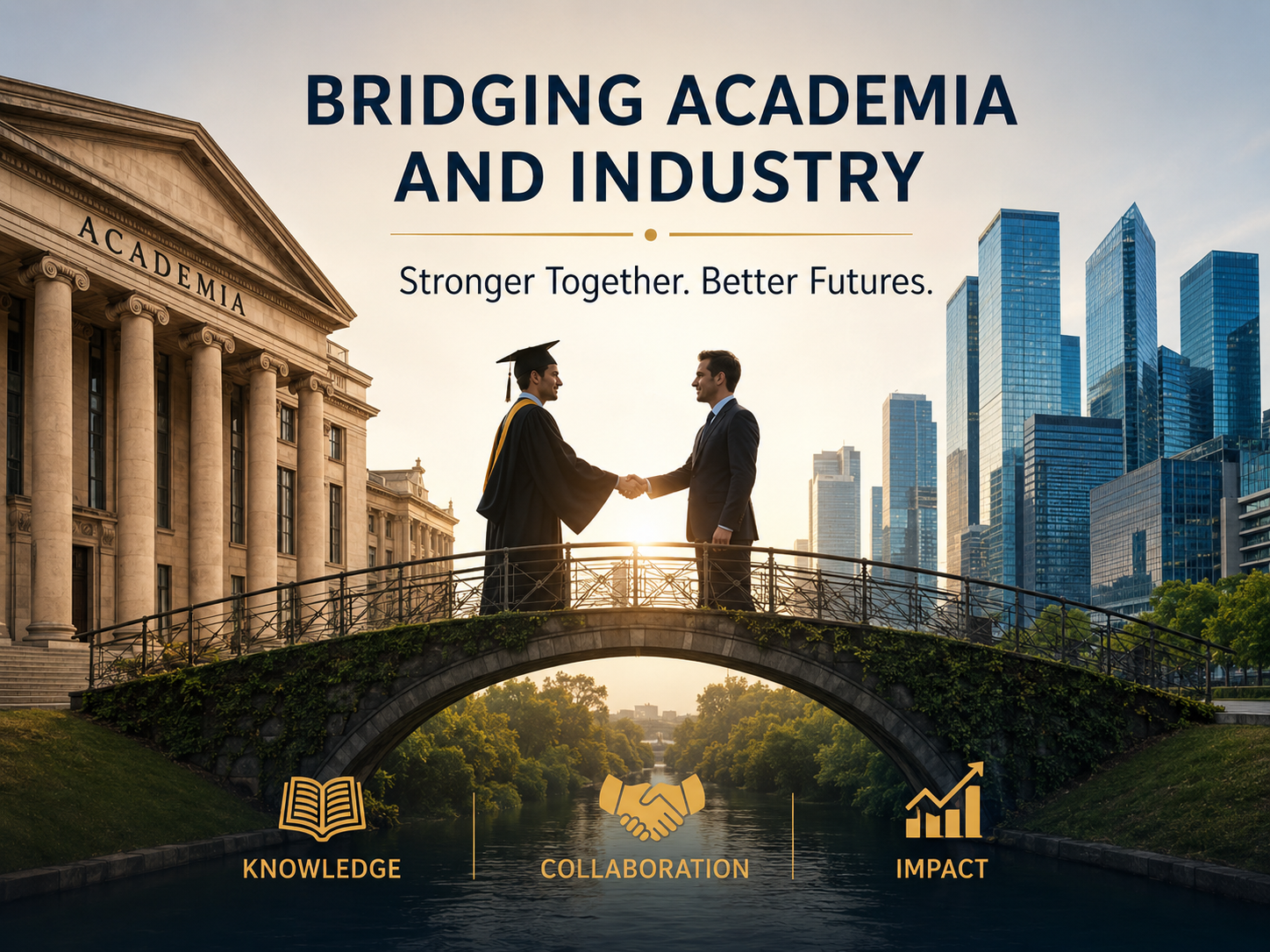
Bridging the Gap Between Academia and Industry in Tourism, Hospitality, and Professional Education
A Question Worth Asking
This is a sensitive question.
Not because universities intentionally reject industry professionals, but because it challenges a long-standing debate that exists in higher education across the world:
Who is better positioned to prepare students for the future—career academics or experienced industry practitioners?
The answer, of course, is neither.
The strongest educational systems combine both.
Yet, in many countries, including Sri Lanka, there remains a noticeable disconnect between academia and industry. While universities frequently emphasize employability, innovation, entrepreneurship, and industry engagement, many highly experienced professionals struggle to gain opportunities as visiting lecturers, guest speakers, curriculum advisors, or adjunct faculty members.
This observation raises an important discussion:
Are universities unintentionally creating barriers that prevent students from learning directly from those who have spent decades leading businesses, managing crises, launching ventures, and operating in global markets?
This article explores that question through an evidence-based and balanced lens.
The Global Reality: Industry Engagement Is Becoming Essential
Higher education is changing rapidly.
According to international labour market studies, approximately 65% of students entering universities today are expected to work in jobs that either do not yet exist or will significantly evolve during their careers.
Simultaneously:
- Employers increasingly prioritize practical skills alongside academic qualifications.
- Graduate employability has become a major ranking indicator for universities.
- Experiential learning is gaining prominence.
- Industry certifications are becoming increasingly valuable.
- Entrepreneurship is being integrated into degree programmes worldwide.
As a result, leading universities globally have increased their reliance on industry practitioners.
Many institutions now actively recruit:
- Former CEOs
- Entrepreneurs
- Industry consultants
- Technology specialists
- Hotel executives
- Tourism strategists
- Healthcare professionals
- Aviation experts
- Financial practitioners
The reason is simple.
Students benefit when theory and practice meet.
The Tourism and Hospitality Challenge
Few industries illustrate this challenge better than tourism and hospitality.
Tourism is one of the world’s largest industries, contributing approximately 10% of global GDP and supporting hundreds of millions of jobs.
However, tourism education often faces criticism from employers who believe graduates possess strong theoretical knowledge but limited operational understanding.
Hotel operations cannot be fully understood from textbooks.
Neither can:
- Revenue management
- Destination marketing
- Crisis management
- Airline partnerships
- Digital distribution
- Investor relations
- Hotel development
- Tourism entrepreneurship
Students frequently learn these concepts best from individuals who have implemented them in real-world environments.
This is particularly important in tourism because the industry evolves faster than many academic curricula.
Case Study 1: Switzerland’s Hospitality Education Model
Switzerland is widely regarded as one of the global leaders in hospitality education.
A key reason is the close integration between academia and industry.
Many hospitality schools employ experienced hotel executives, consultants, and operators as visiting lecturers.
Students are exposed to:
- Real business challenges
- Live case studies
- Industry simulations
- Operational decision-making
The result is graduates who are often considered highly employable internationally.
Case Study 2: Cornell University’s Industry Engagement Approach
One of the world’s most respected hospitality schools has long recognized the importance of practitioner involvement.
Industry leaders regularly contribute through:
- Guest lectures
- Executive education
- Advisory boards
- Research partnerships
The institution benefits from current market insights while students gain exposure to contemporary business realities.
Case Study 3: Singapore’s Applied Education Success
Singapore transformed itself into a global education and tourism hub partly through close collaboration between educational institutions and industry.
Industry professionals frequently participate in:
- Curriculum development
- Internship supervision
- Applied research
- Skills-based teaching
This alignment helps graduates transition more effectively into employment.
Case Study 4: Germany’s Dual Education System
Germany’s dual education model combines classroom learning with practical workplace exposure.
Students often learn directly from experienced practitioners.
The model consistently achieves strong graduate employment outcomes and is widely studied internationally.
Case Study 5: Australia’s Industry Advisory Framework
Many Australian universities maintain active industry advisory committees.
These committees help ensure programmes remain relevant to changing market conditions.
Industry professionals contribute practical perspectives that complement academic research.
Case Study 6: The United Kingdom’s Professional Practice Model
Numerous UK institutions recruit adjunct lecturers from industry.
Professionals continue working in their sectors while teaching part-time.
Students benefit from current market knowledge and active professional networks.
Case Study 7: The Entrepreneur-in-Residence Model
Increasing numbers of universities worldwide now appoint Entrepreneurs-in-Residence.
These individuals may not possess traditional academic careers but contribute substantial practical expertise.
Their role is to expose students to innovation, leadership, and business realities.
Why Some Universities May Hesitate
The issue is rarely about fear.
More often, it involves institutional challenges.
1. Academic Regulations
Universities must comply with accreditation requirements.
These often emphasize academic credentials, publications, and research outputs.
As a result, experienced professionals without extensive publication records may face barriers.
2. Quality Assurance Concerns
Institutions need consistency in teaching standards.
Not every successful executive is automatically an effective educator.
Universities therefore apply selection criteria designed to protect educational quality.
3. Cultural Differences
Academia and industry frequently operate differently.
Academics prioritize research, methodology, and theory.
Industry leaders prioritize results, execution, and commercial outcomes.
Bringing these cultures together requires mutual respect.
4. Internal Competition
Human nature cannot be ignored.
In every sector—not only universities—individuals may sometimes feel uncomfortable when exceptionally accomplished professionals enter their environment.
This phenomenon is not unique to academia.
It exists in corporations, government institutions, and non-profit organizations alike.
5. Budget Limitations
Many universities operate under financial constraints.
Attracting highly experienced international professionals may require compensation structures that institutions cannot easily support.
What Students Actually Need
The debate should not focus on academics versus practitioners.
Students need both.
Academics provide:
- Theory
- Research
- Critical thinking
- Scientific methodology
Industry experts provide:
- Practical experience
- Real-world decision making
- Leadership insights
- Current market knowledge
The most successful educational systems combine these strengths.
The Entrepreneur’s Perspective
Having worked across seven countries, held senior leadership positions, and later transitioned into entrepreneurship, I have personally observed the immense value of combining theory with practice.
Students are not merely seeking information.
Information is available everywhere.
Students seek insight.
They seek context.
They seek lessons learned from real decisions, real successes, and real failures.
An experienced practitioner can often provide perspectives that cannot be fully captured in textbooks.
Likewise, academics contribute frameworks that help students understand why those experiences matter.
The future belongs to institutions that embrace both.
A Better Way Forward
Universities could strengthen industry engagement through:
- Expanded visiting lecturer programmes
- Industry advisory councils
- Executive-in-residence appointments
- Joint research initiatives
- Guest lecture series
- Entrepreneurship mentoring
- Curriculum co-development
- Applied industry projects
These approaches create value for students, universities, and employers alike.
Most importantly, they help bridge the gap between education and employment.
Final Thoughts
The question should not be:
“Are universities afraid of industry experts?”
The more important question is:
“How can universities and industry experts work together to create better outcomes for students?”
The institutions that successfully answer this question will likely produce graduates who are more employable, more innovative, and better prepared for the realities of an increasingly complex global economy.
Education and industry are not competitors.
They are partners.
And when those partnerships thrive, students ultimately become the biggest beneficiaries.
Disclaimer
This article has been authored and published in good faith by Dr. Dharshana Weerakoon, DBA (USA), based on publicly available higher education trends, international educational practices, professional observations, and extensive industry experience across multiple countries. The article is intended solely for educational, professional discussion, public awareness, and constructive dialogue regarding academia-industry collaboration and student employability.
The views expressed are personal, analytical, and opinion-based. They do not target, criticize, or refer to any specific university, educational institution, academic professional, organization, or individual. Any similarities to actual institutions or situations are purely coincidental.
This article does not constitute legal, educational, employment, financial, or policy advice. Readers are encouraged to undertake independent research and professional consultation where appropriate. The author accepts no responsibility for any interpretation, adaptation, or use of the contents beyond their intended educational purpose.
This publication is prepared with due regard for applicable laws, ethical standards, intellectual property rights, professional conduct principles, and non-discriminatory public discourse.
© Dr. Dharshana Weerakoon, DBA (USA). All Rights Reserved.
Further Reading: https://www.linkedin.com/newsletters/outside-of-education-7046073343568977920/
Further Reading: https://dharshanaweerakoon.com/sri-lankas-university-degree-revolution/