Sri Lanka Tourism Needs More Than Visitors: Why Global Partnerships and Smarter Destination Management Matter
The next chapter of Sri Lankan tourism
Tourism is not simply about bringing visitors into a country. It is about building trust, creating economic value, supporting local businesses, and giving international travellers reasons to return.
Sri Lanka has a compelling proposition: beaches, wildlife, ancient heritage, tea-country landscapes, Ayurveda, spirituality, cuisine, and warm hospitality. However, these attractions alone do not guarantee commercial success. The real challenge is to connect them with the right international markets through reliable partnerships and professionally managed travel experiences.
According to Sri Lankan government figures, the country welcomed approximately 2.36 million international tourists in 2025, generating around US$3.2 billion in tourism revenue. Meanwhile, UN Tourism estimated that international tourist arrivals worldwide reached approximately 1.52 billion in 2025.
These figures demonstrate the scale of the opportunity. Nevertheless, the next phase of growth should focus not only on visitor numbers, but also on service quality, visitor satisfaction, regional economic benefits, and long-term value.
This is where professional destination management and international business partnerships become increasingly important.
Introducing International Hospitality Ventures
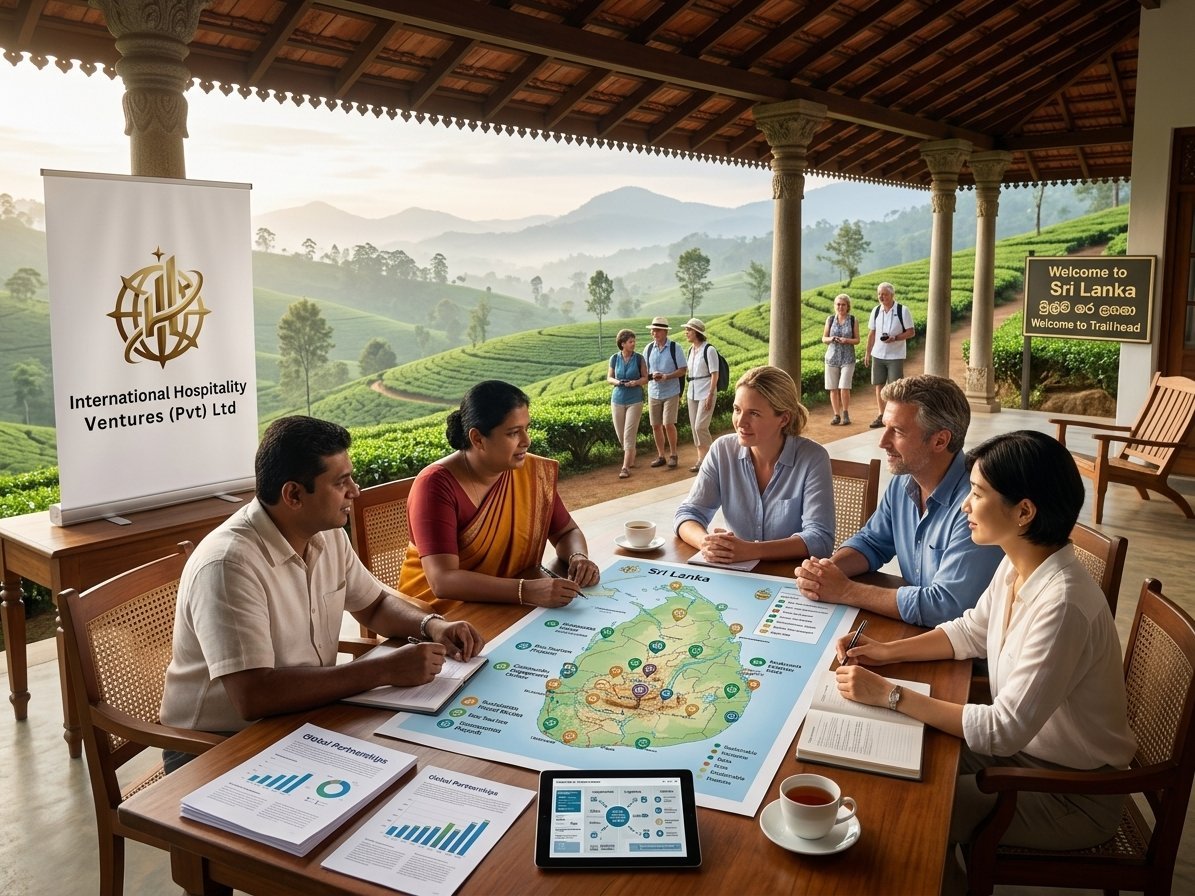
International Hospitality Ventures (Private) Limited (IHV) is a Sri Lankan tourism and hospitality business built around connecting international travel partners with local tourism services and experiences.
Its business approach brings together overseas tour operators, travel agencies, accommodation providers, transport services, guides, and specialist experience providers to support travel arrangements in Sri Lanka.
Rather than viewing each holiday as an isolated booking, a destination management company in Sri Lanka can coordinate multiple services into one coherent experience. For overseas travel businesses, this creates a local point of coordination. For Sri Lankan suppliers, it creates opportunities to reach new markets through professional partnerships.
IHV’s strategic direction is to strengthen these connections through business-to-business collaboration, tailor-made travel arrangements, hospitality partnerships, and opportunities across different tourism segments.
The objective is straightforward: connect international demand with Sri Lanka’s local expertise, while building relationships that can grow over time.
Six international lessons for Sri Lanka
The following examples illustrate established tourism approaches and the lessons Sri Lanka can draw from them. They are industry examples, not claims of projects delivered by IHV.
1. Singapore: Make the entire journey work
Singapore demonstrates the value of coordinating transport, accommodation, attractions, events, and visitor information. The lesson is that convenience contributes to destination competitiveness.
For Sri Lanka, a destination management company in Sri Lanka can help overseas partners coordinate airport arrivals, hotel transfers, sightseeing, and special requests through a single operational plan.
2. Japan: Turn local identity into a travel experience
Japan’s regional destinations show how food, crafts, landscapes, heritage, and seasonal experiences can distinguish one location from another.
Sri Lanka can apply the same principle by developing carefully designed journeys around tea, village life, architecture, wildlife, Ayurveda, and local culinary traditions. The aim should be to create meaningful experiences while respecting local communities.
3. Costa Rica: Make conservation part of the tourism proposition
Costa Rica is widely recognised for nature-based tourism and conservation-oriented travel. Its experience highlights the importance of treating environmental protection as part of destination management.
In Sri Lanka, wildlife experiences, forest visits, and nature-based itineraries should prioritise responsible operators, appropriate visitor behaviour, and respect for sensitive habitats.
4. Thailand: Connect wellness with hospitality
Thailand’s established wellness tourism market illustrates the potential of combining accommodation, traditional wellness practices, relaxation, and hospitality services.
Sri Lanka has its own distinctive opportunities in Ayurveda, yoga, meditation, and wellness retreats. Responsible development requires transparent descriptions of services, qualified practitioners where relevant, and realistic claims about health benefits.
5. New Zealand: Let communities help tell the story
New Zealand offers examples of tourism experiences shaped by local culture and Indigenous heritage. One important lesson is that cultural identity should be presented with respect, consent, and meaningful community participation.
Sri Lanka’s craft traditions, village experiences, regional food, and cultural heritage can similarly support locally grounded tourism when communities participate fairly in the benefits.
6. Dubai: Develop business travel alongside leisure tourism
Dubai illustrates how events, exhibitions, corporate travel, hospitality, and international connectivity can complement leisure tourism.
Sri Lanka can explore opportunities in meetings, incentives, conferences and exhibitions (MICE), corporate retreats, destination weddings, and specialist business travel. These segments require dependable suppliers, careful planning, and professional coordination.
Across all six examples, one principle remains consistent: tourism becomes more competitive when the destination experience is coordinated, differentiated, and delivered reliably.
What international partners should expect
For an overseas travel agency or tour operator, choosing a destination management company in Sri Lanka involves more than comparing prices.
Partners need clear quotations, defined responsibilities, dependable suppliers, transparent commercial terms, timely communication, and practical arrangements for handling unexpected changes.
IHV aims to build its B2B relationships around these fundamentals. Depending on the agreed scope, travel arrangements can bring together accommodation, ground transportation, guides, airport assistance, sightseeing, and tailored experiences.
Equally important, every partnership should be based on realistic commitments. Availability, supplier conditions, payment arrangements, cancellation terms, and service inclusions should be confirmed before a booking is finalised.
Trust is not created by a brochure. It is earned through consistent delivery.
A wider opportunity for Sri Lankan businesses
Tourism creates value beyond hotels and airlines. It can support transport operators, guides, restaurants, farmers, artisans, wellness providers, small accommodation businesses, and regional entrepreneurs.
Consequently, a well-managed destination management company in Sri Lanka can contribute to a more connected tourism supply chain by linking international demand with capable local providers.
However, sustainable growth requires responsible sourcing, fair commercial relationships, environmental awareness, respect for cultural heritage, and service standards that protect both visitors and businesses.
The opportunity is not simply to sell more holidays. It is to create a tourism economy in which more Sri Lankan businesses can participate and build lasting relationships with international customers.
My perspective as a tourism and hospitality strategist
Having worked across international hospitality and tourism environments, I believe the industry must look beyond short-term arrivals and promotional campaigns.
We should ask more demanding questions. Are visitors receiving the experience they were promised? Are local businesses benefiting? Are international partners confident enough to return? Are tourism products differentiated from those offered by competing destinations? And are we building systems that can deliver consistently as demand grows?
These questions matter to individual companies and to Sri Lanka’s wider tourism future.
At International Hospitality Ventures, our direction is to strengthen international partnerships, connect overseas travel businesses with Sri Lankan capabilities, and support professionally coordinated travel experiences.
The ambition is long term. Credibility must come first, followed by dependable service, responsible growth, and relationships that create value for both sides.
Sri Lanka does not need to compete on price alone. It can compete through authenticity, expertise, coordination, and the quality of the experience it delivers.
That is the opportunity I believe we should pursue together.
Dr. Dharshana Weerakoon, DBA (USA), is a Global Tourism & Hospitality Strategist, entrepreneur, Chairman of Global Cooperation (Private) Limited, and Managing Director of International Hospitality Ventures (Private) Limited.
Disclaimer
This article has been prepared in good faith by Dr. Dharshana Weerakoon, DBA (USA), for professional discussion, education, and public awareness. It draws on publicly reported tourism statistics, general international industry examples, and the author’s professional experience and analysis. Figures are approximate and relate to the stated reporting periods. International examples are illustrative and are not representations of projects undertaken by IHV. Company services and arrangements remain subject to confirmation, applicable regulatory requirements, and individual contractual terms.
The views expressed are the author’s own and do not constitute legal, financial, investment, or medical advice. No guarantee of commercial results is made. Care has been taken to present the material responsibly; readers should independently verify information before making business decisions.
© Dr. Dharshana Weerakoon, DBA (USA). All rights reserved.
Further Reading: https://dharshanaweerakoon.com/spiritual-tourism-in-sri-lanka/
Further Reading: https://www.linkedin.com/newsletters/outside-of-education-7046073343568977920/