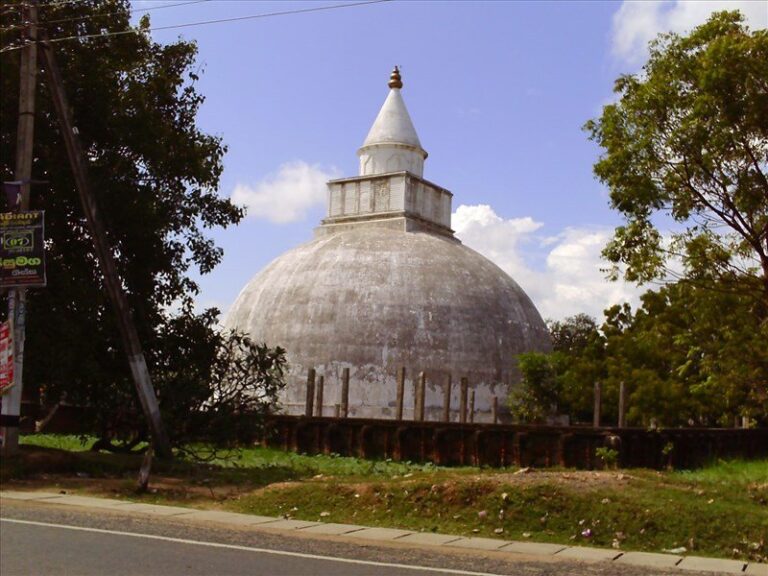
Sri Lanka and the Future of Spiritual Tourism: Why the World Should Look Beyond Beaches
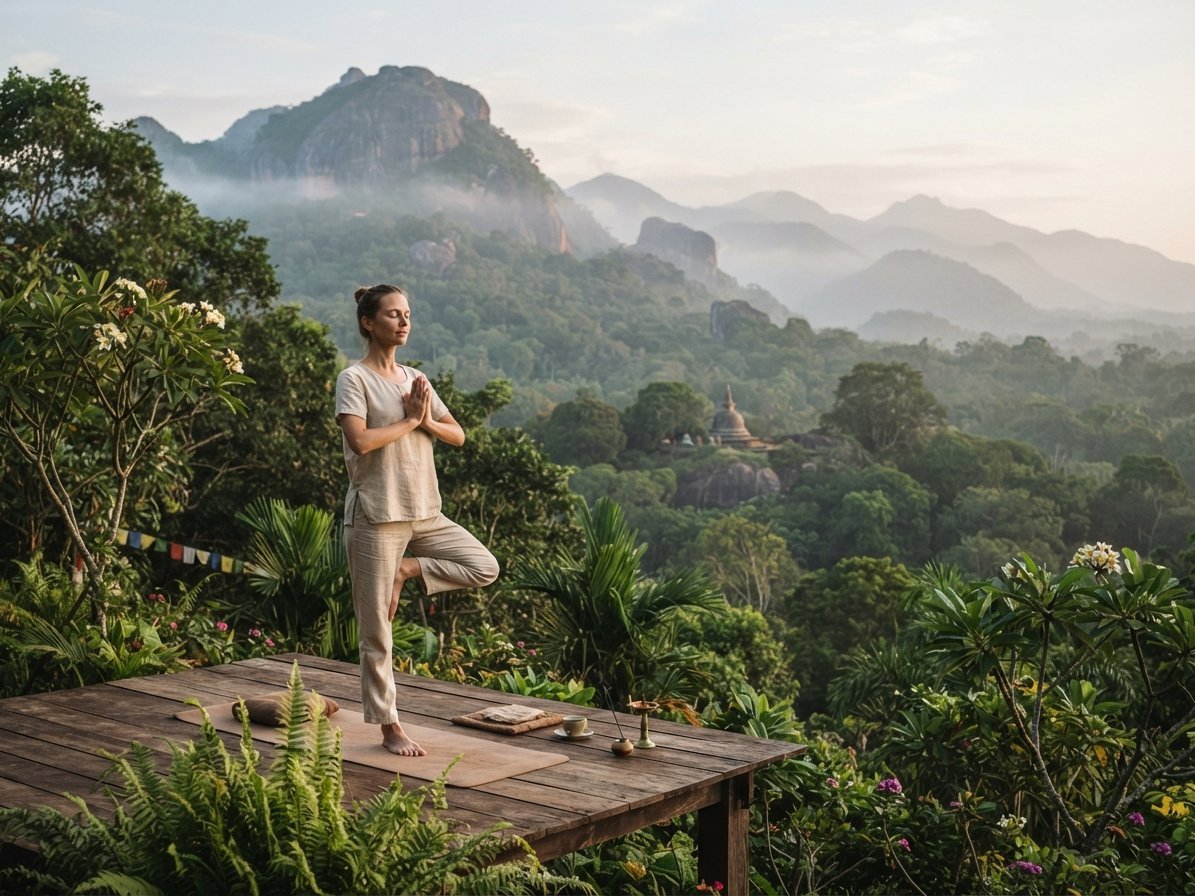
Yoga. Meditation. Ayurveda. Spirituality. Sacred heritage. Nature. Silence.
For many years, Sri Lanka has promoted itself internationally through beaches, wildlife, tea, heritage and adventure.
All of these remain important.
But I believe Sri Lanka has another opportunity that deserves far greater international attention:
Spiritual Tourism.
And I do not mean simply taking tourists from one temple to another.
I mean creating meaningful journeys that connect the body, mind, culture, nature and inner wellbeing — while respecting religion, local communities, professional standards and the dignity of the traveller.
This is where Sri Lanka has an extraordinary opportunity.
And this is also where I believe International Hospitality Ventures (IHV) can play a meaningful role.
Why spiritual tourism matters now
The global wellness economy has reached approximately US$6.8 trillion, according to the Global Wellness Institute’s latest 2024 measurement.
More importantly, wellness tourism generated approximately US$894 billion in expenditure in 2024, with more than 1.2 billion wellness trips recorded globally.
Wellness travellers are no longer simply looking for a massage beside a swimming pool.
They are increasingly looking for:
- yoga
- meditation
- mindfulness
- nature
- traditional healing systems
- sleep and stress reduction
- cultural connection
- spiritual experiences
- personal reflection
- healthier lifestyles
- longer and more meaningful stays
This creates a major opportunity for destinations such as Sri Lanka.
Sri Lanka does not need to manufacture a spiritual identity.
Much of it already exists.
Why Sri Lanka?
Sri Lanka is geographically small, but spiritually and culturally diverse.
Within one relatively compact island, a traveller can encounter:
Buddhist heritage.
Hindu traditions.
Christian heritage.
Islamic heritage.
Ayurveda.
Meditation traditions.
Yoga.
Sacred mountains.
Ancient cities.
Temples.
Forests.
Rivers.
Oceans.
Tea country.
Traditional villages.
This combination is commercially important.
A traveller does not necessarily need to spend two weeks travelling between several countries to experience culture, nature and wellness.
Sri Lanka can potentially provide a multi-dimensional spiritual journey within one destination.
That is one of our competitive advantages.
Why Indian travellers should consider Sri Lanka for spiritual tourism
India is naturally one of the most important markets for Sri Lankan spiritual tourism.
There are deep historical, cultural and religious connections between India and Sri Lanka.
Sri Lanka also has something particularly attractive for Indian travellers:
familiarity without being identical.
The traveller can experience Buddhist, Hindu and Ramayana-related heritage while simultaneously discovering another culture, another landscape and another way of experiencing spirituality.
India is already Sri Lanka’s largest tourism source market.
In 2025, Sri Lanka welcomed more than 531,000 Indian visitors, making India the country’s largest source market.
By the end of August 2026, India had again remained Sri Lanka’s leading source market, with more than 385,000 Indian arrivals.
The opportunity therefore is not simply to attract more Indian tourists.
The opportunity is to increase the value, length and purpose of their visit.
Imagine an Indian traveller arriving in Sri Lanka for a five-day beach holiday.
Now imagine another traveller arriving for:
Yoga + meditation + Ayurveda + Buddhist heritage + Ramayana-related locations + nature + spiritual reflection.
The second traveller may stay longer.
The second traveller may travel to several regions.
The second traveller may consume more specialised services.
And, importantly, the second traveller may return with a completely different emotional connection to Sri Lanka.
That is the opportunity.
Why Europe?
The European opportunity is different.
A European traveller may not necessarily approach Sri Lanka from the same religious perspective as an Indian traveller.
Instead, the motivation may be:
“I need to slow down.”
“I need to disconnect.”
“I need to recover from stress.”
“I want to understand meditation.”
“I want to spend time in nature.”
“I want to experience Ayurveda.”
“I want something more meaningful than a conventional holiday.”
This is why spiritual tourism should not be marketed only as religious tourism.
The modern international market is much broader.
A European visitor can participate in a meditation retreat without becoming Buddhist.
A traveller can practise yoga without changing religion.
A guest can experience Ayurveda without making medical claims about it.
A visitor can visit a sacred place without being a follower of that faith.
Respect is the bridge.
Sri Lanka should welcome people of different beliefs without attempting to convert them.
And what about the rest of the world?
The opportunity extends far beyond India and Europe.
The Middle East, North America, Australia, Japan, South Korea, Southeast Asia and other international markets are increasingly relevant to wellness and meaningful travel.
The global wellness market is growing because modern life itself is changing.
People are working longer.
Cities are becoming more stressful.
Digital life is becoming more intense.
People are searching for sleep, balance, nature, human connection and personal wellbeing.
Therefore, spiritual tourism should not be positioned as a niche product for a small religious audience.
It can become a global tourism category.
Yoga is not simply an activity
Yoga tourism can be much more than a morning yoga class at a hotel.
Sri Lanka can develop structured programmes combining:
Yoga + meditation + Ayurveda + nutrition + nature + culture + responsible travel.
For example:
7-Day Inner Balance Journey
Day 1 – Arrival and orientation
Day 2 – Sunrise yoga and mindfulness
Day 3 – Ayurveda wellness experience
Day 4 – Meditation and cultural heritage
Day 5 – Nature immersion
Day 6 – Yoga, reflection and traditional cuisine
Day 7 – Closing session and departure
The product becomes a journey rather than a collection of activities.
That distinction matters.
Meditation may be one of Sri Lanka’s greatest opportunities
Sri Lanka has a particularly strong foundation for meditation tourism because of its Buddhist heritage and long association with contemplative traditions.
But meditation tourism must be handled carefully.
It should not become a commercial imitation of spirituality.
The experience should preserve:
silence, respect, authenticity, qualified guidance and cultural sensitivity.
A traveller may arrive in Sri Lanka looking for a quiet place to think.
Sometimes the most valuable tourism product is not entertainment.
It is silence.
Ayurveda: opportunity, but responsibility first
Sri Lanka has a long tradition of Ayurveda and indigenous medicine.
The country also has a formal regulatory framework surrounding traditional medicine.
This provides an important foundation for wellness tourism.
However, there is a major difference between:
Ayurveda as a regulated traditional medical/wellness practice
and
unverified health claims made for marketing purposes.
As tourism professionals, we must understand this distinction.
IHV should therefore work with appropriately qualified and legally recognised practitioners and facilities.
We should not promise cures.
We should not replace modern medical care.
We should not make exaggerated health claims.
Instead, we can create responsible wellness journeys in which Ayurveda, yoga, meditation, nutrition, nature and hospitality are professionally coordinated.
That is a much more credible international proposition.
Six Sri Lankan spiritual tourism opportunities
1. Kandy – Sacred Heritage and Mindfulness
Kandy offers one of Sri Lanka’s strongest combinations of spirituality, culture, history and nature.
The Temple of the Sacred Tooth Relic provides a powerful cultural and religious context.
The opportunity is not simply sightseeing.
A carefully designed programme could combine:
heritage + respectful temple visit + meditation + Kandyan culture + nature + wellness.
2. Anuradhapura – Ancient Spirituality
Anuradhapura offers another dimension.
Ancient Buddhist heritage, sacred locations, archaeological landscapes and the natural environment create an extraordinary setting for reflective tourism.
This could support longer-stay spiritual programmes rather than a few hours of sightseeing.
3. Sri Pada – The Spiritual Journey
Sri Pada is not simply a mountain.
For many travellers, the journey itself is meaningful.
The climb, the sunrise, the landscape, the religious traditions and the personal challenge create a powerful tourism experience.
It also demonstrates an important principle:
Spiritual tourism is often about the journey, not only the destination.
4. Kataragama – Multi-Faith Spirituality
Kataragama demonstrates Sri Lanka’s multi-faith character.
Different communities and traditions connect with the destination.
This creates an opportunity to demonstrate Sri Lanka’s ability to host spiritual tourism without reducing spirituality to a single religious identity.
5. Ramayana-Related Tourism
For the Indian market in particular, Ramayana-related locations can create a powerful cultural tourism proposition.
However, such programmes should clearly distinguish between:
religious tradition, cultural interpretation, historical evidence and belief.
That distinction is essential.
The objective should not be to turn mythology into fabricated history.
The objective should be to allow travellers to experience places that have significance within their cultural and religious traditions.
That is both more respectful and more sustainable.
6. Southern and Hill-Country Wellness
Sri Lanka’s beaches and mountains create another opportunity.
Imagine combining:
Ayurveda + yoga + meditation + organic food + tea country + forest + ocean + responsible hospitality.
This is where Sri Lanka can compete internationally without attempting to copy India, Thailand, Bali or other established wellness destinations.
We do not have to become another Bali.
We should become better at being Sri Lanka.
So, where does IHV fit?
This is the question I am particularly interested in.
International Hospitality Ventures is not being positioned simply as another conventional travel agency.
The opportunity is to develop an integrated destination management approach.
A spiritual traveller does not only need a hotel.
They may need:
- airport assistance
- transportation
- accommodation
- professional guides
- yoga instructors
- meditation facilitators
- qualified Ayurveda practitioners
- cultural interpreters
- destination experiences
- carefully designed itineraries
- dietary arrangements
- emergency support
- local coordination
- international travel-agent partnerships
This is precisely where a professional DMC can create value.
IHV can potentially connect the different components into one coordinated journey.
Why I believe IHV has an opportunity
My professional career has taken me across tourism, hospitality, finance, technology and education in several countries.
I have worked with hotels, tourism operations, international teams and travellers from different cultural backgrounds.
Therefore, my interest in spiritual tourism is not simply an academic subject.
I see it as a destination-management opportunity.
IHV can work with hotels, wellness centres, Ayurveda establishments, yoga professionals, meditation centres, guides, transport providers and international travel partners.
The objective is simple:
The traveller should experience one Sri Lanka — not ten disconnected suppliers.
That is the DMC’s role.
The IHV Spiritual Tourism Model
I see the model as five interconnected layers:
1. SPIRIT
Temples, sacred locations, meditation, reflection and cultural traditions.
2. WELLNESS
Yoga, Ayurveda, nutrition, sleep, relaxation and nature.
3. EXPERIENCE
Local communities, cuisine, heritage, tea, wildlife, villages and landscapes.
4. HOSPITALITY
Hotels, villas, transportation, guides, airport services and guest support.
5. INTERNATIONAL DISTRIBUTION
Travel agents, tour operators, wellness companies, corporate partners and specialised international networks.
Put these five together and spiritual tourism becomes more than a package.
It becomes an integrated destination experience.
What Sri Lanka must NOT do
There is also a warning.
We should not commercialise spirituality to the point where authenticity disappears.
We should not make medical promises that cannot be substantiated.
We should not exploit religious traditions.
We should not encourage disrespectful behaviour at sacred sites.
We should not turn every temple into a tourist attraction.
We should not allow unqualified people to present themselves as medical or spiritual authorities.
And we should not destroy the very authenticity that international visitors are coming to experience.
Spiritual tourism must create value without destroying spirituality.
The bigger opportunity
Sri Lanka recorded more than 2.36 million tourist arrivals in 2025.
By the end of August 2026, arrivals had already exceeded 1.53 million.
The next question should therefore not simply be:
“How many tourists can Sri Lanka attract?”
I believe we should also ask:
“What kind of tourists do we want to attract?”
A visitor who comes for three nights, spends most of the time at a resort and leaves is valuable.
But a visitor who stays for two weeks, travels through several provinces, uses local services, participates in wellness programmes, visits cultural sites and returns home with a deeper connection to Sri Lanka can create a different kind of economic and social value.
That is why spiritual tourism deserves serious strategic attention.
My vision
I do not believe Sri Lanka should try to become the world’s largest spiritual tourism destination.
I believe Sri Lanka should aim to become one of the most respected.
That requires quality rather than quantity.
Authenticity rather than exaggeration.
Professionalism rather than improvisation.
Respect rather than commercialisation.
And above all:
Sri Lankan identity rather than copying another destination.
India has its extraordinary spiritual heritage.
Thailand has its wellness ecosystem.
Bali has built a powerful global wellness image.
Japan has its own philosophy of mindfulness and nature.
Europe has an expanding market for retreats, wellbeing and slow travel.
Sri Lanka has the opportunity to build its own model.
One island. Many journeys.
For an Indian traveller, Sri Lanka can be a journey of cultural and spiritual connection.
For a European traveller, it can be a journey of reflection and wellbeing.
For an Asian traveller, it can combine heritage, nature and wellness.
For an executive, it can provide space to slow down.
For a family, it can introduce children to culture, nature and values.
For a long-stay traveller, it can become a temporary lifestyle rather than simply a holiday.
And for the international tourism industry, Sri Lanka can become something more than a beach destination.
It can become a place where people travel not only to see the world — but also to reconnect with themselves.
That, in my view, is the deeper opportunity behind spiritual tourism in Sri Lanka.
And that is one of the tourism segments I believe deserves serious strategic attention from Sri Lankan tourism stakeholders, investors, hotels, DMCs, wellness professionals and international travel partners.
The future traveller may not always ask: “What can I see?”
Increasingly, they may ask:
“How will I feel when I return home?”
Sri Lanka has an opportunity to answer that question.
A personal note
I am writing this not only as a tourism professional, but as someone who believes Sri Lanka has considerably more tourism potential than we sometimes recognise.
My vision through International Hospitality Ventures is to connect Sri Lankan tourism resources with international markets through professionally managed, responsible and meaningful travel experiences.
I believe spiritual tourism in Sri Lanka can become one part of that larger journey.
Not by selling spirituality.
But by respectfully facilitating meaningful experiences around spirituality, wellness, culture and nature.
Disclaimer
This article has been authored and published in good faith by Dr. Dharshana Weerakoon, DBA (USA), based on publicly available tourism, wellness and traditional-medicine information, professional experience in tourism and hospitality across multiple international markets, and the author’s personal analysis of emerging destination-management opportunities.
The article is intended solely for educational, professional, journalistic and public-awareness purposes. It is not medical, religious, legal, financial or investment advice.
References to Ayurveda, yoga, meditation, wellness and traditional practices are intended to describe tourism and cultural experiences and should not be interpreted as medical claims, diagnosis, treatment recommendations or guarantees of health outcomes. Any medical or traditional-medicine service should be provided only by appropriately qualified and legally authorised practitioners and facilities.
Religious, cultural, historical and traditional references are presented respectfully and should not be interpreted as assertions that matters of faith or mythology constitute independently verified historical fact.
The proposed tourism concepts are subject to applicable Sri Lankan laws, regulations, licensing requirements, professional standards, consumer-protection principles, privacy requirements and the rules applicable to tourism, hospitality, traditional medicine and religious/cultural sites.
The author accepts no responsibility for any misinterpretation, adaptation or misuse of the article. Views expressed are personal and analytical and do not necessarily represent the official position of any government institution, tourism authority, religious organisation, academic institution, business partner or company referred to in the article.
This article is an original professional opinion piece based on the author’s own analysis and experience. It has not been copied from another published article.
© Dr. Dharshana Weerakoon, DBA (USA). All rights reserved.
Further Reading: https://dharshanaweerakoon.com/ramayana-trail-sri-lanka/
Further Reading: https://www.linkedin.com/newsletters/outside-of-education-7046073343568977920/