Ghost Wrecks and Cold War Secrets: Why Trincomalee Can Become Asia’s Premier Maritime Heritage Diving Destination
Transforming Sri Lanka’s Naval History into a High-Yield Blue Economy Tourism Product
Introduction
For decades, Sri Lanka has promoted its pristine beaches, wildlife, ancient kingdoms, tea plantations, and cultural heritage to the international tourism market. While these attractions have undoubtedly contributed to the country’s tourism success, there remains a significant untapped opportunity beneath the surface of one of the world’s finest natural harbours—Trincomalee.
Most visitors associate diving in Sri Lanka with colourful coral reefs, tropical fish, turtles, and seasonal whale watching. These experiences are undoubtedly attractive, yet they are widely available across many tropical destinations throughout Asia and the Indian Ocean.
What truly differentiates Trincomalee is something far rarer.
Hidden beneath its waters lies one of the most historically significant underwater landscapes in the Indian Ocean—a remarkable collection of wartime shipwrecks, naval relics, military infrastructure, and stories connected to two defining periods of modern history: the Second World War and the Cold War.
Rather than competing solely in the recreational diving market, Sri Lanka has an opportunity to position Trincomalee as a globally recognised maritime heritage and technical diving destination. Such a strategy would attract a niche but exceptionally high-spending segment of international travellers who seek authentic exploration, historical discovery, underwater archaeology, and technical diving experiences rather than conventional beach holidays.
This is not merely about diving.
It is about creating an entirely new tourism economy based on maritime heritage, education, conservation, scientific research, and premium adventure travel.
The future of Sri Lanka’s tourism should not always be built by constructing new hotels. Sometimes, our greatest assets already exist—they simply require a different vision.
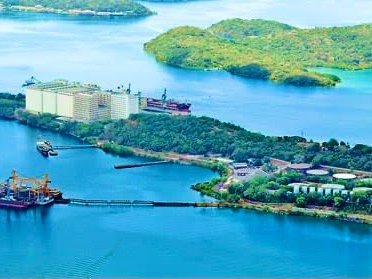
Trincomalee: One of the World’s Greatest Natural Harbours
Few locations possess the strategic importance of Trincomalee.
Its harbour extends over 1,600 hectares and is considered among the largest natural deep-water harbours in the world.
Its geographical position has attracted traders, explorers, colonial powers, and naval forces for centuries.
Successive Portuguese, Dutch, British, and Allied naval operations recognised Trincomalee as one of the safest deep-water anchorages in the Indian Ocean.
During the Second World War, thousands of Allied personnel were stationed in Trincomalee. Massive fuel storage facilities, naval docks, airfields, anti-submarine patrol bases, and logistics centres transformed the harbour into one of Britain’s most important Eastern Fleet bases.
Although many visible structures remain on land, a significant portion of this history now rests underwater.
These submerged relics represent an extraordinary tourism opportunity.
Beyond Coral Reefs
Globally, recreational reef diving has become increasingly competitive.
Thailand
Indonesia
Malaysia
Philippines
Maldives
Australia
Egypt
Belize
Mexico
all offer spectacular coral diving.
Competing solely on reefs places Sri Lanka in an increasingly crowded marketplace.
However, maritime heritage diving occupies an entirely different category.
This market focuses on:
• Naval history
• Wartime archaeology
• Technical diving
• Documentary production
• Scientific exploration
• Underwater photography
• Historical tourism
• Military enthusiasts
• Expedition cruises
• Academic research
These visitors travel specifically to experience authentic underwater history.
Unlike casual tourists, they typically spend considerably more per trip because technical diving requires specialised equipment, guides, certifications, vessels, insurance, accommodation, training, and longer stays.
The Global Growth of Technical Diving
The international diving industry is estimated to generate billions of US dollars annually.
Within this broader market, technical diving represents one of the fastest-growing premium sectors.
Technical divers often spend several times more than recreational divers because their trips involve:
multiple dives,
specialised gases,
advanced equipment,
professional dive planning,
decompression support,
chartered vessels,
higher insurance coverage,
and extended accommodation.
Many remain at destinations for one to three weeks instead of only several days.
Their spending benefits hotels, restaurants, transport providers, equipment suppliers, local guides, marine engineers, photographers, training centres, and conservation organisations.
Unlike mass tourism, this model focuses on higher revenue from fewer visitors, reducing environmental pressure while increasing economic returns.
This aligns perfectly with sustainable tourism principles.
Why Maritime Heritage Tourism Creates Greater Economic Value
Modern tourism is shifting away from simple sightseeing.
Travellers increasingly seek meaningful experiences.
Heritage tourism consistently ranks among the highest-spending tourism categories because visitors value authenticity.
Underwater heritage offers exactly that.
A diver exploring a genuine wartime wreck is not merely enjoying recreation.
They are participating in history.
This emotional connection significantly increases visitor satisfaction, repeat visitation, and international publicity.
Moreover, documentary filmmakers, universities, naval historians, museums, and scientific institutions become natural partners.
The economic value therefore extends well beyond tourism alone.
Case Study 1 – Chuuk Lagoon, Micronesia
During the Second World War, Chuuk Lagoon became one of Japan’s principal naval bases.
Following Operation Hailstone in 1944, dozens of Japanese warships and hundreds of aircraft sank beneath the lagoon.
Today, Chuuk is internationally recognised as one of the world’s greatest wreck-diving destinations.
Divers travel from Europe, North America, Australia, and Japan specifically to explore these underwater museums.
Despite its remote location, the destination commands premium prices because nowhere else offers a comparable concentration of authentic wartime wrecks.
The lesson for Sri Lanka is straightforward.
History itself becomes the attraction.
Case Study 2 – Scapa Flow, Scotland
Scapa Flow transformed former German naval wrecks into one of Britain’s leading technical diving destinations.
Rather than removing these vessels, authorities protected them through heritage legislation.
Today, guided expeditions attract experienced divers from across the world.
Hotels, charter operators, museums, restaurants, and local communities all benefit economically.
Heritage preservation became economic development.
Sri Lanka can achieve similar success through careful management rather than uncontrolled exploitation.
Case Study 3 – Bikini Atoll
Bikini Atoll combines wartime naval history with Cold War nuclear testing heritage.
Although access remains tightly controlled, it attracts elite technical divers seeking extraordinary underwater experiences unavailable elsewhere.
Limited visitor numbers actually increase exclusivity.
Premium pricing offsets low visitor volumes.
This demonstrates that tourism success is not always measured by arrivals alone.
Yield matters equally.
Case Study 4 – Malta
Malta successfully integrated underwater archaeology into its national tourism strategy.
Protected wrecks, interpretation centres, licensed dive operators, and strict conservation measures ensure long-term sustainability.
Today, maritime heritage complements the island’s cultural tourism rather than competing against it.
Sri Lanka could adopt a similar integrated approach.
Case Study 5 – Palau
Palau protects its underwater heritage through strong environmental legislation.
Historic wrecks coexist alongside marine conservation.
Divers willingly pay conservation fees because they understand the importance of preservation.
Tourism finances protection.
Protection strengthens tourism.
Both reinforce one another.
Case Study 6 – Coron Bay, Philippines
Coron Bay transformed Japanese wartime shipwrecks into one of Southeast Asia’s premier diving destinations.
Local businesses, hotels, restaurants, transport operators, photographers, instructors, and equipment suppliers all benefit from the specialised diving economy.
Instead of relying solely on beaches, Coron diversified through maritime heritage.
Sri Lanka possesses similar potential.
Case Study 7 – Pearl Harbor, Hawaii
Pearl Harbor demonstrates how military history can generate tourism while maintaining dignity and respect.
Visitors come not for entertainment but for education, remembrance, and appreciation of history.
Interpretation, storytelling, museums, memorials, and guided experiences significantly increase visitor engagement.
Trincomalee can adopt a comparable philosophy that honours history while supporting sustainable tourism development.
A Vision for Trincomalee
Imagine a visitor arriving in Trincomalee.
During one week they could:
Explore historic wreck sites.
Visit the famous oil tank farm.
Tour naval museums.
Experience Fort Frederick.
Observe dolphins and whales.
Visit Nilaveli and Pigeon Island.
Participate in maritime history lectures.
Enjoy Sri Lankan cuisine.
Meet local fishermen.
Attend underwater photography workshops.
Experience cultural performances.
Instead of a two-day beach holiday, visitors remain seven to ten days.
That single change dramatically increases tourism revenue without increasing visitor numbers proportionately.
Strategic Recommendations
Sri Lanka should consider developing a carefully managed Maritime Heritage Diving Master Plan incorporating conservation, scientific research, visitor safety, international partnerships, local community engagement, and environmental sustainability.
Any development should prioritise legal compliance, archaeological protection, national security considerations, and ecological preservation. Sensitive or protected sites should remain subject to all applicable permissions and restrictions, with public access determined only by the relevant Sri Lankan authorities.
By focusing on responsible management rather than mass exploitation, Trincomalee can build a reputation as a premium destination that protects history while creating economic opportunity.
Conclusion
Sri Lanka does not need to imitate every competing beach destination.
Its competitive advantage lies in combining extraordinary natural beauty with centuries of maritime history.
Trincomalee possesses a story unlike almost anywhere else in the Indian Ocean.
Its harbour witnessed colonial rivalry, global conflict, strategic naval operations, and decades of geopolitical significance.
Those stories remain beneath the sea.
If responsibly researched, protected, interpreted, and presented, they could form the foundation of one of Asia’s most distinctive maritime heritage tourism products.
Success will not depend on building more hotel rooms alone.
It will depend on creating experiences that cannot be replicated elsewhere.
History has already given Sri Lanka an extraordinary asset.
The opportunity now is to preserve it, interpret it responsibly, and allow the world to discover it.
Disclaimer
This article has been authored and published in good faith by Dr. Dharshana Weerakoon, DBA (USA), drawing upon publicly available information, historical literature, tourism and maritime heritage publications, conservation principles, industry observations, and extensive professional experience in international tourism and hospitality. The article is intended solely for educational, journalistic, strategic discussion, and public awareness purposes to encourage dialogue on sustainable maritime heritage tourism in Sri Lanka. It does not disclose restricted information, encourage unauthorised access to protected sites, or replace the advice of legal, archaeological, environmental, defence, maritime, or investment professionals. Any proposals discussed are conceptual and should be implemented only in accordance with the laws, regulations, heritage protection requirements, environmental safeguards, national security considerations, and relevant approvals applicable in Sri Lanka. The views expressed are entirely those of the author and should not be interpreted as official policy or professional legal, financial, archaeological, or investment advice. This article has been independently authored through the author’s professional expertise and analysis.
© Dr. Dharshana Weerakoon, DBA (USA). All Rights Reserved.
Further Reading: https://www.linkedin.com/newsletters/outside-of-education-7046073343568977920/
Further Reading: https://dharshanaweerakoon.com/maldives-resort-investment-challenges/