
Five-Star Hotels, Foreign Drinks: Why Is Sri Lanka Hiding Its Own Beverage Heritage?
By Dr. Dharshana Weerakoon, DBA (USA)
Global Tourism & Hospitality Strategist | Entrepreneur | Chairman – Global Cooperation Private Limited | Managing Director – International Hospitality Ventures Private Limited
The five-star question we need to ask
Walk into many of Sri Lanka’s star-class hotels, visit their bars and examine their beverage menus.
You will often find an impressive selection of international whisky, vodka, gin, rum, champagne and wine brands. These products have their place in international hospitality. However, there is a question worth asking.
Where is the same level of attention given to our own Sri Lankan beverages?
Why should international brands dominate the perception of premium hospitality when Sri Lanka has its own distinctive beverage heritage?
A British visitor can enjoy Scotch whisky back home. A French visitor can enjoy French wine in France. A Japanese visitor can experience Japanese sake at home.
But when they travel to Sri Lanka, shouldn’t we give them an opportunity to discover something they cannot experience in quite the same way elsewhere?
Tourism is not simply about providing visitors with what they already have. It is about introducing them to something new, authentic and memorable.
That is where our opportunity lies.
Our beverage heritage is part of our identity
Sri Lanka has a rich collection of traditional beverages and locally sourced ingredients that deserve greater recognition in the hospitality industry.
Consider what we already have:
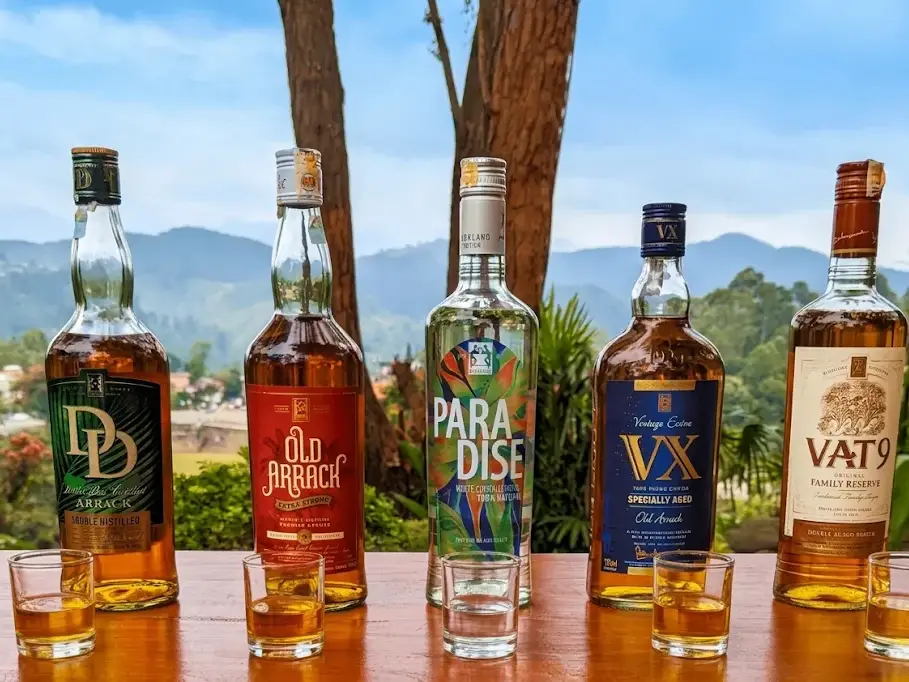
- Coconut arrack: A distinctive Sri Lankan spirit with an established production heritage.
- Coconut toddy (Raa): A traditional fermented beverage with a connection to coconut-growing communities.
- Palmyrah (Thal): A northern and eastern cultural resource with a distinctive traditional beverage heritage.
- Kithul: Kithul treacle and other kithul-based products offer excellent opportunities for traditional and contemporary beverages.
- Local tropical ingredients: Coconut, lime, ginger, cinnamon, cardamom, pepper and other indigenous ingredients can create distinctive drinks and signature cocktails.
These are not simply products. They represent communities, agricultural traditions, local knowledge and regional identities.
The Export Development Board describes Sri Lankan coconut toddy and arrack as traditional products, with toddy commonly known locally as Raa.
The challenge is not necessarily the absence of local products. It is how effectively we position, present and commercialise them.
Tourism is an economic opportunity, not just an arrivals game
Sri Lanka welcomed approximately 2.36 million international tourists in 2025, generating approximately US$3.2 billion in tourism earnings.
These figures demonstrate the scale of the opportunity.
However, attracting visitors is only one part of tourism development. We must also consider how much visitor expenditure remains within our domestic economy.
Every locally produced beverage purchased by a hotel can create opportunities for producers, suppliers, distributors, agricultural communities and other local businesses.
Furthermore, the sale of locally produced liquor is already a significant domestic market. Parliamentary information reported that approximately 29.7 million 750 ml bottles and 33.4 million 375 ml bottles of locally produced liquor were sold in 2024.
The same parliamentary statement reported Rs. 213.39 billion in excise revenue from locally produced liquor.
These figures do not measure hotel consumption or international visitor demand. Nevertheless, they demonstrate that locally produced beverages are an established part of the Sri Lankan market.
The question is whether our hospitality industry is giving them sufficient visibility.
Seven lessons from Sri Lanka and the world
1. Sri Lankan coconut arrack – An opportunity to build an international identity
Sri Lankan coconut arrack has a distinctive production story, flavour profile and connection to our coconut industry.
Instead of treating it as just another bottle behind the bar, hotels could introduce curated arrack selections, tasting experiences and professionally developed signature cocktails.
The story of its origin, production and maturation can become part of the guest experience.
2. Coconut toddy – A traditional experience worth rediscovering
Coconut toddy is more than a traditional beverage. It represents the knowledge and livelihood of communities involved in tapping coconut palms.
Its relatively short shelf life creates operational challenges. Therefore, hotels need appropriate sourcing, food-safety controls, handling and licensing arrangements.
However, these challenges should encourage innovation rather than complete neglect.
3. Palmyrah (Thal) – Bringing regional identity into hospitality
Palmyrah is strongly associated with the cultural identity of northern Sri Lanka.
Its traditional products and regional food culture offer opportunities to introduce visitors to a different dimension of the island.
Hotels could explore appropriately licensed and safely prepared regional beverage experiences alongside palmyrah-based non-alcoholic alternatives.
This could also create greater visibility for regional producers.
4. Kithul – An opportunity beyond traditional treacle
Kithul is often associated with treacle and traditional sweets.
However, why should we limit its application to conventional food products?
Kithul-based mocktails, tropical refreshments, desserts and contemporary beverage presentations could offer something distinctive.
This is an opportunity to bring traditional ingredients into modern hospitality without losing their cultural identity.
5. Japan – How sake became a cultural ambassador
Japan provides an excellent example of connecting a traditional beverage with national identity.
In December 2024, UNESCO inscribed the traditional knowledge and skills of sake-making with koji mould on its Intangible Cultural Heritage list.
Japan has continued to promote the craftsmanship, history and cultural significance of sake.
The lesson is clear: a traditional beverage can become an international cultural asset when its story, quality and heritage are properly communicated.
6. South Korea – Making traditional drinks part of the visitor experience
South Korea has promoted traditional beverages such as makgeolli through tourism experiences, regional breweries and cultural food programmes.
The Korea Tourism Organization highlights brewery visits, tasting opportunities and regional varieties.
Rather than presenting traditional beverages as outdated products, Korea connects them with contemporary food culture and travel experiences.
Sri Lanka can learn from this approach.
7. Scotland – Turning whisky into a tourism attraction
Scotland demonstrates how a locally rooted beverage can become a major part of a country’s international tourism identity.
According to the Scotch Whisky Association, Scotch whisky distilleries attracted approximately 2.7 million visits in 2024.
Distillery visits, guided experiences, tastings and heritage storytelling have helped make whisky tourism an important attraction.
Sri Lanka should consider what a similar approach could mean for arrack, coconut products and traditional beverage producers.
What should Sri Lankan five-star hotels do differently?
I am not suggesting that hotels remove international beverages from their menus.
Nor am I suggesting that every international visitor must consume local liquor.
Hospitality is about choice, quality and guest preferences.
However, I believe our star-class hotels can take several practical steps.
1. Introduce a dedicated Sri Lankan beverage section
Every hotel bar should consider offering a properly presented selection of local beverages alongside international brands.
2. Develop signature Sri Lankan cocktails
Use coconut arrack, cinnamon, lime, ginger, kithul and other suitable local ingredients to develop original drinks.
3. Train bartenders and service teams
A beverage is easier to sell when the person serving it understands its origin, production, characteristics and cultural significance.
4. Establish partnerships with local producers
Hotels should explore responsible procurement relationships with registered, licensed and quality-assured local suppliers.
5. Create tasting experiences
Offer carefully designed Sri Lankan beverage experiences for interested guests, including educational presentations and food pairings.
6. Promote regional products
Give northern palmyrah products, traditional coconut products and kithul-based creations opportunities to reach a wider hospitality market.
7. Introduce local non-alcoholic alternatives
Not every visitor drinks alcohol. Sri Lankan hospitality must also showcase coconut water, king coconut, herbal drinks, fresh tropical refreshments and kithul-based creations.
The commercial opportunity is bigger than a beverage menu
The benefits can extend beyond hotel revenue.
A stronger market for Sri Lankan local beverages could support:
- Local agricultural producers and traditional communities.
- Small and medium-sized enterprises.
- Regional entrepreneurship and employment.
- Domestic supply chains and value retention.
- Culinary and beverage tourism.
- Greater international recognition of Sri Lankan products.
Moreover, local products can help hotels differentiate themselves in an increasingly competitive international tourism market.
A visitor may forget the brand of an imported whisky served during a holiday. However, a beautifully presented Sri Lankan signature drink, accompanied by an interesting story about its origin, may become a memorable part of that holiday.
That is the difference between simply serving a beverage and creating an experience.
My message to Sri Lanka’s hospitality industry
We spend considerable time discussing international marketing, luxury positioning, hotel classifications, room rates and destination competitiveness.
All of these are important.
However, we must also examine what makes our hospitality genuinely Sri Lankan.
A five-star hotel should not be judged only by the international brands it carries. It should also be recognised for how confidently it presents its own country’s identity.
We must not confuse international standards with international products.
International standards should be maintained, but local identity should never be sacrificed.
Let us give coconut arrack, coconut toddy, palmyrah, kithul and our other traditional products the professional attention they deserve.
Let us develop better packaging, quality standards, presentation, storytelling and market access.
Let us make our local products attractive not only to Sri Lankan consumers but also to international visitors.
When tourists visit Sri Lanka, they should have the opportunity to experience something genuinely Sri Lankan.
If we do not promote our own identity, who will do it for us?
My question to Sri Lanka’s hotel owners, general managers, food and beverage directors, executive chefs, bartenders and tourism professionals:
When was the last time your hotel introduced a new signature beverage that genuinely represented Sri Lanka?
I believe it is time we gave our own heritage a place at the international hospitality table.
Dr. Dharshana Weerakoon, DBA (USA)
Global Tourism & Hospitality Strategist
Chairman – Global Cooperation Private Limited
Managing Director – International Hospitality Ventures Private Limited
Disclaimer
This article has been authored and published in good faith by Dr. Dharshana Weerakoon, DBA (USA), drawing on publicly available national and international tourism, economic and cultural information, together with professional experience across multiple countries and ongoing industry insights.
It is intended exclusively for educational, professional, journalistic and public-awareness purposes, to stimulate constructive discussion about Sri Lankan hospitality, local enterprise, cultural heritage and sustainable tourism development.
The observations concerning hotel beverage selection are general industry commentary and do not constitute allegations against any particular hotel, business, brand or individual. No claim is made that all Sri Lankan star-class hotels follow the same beverage procurement or promotional practices.
The proposed initiatives are subject to applicable Sri Lankan laws and regulations, including licensing, excise, food safety, consumer protection, intellectual property, advertising and other relevant requirements. The article does not constitute legal, financial, investment or regulatory advice.
The author accepts no responsibility for interpretations or uses of the article beyond its stated educational and discussion purposes. The views and recommendations expressed are the author’s personal professional opinions.
© Dr. Dharshana Weerakoon, DBA (USA). All rights reserved.
Further Reading: https://dharshanaweerakoon.com/lpg-availability-in-sri-lanka/
Further Reading: https://www.linkedin.com/newsletters/outside-of-education-7046073343568977920/