Beyond the Ramayana Trail: Can ISKCON Colombo Help Sri Lanka Welcome More Indian Devotees?
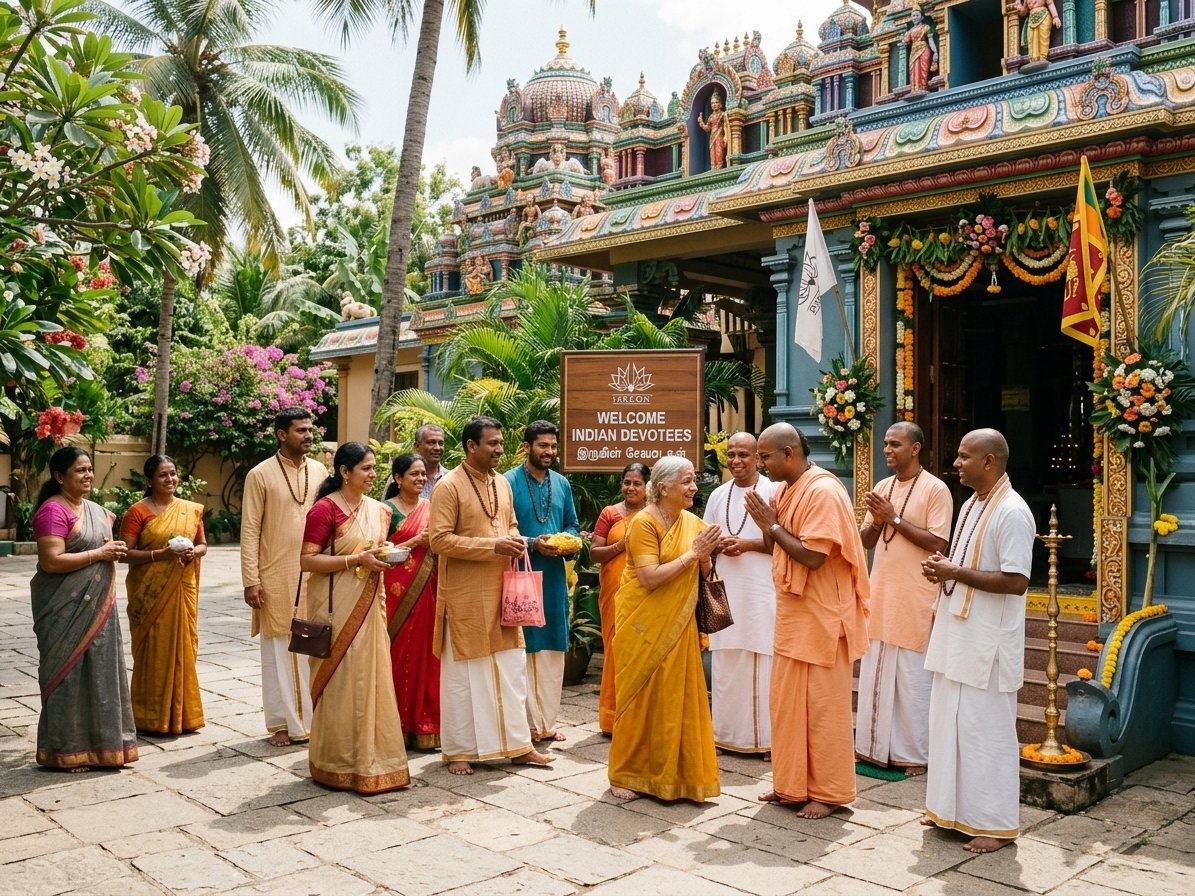
A Strategic Tourism Opportunity at the Intersection of Faith, Culture and Hospitality
Sri Lanka has always been geographically close to India. However, in tourism, proximity alone does not create a meaningful relationship. Shared culture, faith, history and trust do.
This is why I believe Sri Lanka should look more seriously at the growing opportunity presented by Indian spiritual and devotional tourism—and at the potential role that established religious and cultural institutions, including ISKCON Colombo, could play within a broader and professionally managed visitor ecosystem.
This is not about turning religion into a commercial product.
Instead, it is about understanding a simple reality: millions of people already travel because of faith, spiritual identity, heritage and personal devotion. If Sri Lanka can welcome these visitors respectfully, professionally and authentically, spiritual tourism could become an important part of our wider tourism economy.
India Is Already Sri Lanka’s Most Important Tourism Market
The numbers deserve attention.
Sri Lanka welcomed approximately 2.3 million international tourists in 2025, with India remaining the country’s largest source market. More than 531,000 Indian visitors travelled to Sri Lanka during the year.
That means roughly one out of every four international visitors came from India.
This is a major strategic advantage.
India is not only a large neighbouring market. It is also a civilisation with one of the world’s most active religious and spiritual travel cultures. From temples and pilgrimage routes to festivals and spiritual retreats, travel motivated by faith is deeply embedded within Indian society.
Therefore, the question for Sri Lanka should not simply be:
“How can we attract more Indian tourists?”
The more strategic question is:
“Which Indian traveller segments are already naturally connected to Sri Lanka?”
Devotees and spiritual travellers are one such segment.
The Ramayana Connection: A Powerful Story That Requires Responsible Development
The Ramayana Trail has already established itself as an important concept in Sri Lanka’s tourism conversation.
A number of Sri Lankan locations are traditionally associated with events and characters connected with the Ramayana. For many Indian visitors, these locations are not simply sightseeing attractions. They can represent places of cultural imagination, devotion and personal spiritual interest.
However, Sri Lanka must approach this opportunity carefully.
Historical faith traditions, literature, archaeology and modern tourism marketing are not always identical. Therefore, destinations should avoid presenting spiritual traditions as scientifically proven historical facts when such evidence is contested or unavailable.
The stronger approach is simple:
Respect belief. Present tradition honestly. Protect heritage. Avoid exaggeration.
This is where professionally curated spiritual tourism becomes important.
Where Could ISKCON Colombo Fit Into This Opportunity?
ISKCON Colombo has an established connection with the wider international Krishna consciousness community.
For an Indian devotee visiting Sri Lanka, institutions such as ISKCON can potentially provide something that conventional tourism infrastructure cannot always provide:
A familiar spiritual environment.
This could include, where appropriate and subject to the organisation’s own policies:
- Spiritual programmes and cultural activities.
- Guidance for devotees visiting Sri Lanka.
- Vegetarian food traditions.
- Community connections.
- Information about religious and cultural experiences.
- Support in creating a respectful spiritual itinerary.
Importantly, I am not suggesting that ISKCON Colombo should become a commercial tour operator.
That is neither necessary nor appropriate.
Instead, there may be opportunities for collaboration between religious institutions, licensed tourism professionals, hotels, transport providers and destination management companies—while maintaining clear boundaries between spiritual service and commercial activity.
That distinction is extremely important.
Case Study 1: The Vaishno Devi Pilgrimage Economy
India demonstrates how pilgrimage can create economic ecosystems extending far beyond the temple itself.
Accommodation, transportation, food, local employment and small businesses all benefit from visitor movement.
The lesson for Sri Lanka is clear:
A spiritual destination does not need to commercialise faith in order to generate economic benefits.
A professionally managed visitor ecosystem naturally creates economic opportunities around the journey.
Case Study 2: Varanasi and the Power of Spiritual Identity
Varanasi attracts visitors not only because of monuments but because of experience.
People travel to feel the atmosphere, participate in rituals, experience food, observe traditions and connect emotionally with the destination.
Sri Lanka should learn from this principle.
A successful spiritual journey cannot be built only around a list of locations.
The journey itself must become the experience.
Case Study 3: Ujjain and Destination Transformation
Ujjain has demonstrated how major spiritual destinations can attract very large visitor numbers when infrastructure, accessibility and destination identity are developed together.
The broader lesson is that spiritual tourism requires:
- Visitor management.
- Transport planning.
- Accommodation capacity.
- Cleanliness.
- Safety.
- Digital information.
- Professional interpretation.
Sri Lanka should think about the Ramayana Trail in the same integrated way.
Case Study 4: Bodh Gaya and International Pilgrimage
Bodh Gaya demonstrates another important model: faith tourism can be international.
Visitors from multiple countries travel because of a shared spiritual connection.
Sri Lanka already benefits from Buddhist pilgrimage. Therefore, we understand the importance of welcoming visitors whose journey is motivated by something deeper than leisure.
The same professional understanding can be applied to other spiritual visitor segments.
Case Study 5: Camino de Santiago
The Camino de Santiago demonstrates how a spiritual route can also become a cultural, wellness and personal-development journey.
Not every visitor completes such a journey for purely religious reasons.
Some travel for reflection.
Others travel for heritage.
Some seek community.
Others simply want meaning.
This is an important lesson for Sri Lanka. A well-designed spiritual journey can attract both devotees and culturally interested travellers, provided its identity remains authentic.
Case Study 6: Shirdi and Community-Based Pilgrimage Infrastructure
Shirdi demonstrates the importance of managing large numbers of visitors through coordinated infrastructure.
Accommodation, food, transportation and visitor services must work together.
For Sri Lanka, this means that spiritual tourism should never be developed only as a marketing campaign.
Marketing without infrastructure creates disappointment.
Case Study 7: The Ramayana Circuit as a Cross-Border Opportunity
The greatest opportunity may not be limited to individual sites.
India and Sri Lanka share a powerful cultural geography connected with the Ramayana tradition. Rather than competing, the two countries could potentially be viewed as complementary parts of a broader cultural and spiritual journey.
For example:
India → Sri Lanka → Spiritual and cultural journey
Such programmes could involve:
- Licensed travel operators.
- Airlines.
- Hotels.
- Cultural institutions.
- Religious organisations.
- Local communities.
- Destination management companies.
This would create a more complete visitor experience.
My Strategic View: Sri Lanka Should Build an “Indian Devotee Visitor Ecosystem”
In my opinion, the future opportunity is bigger than the Ramayana Trail alone.
Sri Lanka should consider developing an integrated Indian Devotee Visitor Ecosystem.
This does not mean creating one single religious product.
Instead, it means connecting several experiences responsibly:
1. Spiritual Connection
Faith-related and traditional sites presented respectfully.
2. Cultural Connection
Sri Lankan dance, music, food, heritage and local traditions.
3. Hospitality Connection
Hotels and restaurants that understand vegetarian, family and devotional traveller requirements.
4. Community Connection
Opportunities to interact respectfully with local religious and cultural communities.
5. Travel Connection
Affordable and convenient air connectivity between Indian cities and Sri Lanka.
6. Professional Connection
Licensed tourism professionals coordinating transport, accommodation, safety and visitor experiences.
This is where organisations such as ISKCON Colombo could potentially become one valuable stakeholder among many, subject to their interest, capacity and organisational policies.
The Commercial Opportunity Must Never Come Before Respect
This point is important.
Spiritual tourism can generate revenue. However, revenue cannot be the only objective.
If visitors feel that their faith is being exploited, the destination loses credibility.
Therefore, Sri Lanka must follow several principles:
First, authenticity over exaggeration.
Second, respect over commercialisation.
Third, local community participation over external exploitation.
Fourth, professional tourism standards over informal operations.
Finally, cultural sensitivity over aggressive marketing.
These principles are not obstacles to business.
They are the foundation of sustainable business.
The Opportunity for Sri Lanka
India is already Sri Lanka’s largest tourism source market.
More than half a million Indian visitors arrived in Sri Lanka during 2025. Even a modest increase in specialised spiritual and cultural travel could create significant opportunities across accommodation, transportation, food, guiding and local enterprises.
However, success will not come from simply placing the words “Ramayana Trail” on a brochure.
It will require collaboration.
Tourism authorities cannot do everything alone.
Religious organisations cannot do everything alone.
Private tourism companies cannot do everything alone.
The future lies in a carefully governed ecosystem where every stakeholder understands their role.
My Final Thought
As a Sri Lankan tourism professional, I believe we should start looking beyond conventional tourism categories.
A visitor is not always simply a tourist.
Sometimes, the visitor is a pilgrim.
Sometimes, a seeker.
Sometimes, a family travelling because of faith.
Sometimes, someone searching for a deeper connection with history, culture and spirituality.
Sri Lanka has the geography.
Sri Lanka has the cultural connections.
Sri Lanka has the hospitality tradition.
And India has already demonstrated its importance as our largest tourism market.
The real question is whether we can bring these elements together responsibly.
The potential involvement of organisations such as ISKCON Colombo should therefore be explored—not as a commercial exploitation of religion, but as part of a wider conversation about how Sri Lanka can create respectful, authentic and professionally managed spiritual visitor experiences for Indian devotees.
In tourism, the strongest destinations are not those that invent stories.
They are the destinations that understand the stories people already carry in their hearts.
Disclaimer
This article has been authored and published in good faith by Dr. Dharshana Weerakoon, DBA (USA), based on publicly available tourism data, industry information, professional experience and independent analysis of spiritual, cultural and destination tourism opportunities.
The article is intended solely for educational, professional discussion and public awareness purposes. References to religious traditions, pilgrimage routes, organisations, destinations and cultural beliefs are made respectfully and do not constitute endorsements, representations of affiliation, or claims of formal partnership.
The views expressed are personal and analytical. They should not be interpreted as legal, financial, investment, religious or official tourism advice. The author does not claim to represent ISKCON Colombo, any religious institution, government authority or other organisation mentioned in this article.
Care has been taken to respect religious dignity, cultural diversity, Sri Lankan law and ethical standards. Any future tourism initiative involving religious or cultural organisations should be subject to appropriate consultation, consent, licensing, governance and applicable laws and regulations.
© Dr. Dharshana Weerakoon, DBA (USA). All rights reserved.
Further Reading: https://www.linkedin.com/newsletters/outside-of-education-7046073343568977920/
Further Reading: https://dharshanaweerakoon.com/ramayana-trail-sri-lanka/