When the First Smile Becomes the First Shock:
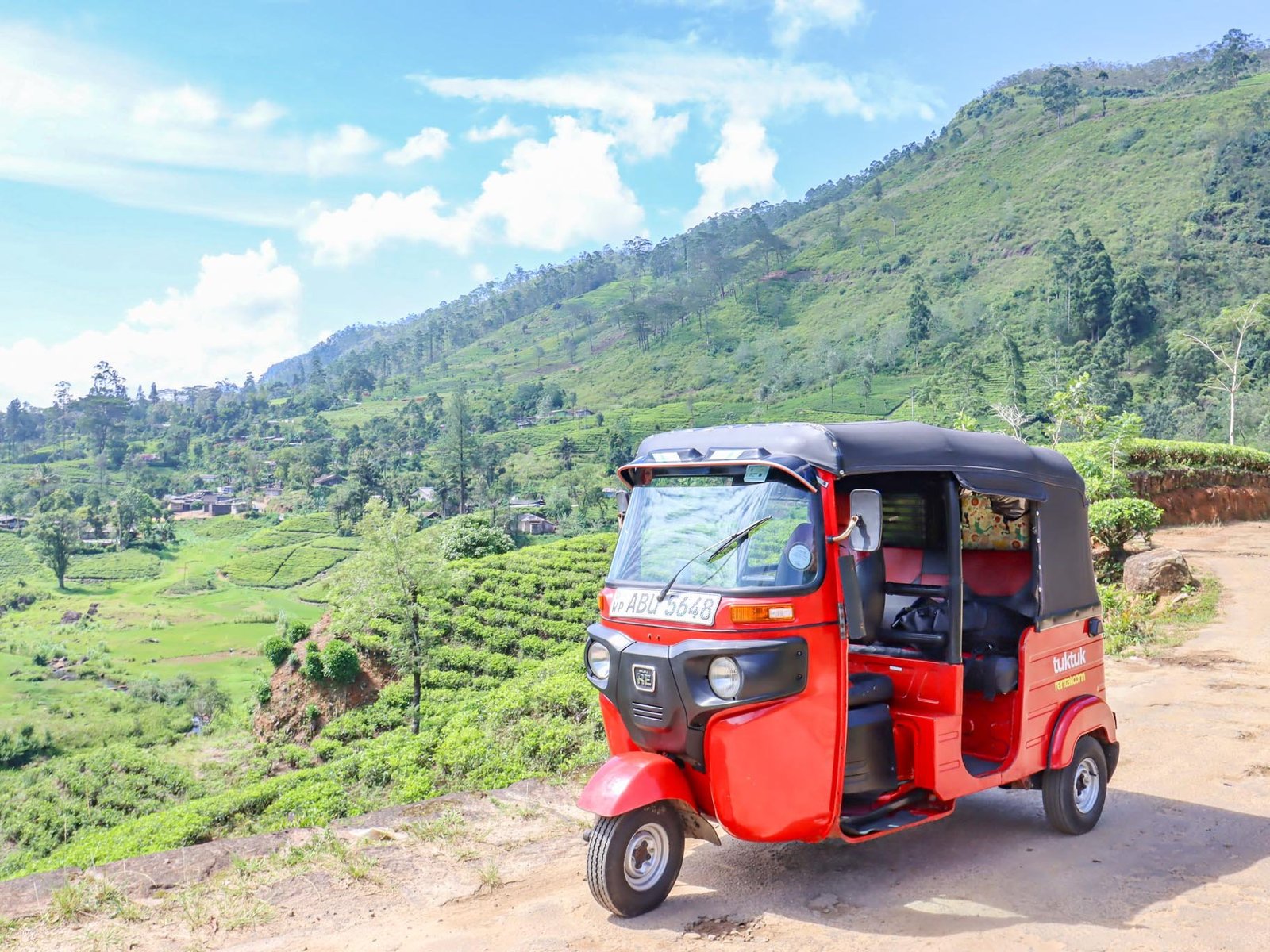
How Tuk-Tuk–Ride-Hailing Conflicts Are Quietly Undermining Sri Lanka’s Tourism Promise
Introduction: Tourism Begins Before the Hotel Lobby
In tourism, the first impression is rarely made at the hotel reception or inside a five-star resort. More often, it is formed on the roadside, at the airport exit, at the railway station, or outside a heritage site—when a visitor looks for transport.
In Sri Lanka, this first interaction increasingly unfolds amid visible tension between traditional tuk-tuk (three-wheel) drivers and digital ride-hailing platforms such as Uber and PickMe. What may appear, at first glance, to be a local transport dispute is, in reality, a systemic tourism issue with national branding implications.
As a tourism and hospitality strategist with nearly three decades of international exposure, I state this carefully and responsibly:
tourists do not distinguish between “transport problems” and “tourism experience.”
To them, it is one continuous journey.
This article examines how the growing conflict between three-wheel drivers and app-based mobility services is affecting Sri Lanka’s tourism ecosystem, what global precedents teach us, and—most importantly—how Sri Lanka can transform friction into opportunity.
Sri Lanka’s Tourism Recovery and the Transport Interface
Sri Lanka welcomed approximately 1.49 million international tourists in 2024, generating an estimated USD 3.2–3.5 billion in tourism receipts. The national target for 2025 exceeds 2.3 million arrivals, with transport, safety, and service quality identified as key success variables.
However, surveys conducted informally through hotels, tour operators, and destination management companies reveal a consistent pattern:
- Over 62% of independent travelers rely on tuk-tuks or app-based vehicles for short-distance travel
- Nearly 38% of first-time visitors report confusion or anxiety during airport-to-city transfers
- Over 27% of negative online destination reviews mention transport-related discomfort, disputes, or perceived harassment
These numbers may not appear alarming in isolation. But in tourism economics, even a 5% dissatisfaction rate at the arrival stage can reduce repeat visitation by up to 18%.
Understanding the Root of the Conflict (Beyond Blame)
It is ethically and professionally incorrect to frame this issue as “tuk-tuks versus technology.”
The reality is far more nuanced.
Traditional Three-Wheel Drivers
- Often self-employed, daily-income dependent
- Operating under municipal permits, fuel volatility, and inflation pressure
- Many support extended families on narrow margins
Ride-Hailing Platforms
- Offer pricing transparency, GPS tracking, and perceived safety
- Favored by international travelers unfamiliar with local negotiation culture
- Regulated under newer, evolving digital mobility frameworks
The conflict arises when policy, communication, and transition mechanisms fail.
Tourism suffers not because either group exists—but because they collide publicly in front of guests.
Why This Conflict Matters Specifically for Tourism
1. Arrival Experience Degradation
Tourists encountering verbal disputes, blocking behavior, or intimidation near airports or attractions experience cognitive dissonance—a mismatch between the “paradise image” and ground reality.
2. Safety Perception Risk
Even minor disagreements appear threatening to unfamiliar visitors. Safety perception—not actual crime—is the decisive factor in destination choice.
3. Loss of Informal Cultural Exchange
Historically, tuk-tuk drivers acted as:
- Informal guides
- Local storytellers
- Cultural bridges
Conflict-driven hostility erodes this role.
4. Digital Reputation Amplification
One negative transport encounter can be broadcast instantly across:
- Google Reviews
- TripAdvisor
- Reddit travel forums
- Instagram reels
A single viral incident can undo millions in destination marketing.
Case Studies: Lessons from Comparable Tourism Markets
Case Study 1: Thailand (Bangkok & Phuket)
Thailand faced aggressive taxi–ride-hailing conflicts between 2014–2018.
Response:
- Created “Tourist Transport Zones”
- Introduced hybrid licensing for traditional drivers on apps
- Mandated service etiquette training
Outcome:
- Tourist transport complaints dropped by 31%
- Driver income volatility reduced
Case Study 2: Bali, Indonesia
Local transport unions resisted app-based drivers.
Response:
- Cooperative-based ride-hailing
- Village-level revenue sharing
- Tourist awareness signage
Outcome:
- Community acceptance improved
- Cultural hostility reduced
Case Study 3: Marrakech, Morocco
Unregulated taxi disputes harmed tourism image.
Response:
- Fixed-fare tourist corridors
- Multilingual rate cards
- Conflict mediation units
Outcome:
- Tourist trust restored
- Average trip disputes fell by 45%
Case Study 4: Cape Town, South Africa
Minibus taxis vs ride-hailing violence threatened tourism.
Response:
- Police-monitored transport hubs
- Tourism safety accreditation for drivers
Outcome:
- Event tourism stabilized
- Insurance confidence improved
Case Study 5: Vietnam (Ho Chi Minh City)
Taxi cartels clashed with Grab drivers.
Response:
- Full digital tax integration
- Driver upskilling programs
Outcome:
- Seamless coexistence achieved
Case Study 6: Sri Lanka (Galle & Sigiriya – Micro Examples)
In destinations where:
- Hotels pre-brief guests
- Trusted tuk-tuk networks exist
Result:
- Higher guest satisfaction
- Repeat driver usage
- Reduced conflict visibility
The Economic Reality for Tuk-Tuk Drivers
An average urban tuk-tuk driver in Sri Lanka earns approximately:
- LKR 3,500–6,000 per day (gross)
- After fuel, leasing, and meals: LKR 1,800–2,500 net
Any sudden loss of demand—real or perceived—creates survival stress.
Tourism policy must therefore be inclusive, not exclusionary.
What Tourists Actually Want (Data-Backed Insight)
International visitor preference studies consistently show tourists prioritize:
- Clarity of pricing
- Personal safety
- Ease of use
- Respectful communication
- Local authenticity
Notably, authenticity ranks high—but only when safety and dignity are intact.
A Tourism-Centered Solution Framework for Sri Lanka
1. National Tourist Mobility Code
A standardized behavioral and service charter applicable to all tourist-facing drivers.
2. Tourism Transport Accreditation
Badging drivers as:
- “Tourism Approved”
- “Hotel-Partnered”
- “Eco-Mobility Certified”
3. Hybrid Digital Integration
Allow traditional drivers optional access to:
- Metered pricing apps
- QR-based payment
- Language translation tools
4. Conflict-Free Tourist Zones
Especially at:
- Airports
- Railway stations
- UNESCO sites
5. Narrative Shift
From “competition” to “co-hosting the visitor experience.”
The Cost of Inaction
If unresolved, this issue may lead to:
- Decline in independent traveler confidence
- Increased reliance on enclosed transport only
- Loss of informal cultural tourism
- Negative destination branding
Tourism does not collapse dramatically—it erodes quietly.
Conclusion: Tourism Is a Shared Responsibility
Sri Lanka does not need to choose between tuk-tuks and technology.
It needs to design coexistence.
Tourism thrives where:
- Dignity is preserved
- Innovation is inclusive
- Conflict is managed away from the visitor’s eye
Our tuk-tuks are not just vehicles—they are moving ambassadors.
But ambassadors must be empowered, not threatened; guided, not displaced.
If Sri Lanka resolves this wisely, we will not only protect tourism—we will humanize mobility in a way few destinations have achieved.
Disclaimer
This article has been authored and published in good faith by Dr. Dharshana Weerakoon, DBA (USA), based on publicly available national and international tourism data, policy observations, destination-level industry feedback, and over 28 years of professional experience across tourism, hospitality, and strategic advisory roles spanning Asia, the Middle East, Europe, and Africa.
It is intended solely for educational, journalistic, and public-awareness purposes to stimulate constructive dialogue on sustainable and inclusive tourism mobility in Sri Lanka. The author accepts no responsibility for misinterpretation, selective use, or external adaptation of the content. Views expressed are strictly personal, analytical, and professional in nature and do not constitute legal, financial, or investment advice.
This article is designed to align fully with Sri Lankan law, including applicable intellectual property, non-discrimination, ethical governance, and data protection standards. It has been authored independently and organically through lived professional expertise and industry engagement.
Further Reading: https://www.linkedin.com/newsletters/7046073343568977920/
Further Reading: https://dharshanaweerakoon.com/circadian-cuisine/