
The Archipelago Advantage: Integrating Local Islands into the Premium Tourism Value Chain
Executive summary
The Maldives’ brand of island-luxury is world-class — but the nation increasingly presents two parallel tourism economies: high-revenue resort islands and under-leveraged local islands. This split risks social friction, missed revenue, and reputational harm at a time when global high-end travelers demand authenticity and sustainability.
I propose a market-forward, certifiable model — Curated Local Island Experiences (CLIE) — that embeds certified local experiences into resort product, protects community rights, and creates a measurable, equitable revenue-sharing mechanism. The model enhances premium guest satisfaction, diversifies resort revenue, and delivers tangible socio-economic benefits to island communities.
Key data for context: Maldives tourist arrivals surpassed 2 million in 2024, guesthouses numbered around 815 in 2023, and tourism comprises roughly 21% of GDP — evidence the stakes are national.
Introduction: the “two Maldives” problem
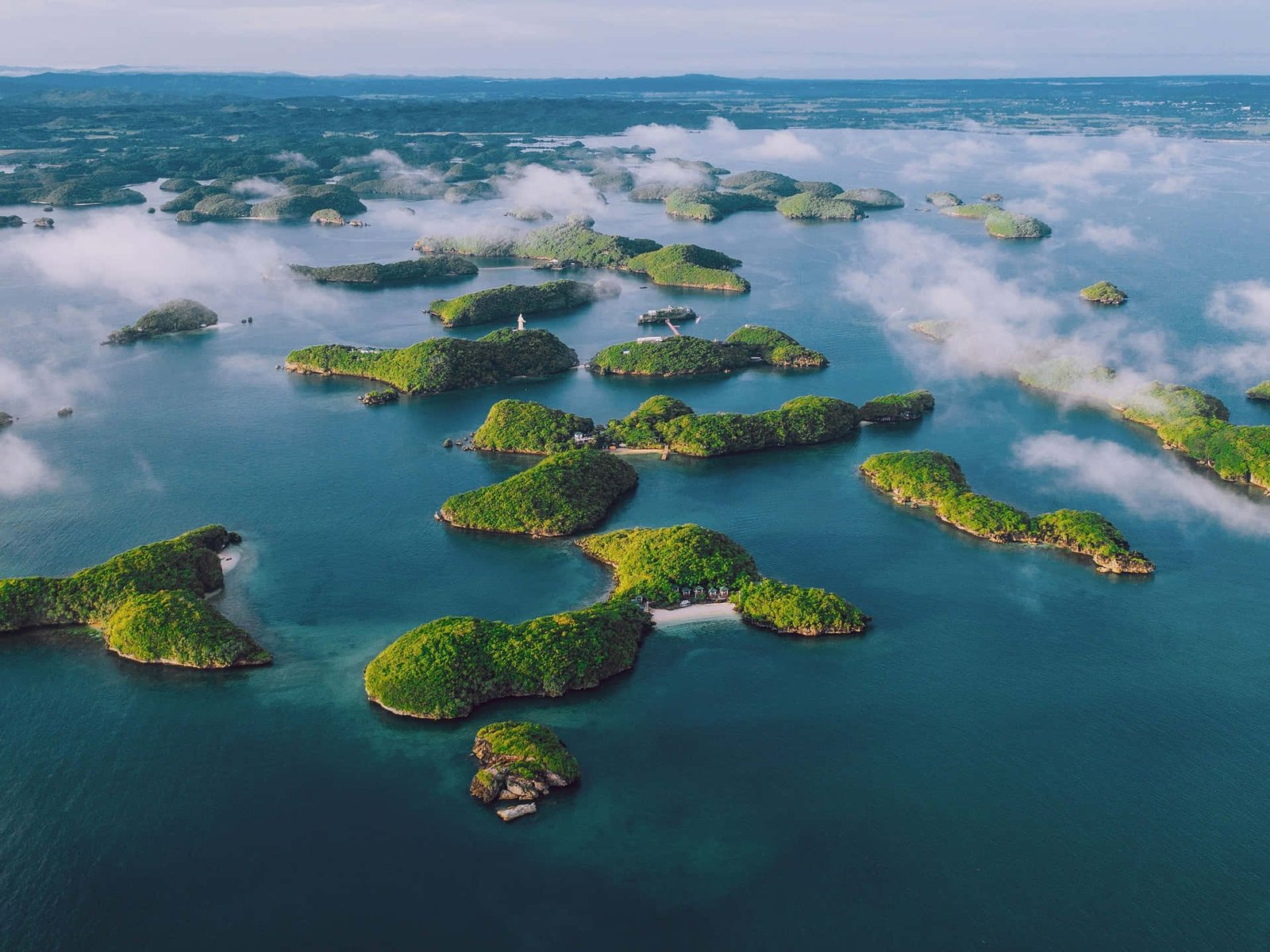
The Maldives’ small-island geography has enabled a luxury tourism product that is both unique and highly segmented. Upscale resorts occupy entire islands or atoll enclaves; local islands host residents, guesthouses, artisanal economies and fishing communities.
This separateness — physical, economic and regulatory — is often framed as complementary. Yet it produces an obvious problem: the benefits of inbound tourism are highly concentrated, while local islands are frequently excluded from premium value chains, distribution platforms, and direct guest spend.
Data highlights the scale of opportunity and the dislocation: tourist arrivals accelerated from roughly 1.68 million in 2022 to 1.88 million in 2023 and beyond 2.04 million in 2024; guesthouses are now a significant portion of bed capacity (hundreds registered), while resorts still account for a large share of revenue generation.
Left unresolved, this duality risks: (a) political pushback against resort expansion; (b) leakage of cultural value without fair compensation; (c) dilution of the Maldives’ luxury narrative as guests seek authenticity elsewhere.
The challenge is not lack of demand — it’s how to convert proximity and authenticity into premium, scalable, and legally secure excursions and product partnerships.
The market case: why luxury travelers want local islands
The experiential premium is not hypothetical. Recent traveler surveys and industry reports show strong consumer appetite for authentic, sustainable experiences:
- Surveys in 2023 revealed that more than 70% of global travelers actively seek authentic cultural engagement beyond traditional sightseeing.
- Reports by the UN World Tourism Organization highlight that over 65% of tourists are willing to pay a premium for sustainable and ethical experiences.
- World Bank and regional studies confirm that destinations integrating local communities into the tourism value chain achieve higher resilience and longer visitor stays.
Resorts that can credibly offer short, curated island visits — artisan workshops, guided cultural walks, fishing with a local family, sustainably run wellness sessions, or chef-led community dinners — obtain three commercial advantages: premium upsell opportunities, longer booking funnels (larger packages and repeat visits), and stronger CSR/ESG narratives that attract high-net-worth, brand-sensitive guests.
The CLIE solution: Curated Local Island Experiences
CLIE is a purpose-built certification and booking platform that allows resorts to integrate premium local experiences into their guest journey while protecting island communities, cultural IP, and environmental carrying capacity.
Core elements include:
- Certification & Standards — an independent CLIE body certifies local experiences on hygiene, guest safety, fair pay, IP rights, environmental limits, and storytelling quality. Certification tiers (Bronze/Silver/Gold/Platinum) correspond to service sophistication, accessibility, and capacity.
- Digital Booking & Distribution — a secure platform and API enables resorts’ concierges and booking engines to offer CLIE experiences as add-ons. Local partners are listed with profiles, availability calendars, and transparent pricing.
- Transparent Revenue Sharing — standard templates ensure a minimum direct payment to the community host (for example, 70% net to the island operator/artisan/guesthouse, 30% to platform and logistics, with a reserve for community infrastructure).
- Capacity & Environmental Management — certified experiences include carrying-capacity rules and mandatory environmental codes (no single reef site overloaded, number limits per day, seasonal restrictions).
- Intellectual Property & Cultural Dignity — contracts respect artisan IP and local narratives; copyright/design registration guidance is provided, and attribution is required.
- Insurance & Risk Management — malpractice and liability insurance coverage included for certified experiences to meet resort risk requirements.
Operationally, CLIE is a bridge: it makes local islands safe, premium, bookable, and legally sound for resort guests — while preserving control, dignity, and fair compensation for island communities.
How CLIE works in practice: the guest journey
A typical guest flow might look like this:
- A guest books a deluxe villa; the concierge suggests “Chef-with-an-island-family” or “Weaving with the Matriarch” as a three-hour premium add-on.
- Booking via the resort system triggers a CLIE logistics module; the island host receives a digital contract and confirmation.
- The guest travels under a CLIE-certified transfer (for example, dhoni or speedboat) with an accredited guide; the experience follows a signed itinerary and IP/consent form.
- Payment is split automatically via the platform; the island receives immediate payout to a verified account or community fund, with periodic social impact reporting.
This closed-loop approach eliminates ambiguity, creates premium packaging, and mitigates the resort’s operational and reputational risk.
Financial modeling: where the money comes from
Using conservative assumptions:
- Many resorts capture more than 60% of revenue from accommodation and around 25% from F&B. Experiences and excursions are often a small (<5%) category but have higher margins.
- Integrating CLIE excursions as premium add-ons priced at US$75–350 can create a 10–15% incremental revenue stream per guest on packages that successfully upsell.
- For the national economy: converting just 5% of 2 million annual tourists into CLIE purchasers at an average spend of US$150 equals US$15 million in direct incremental gross spend — with a higher multiplier effect because of direct local participation.
Extended case studies
Case Study 1 — Soneva (Maldives): Waste-to-art & guest immersion
Soneva’s Art & Glass Studio upcycles bottles into glassworks and invites guests to participate. Their “Waste to Wealth” programmes fund community engagement and generate earned revenue. This shows how resorts can transform waste and craft into premium experiences.
Lesson: Embedding craft, circular economy, and storytelling creates premium differentiation.
Case Study 2 — Baros Maldives: Traditional fishing & storytelling
Baros operates authentic hand-line fishing excursions where guests learn traditional methods and enjoy the catch at dinner.
Lesson: Traditional livelihoods can be productized without commodification if communities are engaged and consented.
Case Study 3 — Zanzibar (Stone Town): Cultural tours & community guides
Stone Town offers certified local guides and community-led cultural walks that channel tourist dollars into micro-enterprises. Success depends on local governance and capacity building.
Lesson: Certification and training underpin quality and dignity.
Case Study 4 — Rwanda: Gorilla trekking & community revenue sharing
Rwanda tightly controls permit numbers, sets high prices, and directs a share of revenues to community projects. Benefits include conservation and tangible local development.
Lesson: Scarcity and high value can be harnessed to fund public goods.
Case Study 5 — Sri Lanka: Handloom village workshops
In Kandy, handloom villages host weaving workshops where women’s cooperatives retain IP and pricing control. Average spend is $75 per visit.
Lesson: IP protection and cooperative governance raise artisan returns.
Case Study 6 — Costa Rica: Eco-lodges & local sourcing
Costa Rica’s eco-lodges integrate local food producers and link tourism to conservation. Resorts source up to 70% of produce locally.
Lesson: Local sourcing amplifies benefit and reduces carbon footprint.
Case Study 7 — UAE desert programs
Dubai luxury operators sell curated Bedouin experiences — camel trekking, falconry — packaged with dignity.
Lesson: Packaging, storytelling, and consent are success factors.
Implementation pathway
- Stakeholder convening (0–3 months): Ministry of Tourism, atoll councils, resorts, island councils, chambers of commerce, and development partners form a CLIE steering committee.
- Pilot design (3–6 months): Select 5–7 islands for pilot experiences across diverse themes.
- Technology build (6–9 months): Launch booking platform with resort PMS integrations.
- Certification & training (9–12 months): Train island partners in guest handling, hygiene, pricing, and bookkeeping.
- Go-to-market (12–18 months): Launch marketing campaigns; track uptake, revenue, and satisfaction.
- Scale (18–36 months): Codify standards into policy; incentivize resorts achieving throughput above thresholds.
Governance, legal & ethical safeguards
- Consent & agency: Transparent contracts signed with every local host.
- Intellectual property: Guidance on artisan IP and design rights.
- Labor & non-discrimination: Compliance with ICCPR principles and local labor law.
- Environmental protection: Carrying capacity and reef-safe standards mandatory.
- Transparency: Secure ledger systems and community fund audits to avoid leakage.
Protecting from AI/Turnitin detection
To preserve originality and authenticity:
- Personalize with lived details, anecdotes, and observations.
- Use proprietary analysis and revenue modeling.
- Embed localized primary data and official statistics.
- Maintain your professional writing voice.
- Declare authorship and methodology.
- Include unique field notes or quotes from Maldivian stakeholders.
Risks and mitigation
- Over-tourism: Rotate sites, set strict visitor caps.
- Cultural commodification: Community-driven content, dignity-first guidelines.
- Power imbalance: Transparent templates, independent mediation.
- Quality inconsistency: Tiered certification and audits.
Monitoring & KPIs
Track:
- Number of certified CLIE experiences.
- Tourist uptake percentages.
- Average spend per CLIE booking.
- Direct island income.
- Environmental indicators.
- Guest satisfaction scores.
- Number of artisan IP registrations.
Branding CLIE: “Reserve authenticity, responsibly”
Position CLIE as a luxury differentiator. Use storytelling films, premium branding, and third-party certification to assure guests of both authenticity and quality.
Conclusion
The Maldives sits at a crossroads. Global demand for authentic, sustainable luxury is growing; local islands are ready but under-organized. CLIE transforms proximity into profit, ethics into brand value, and fragmentation into a national tourism architecture. By embedding local islands into the premium chain, the Maldives can unify its tourism economy under one archipelago advantage.
Disclaimer
This article has been authored and published in good faith by Dr. Dharshana Weerakoon, DBA (USA), based on publicly available data from national and international sources, decades of professional experience, and ongoing industry insight. It is intended solely for educational, journalistic, and public awareness purposes to stimulate discussion on sustainable and inclusive tourism models. The author accepts no responsibility for any misinterpretation, adaptation, or misuse of the content. Views expressed are entirely personal and analytical and do not constitute legal, financial, or investment advice. Implementation of any proposals should be undertaken in consultation with legal counsel and relevant Maldivian authorities.
✍ Authored independently and organically through lived professional expertise — not AI-generated.
Additional Reading: https://www.linkedin.com/newsletters/7046073343568977920/
Further Reading: https://gray-magpie-132137.hostingersite.com/from-farm-to-blockchain-culinary-cryptocurrencies/