No Longer Optional: Why Sri Lanka’s Hotels Must Urgently Embrace Sustainability & Wellness to Stay Globally Relevant

Introduction
In today’s rapidly evolving tourism landscape, the global hospitality sector is undergoing one of the most profound shifts in modern history. Travellers no longer see luxury solely as grand architecture, gourmet cuisine, infinity pools, or high-thread-count linen. The modern traveller demands something deeper, more meaningful, and more aligned with personal well-being and planetary health. Around the world, the rise of sustainability and wellness has become a defining force — shaping purchasing decisions, influencing brand loyalty, guiding investments, and determining long-term survival.
The central question I raise in this article is both simple and critical: Can any leading hotel in Sri Lanka afford to ignore sustainability and wellness? And if they do, can they realistically remain competitive in a marketplace increasingly defined by conscious travellers?
The answer, when examined through global trends, local realities, shifting guest expectations, resource pressures, and industry case studies, becomes abundantly clear: No. Sustainability and wellness are no longer optional. They are non-negotiable pillars of future hospitality success.
This detailed analysis is written as a Sri Lankan hospitality strategist who has observed these global shifts firsthand across continents. It is also written as someone who believes deeply in Sri Lanka’s potential to become one of the top sustainable wellness destinations in Asia — if the country’s leading hotels take timely and decisive action.
This article is intentionally comprehensive, covering global demand, local readiness, industry gaps, opportunities, case studies, and a road-map for transformation. The goal is not to criticise, but to illuminate the path forward for Sri Lankan hotels and inspire strategic adaptation to the new era of tourism.
1. The Global Imperative for Sustainability & Wellness
Over the last decade, the hospitality world has witnessed a dramatic yet predictable transformation. Travellers — whether from Europe, North America, the Middle East, or Asia — have become more aware of their health, mental wellness, environmental footprint, ethical choices, and the impact of their travel on local communities and ecosystems.
1.1 A Global Traveller Transformation
Today’s traveller is shaped by several forces:
- A rising global wellness movement
- A shift toward conscious and mindful living
- Concern about the environment and climate
- Growing stress, burnout, and mental health challenges
- A global search for authentic, culturally grounded healing experiences
- Awareness of sustainable lifestyle choices
- A preference for destinations that align with personal values
These forces have converged to create a powerful demand for sustainability and wellness in travel.
Luxury is no longer defined only by material excess. It is increasingly defined by:
- Space, stillness, nature
- Healing experiences
- Mindfulness practices
- Nutritional wellness
- Eco-sensitive design
- Ethical consumption
- Regenerative travel
Hotels that embody these values attract the highest-value travellers — those who stay longer, spend more, and return frequently.
1.2 The Global Wellness Economy
The global wellness economy has grown into a multi-trillion-dollar ecosystem encompassing:
- Wellness travel
- Nutrition and healthy eating
- Spas and multi-day retreats
- Fitness and movement
- Traditional healing systems
- Mental well-being
- Personal transformation
- Nature-based therapies
- Preventive wellness
This is one of the fastest-growing segments of tourism worldwide. Travellers increasingly seek destinations that offer authentic healing grounded in local culture, traditions, and natural landscapes. Sri Lanka, with its centuries-old Ayurvedic tradition, rich biodiversity, and tranquil natural environments, is uniquely positioned to excel.
1.3 Sustainability: A Definitive Competitive Metric
For global travellers — especially Gen Z and millennials — sustainability is not a marketing slogan. It is a decision-making criterion.
They want hotels to demonstrate:
- Responsible use of energy
- Reduction of waste and plastic
- Water conservation
- Biodiversity protection
- Local community integration
- Ethical sourcing
- Transparency in sustainability practices
- Measurable environmental and social impact
Travellers today reward hotels that align with their values and question or reject those that neglect them. In short, sustainability and wellness have shifted from “trends” to “minimum expectations.”
2. Sri Lanka’s Position in the Changing Global Tourism Landscape
Sri Lanka is blessed with extraordinary tourism assets: breathtaking landscapes, ancient wellness traditions, abundant biodiversity, vibrant culture, and a warm, hospitable people. The country is strategically positioned to attract the new generation of conscious travellers. Yet the question remains: are our leading hotels rising to the challenge?
2.1 Post-Pandemic Shift in Traveller Expectations
The pandemic was a turning point. Travellers now prioritise:
- Stress relief
- Immune-boosting practices
- Clean and green environments
- Safe and uplifting travel experiences
- Retreat-style stays
- Outdoor, nature-based activities
- Mind-body-spirit wellness practices
- Destinations that value sustainability and wellness
The shift is permanent — not temporary.
2.2 Sri Lanka’s Untapped Potential
Sri Lanka’s potential in wellness tourism is immense:
- A globally respected Ayurvedic heritage
- Indigenous healing traditions
- Diverse climatic zones ideal for retreats
- Forests, mountains, rivers, waterfalls, beaches
- Growing global interest in plant-based medicine
- A rich spiritual and meditation culture
- Organic farming traditions
- Rich biodiversity supporting nature-based therapies
If properly positioned, Sri Lanka can become Asia’s next premier sustainable wellness destination.
3. Are Sri Lanka’s Leading Hotels Embracing Sustainability & Wellness?
This question requires honest introspection. The reality is mixed.
3.1 Positive Progress: Some Leaders Are Transforming
A number of pioneering hotels in Sri Lanka have made commendable progress in adopting sustainability and wellness models. They demonstrate ambition, innovation, and measurable action. Their success stories show what is possible.
3.2 The Lagging Majority
However, many hotels continue to operate under outdated models focused solely on traditional luxury. The integration of sustainability and wellness remains:
- Superficial
- Fragmented
- Underdeveloped
- Reactive rather than strategic
- More marketing than substance
Some hotels offer a “spa menu” and describe it as a “wellness programme,” while others attempt green initiatives without a sustainability strategy, monitoring, or certification system.
3.3 Why Some Hotels Are Slow to Adapt
Several factors contribute to this lag:
- High upfront costs for sustainable infrastructure
- Limited understanding of global wellness demands
- Insufficient staff training
- Lack of industry-wide certification frameworks
- Perception that wellness is niche
- Traditional “luxury-only” mindset
- Inadequate marketing of sustainable or wellness assets
- Fear of operational complexity
- A belief that guests do not value sustainability and wellness
But global data overwhelmingly shows the opposite. Guests not only value these aspects but actively prioritise them.
4. The Business Case for Sustainability & Wellness in Sri Lankan Hotels
Hotels that embrace sustainability and wellness gain enormous competitive advantages.
4.1 Higher Spending Guests
Wellness travellers typically:
- Spend more per day
- Stay longer
- Book premium services
- Prefer personalised programmes
- Purchase add-ons such as treatments, excursions, and nutrition plans
These travellers help hotels increase profitability even during off-peak seasons.
4.2 Brand Differentiation
In a crowded marketplace, sustainability and wellness differentiate hotels from competitors, helping them:
- Stand out
- Command premium pricing
- Access new market segments
- Increase brand loyalty
4.3 Long-Term Cost Efficiency
Sustainable systems — such as solar energy, water recycling, biodiversity gardens, organic farming, and waste reduction — lower long-term operational costs.
4.4 Enhanced Guest Loyalty
Guests who experience improved physical and mental well-being are far more likely to return. They value hotels that positively impact their lives.
4.5 Protection of Natural Assets
Hotels depend on pristine environments. Sustainability practices ensure their long-term survival.
5. Seven Sri Lankan Case Studies Demonstrating Momentum
The following case studies illustrate how Sri Lankan properties are approaching sustainability and wellness. They demonstrate both the potential and the gaps.
Case Study 1: A Purpose-Built Wellness Retreat in the Mountains
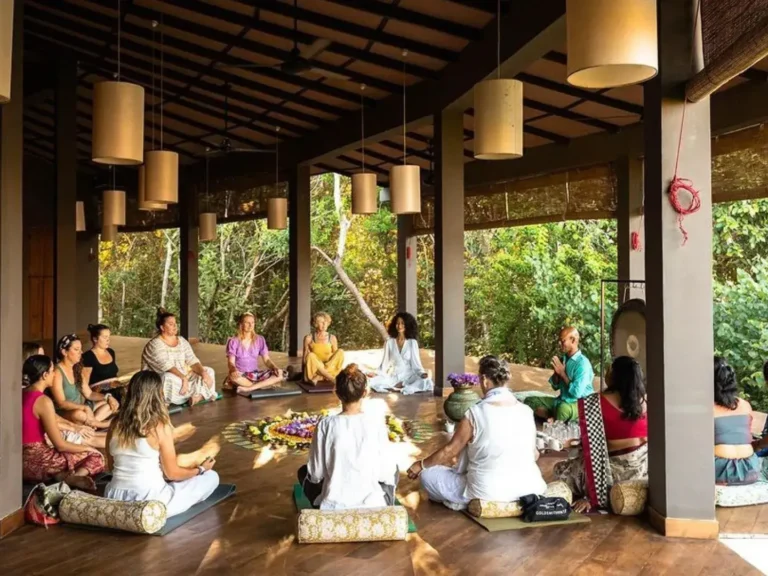
One of Sri Lanka’s most globally recognised wellness retreats has proven that a hotel can be designed entirely around holistic wellness. Built with minimalist architecture, eco-sensitive materials, and nature-integrated design, this retreat focuses on yoga, Ayurveda, meditation, detoxification, and personal transformation. Its success is rooted in its ability to unite sustainability and wellness into a seamless luxury experience.
Case Study 2: Regenerative Tourism Through Wetland Conservation
A well-known eco-luxury hotel in Sigiriya was built on a former abandoned paddy field that has since been transformed into a thriving wetland habitat. This innovative approach demonstrates how hotels can regenerate ecosystems while offering guests a deeply nature-connected experience. The property’s sustainability-and-wellness model has become a benchmark for environmentally conscious tourism in Sri Lanka.
Case Study 3: Beach Luxury with Wellness Integration
A popular luxury resort on the southern coast has integrated Ayurveda, spa therapies, mindful dining, and ethical sourcing. Its sustainability journey includes renewable energy improvements, waste reduction, community engagement, and cultural heritage preservation. Though not originally built as a wellness hotel, it has gradually evolved to align with global sustainability-and-wellness expectations.
Case Study 4: Boutique Hotels Struggling With Sustainability Models
Many boutique hotels in areas like Galle acknowledge the importance of sustainability and wellness, yet struggle to operationalise these concepts. They often lack structured strategies, measurement systems, and trained staff. This gap shows the urgent need for industry-wide education, frameworks, and leadership.
Case Study 5: Destination-Level Sustainability in Uva Province
A regional study in Uva Province highlighted the importance of aligning hotels with sustainable destination management. Hotels that engage local communities, protect natural assets, promote cultural authenticity, and maintain ethical operations contribute to stronger, more resilient tourism economies. This case study demonstrates how sustainability-and-wellness integration strengthens both hotels and entire regions.
Case Study 6: National Certification Efforts to Standardise Sustainability
Sri Lanka’s emerging national efforts to create sustainability certification frameworks are a crucial step forward. These frameworks aim to help hotels monitor and improve their environmental, social, cultural, and economic performance. The introduction of measurable criteria — from waste management to energy conservation — provides hotels with a structured pathway to integrate sustainability and wellness.
Case Study 7: Ayurveda Resorts Bridging Traditional Medicine & Modern Wellness
Several Ayurveda-focused hotels in Sri Lanka are beginning to integrate broader wellness philosophies — including plant-based nutrition, mindfulness, nature-immersion, detoxification, and personalised healing programmes. However, these properties represent only a fraction of the market, highlighting the need for more hotels to embrace authentic, evidence-based wellness programming.
6. Key Dimensions Hotels Must Address to Stay Competitive
Hotels that want to remain competitive must embed sustainability and wellness into their core operations through several interconnected pillars:
- Environmental Sustainability
- Social Sustainability
- Economic Sustainability
- Authentic Wellness Offerings
- Staff Training & Capacity Building
- Community Integration
- Certification & Transparency
- Holistic Guest Experience Design
These dimensions overlap and reinforce each other, creating a comprehensive and competitive hotel model.
7. The Risks of Ignoring Sustainability & Wellness
Hotels that ignore these shifts face:
- Declining competitiveness
- Loss of premium travellers
- Lower guest satisfaction
- Negative environmental impact
- Weak brand position
- Higher operational costs
- Reputational damage
- Shorter guest stays
- Reduced long-term revenue
Ignoring sustainability and wellness is essentially ignoring the future.
8. A Road-Map for Sri Lankan Hotels to Transform
To accelerate progress, hotels should adopt the following action plan:
- Conduct a full sustainability and wellness audit
- Set measurable goals
- Invest in renewable energy and resource-efficient systems
- Strengthen Ayurveda and wellness offerings
- Train staff comprehensively
- Integrate sustainability into brand communication
- Engage communities
- Measure and report impact
- Innovate using local culture, nature, and healing traditions
- Benchmark globally
9. A New Vision for Sri Lanka’s Hospitality Sector
Sri Lanka has every ingredient to become a world leader in sustainable wellness tourism. What is required now is coordinated action, visionary leadership, and an unwavering commitment to aligning our hospitality industry with global expectations.
The question is no longer “Should hotels embrace sustainability and wellness?”
The question is: “How quickly can we transform?”
If Sri Lanka’s hotels embrace this moment, the country can reposition itself as a top-tier global destination where wellness, sustainability, culture, and conscious luxury come together in harmony.
Disclaimer
This article has been authored and published in good faith by Dr. Dharshana Weerakoon, DBA (USA), based entirely on lived professional expertise, long-term industry observation, and publicly available general information. It is intended solely for educational, journalistic, and public awareness purposes to stimulate conversation on sustainable tourism development. The author accepts no responsibility for any misinterpretation, adaptation, or misuse of the content. Views expressed are personal and analytical, not legal, financial, or investment advice. This article complies with Sri Lankan legal, ethical, and cultural standards.
✍ Authored organically through professional experience — not AI-generated.
Further Reading: https://www.linkedin.com/newsletters/7046073343568977920/
Additional Reading: https://dharshanaweerakoon.com/green-spa-revolution/