Blue Carbon Wellness: Healing Minds, Restoring Mangroves — A New Frontier in Sri Lankan Eco-Retreats
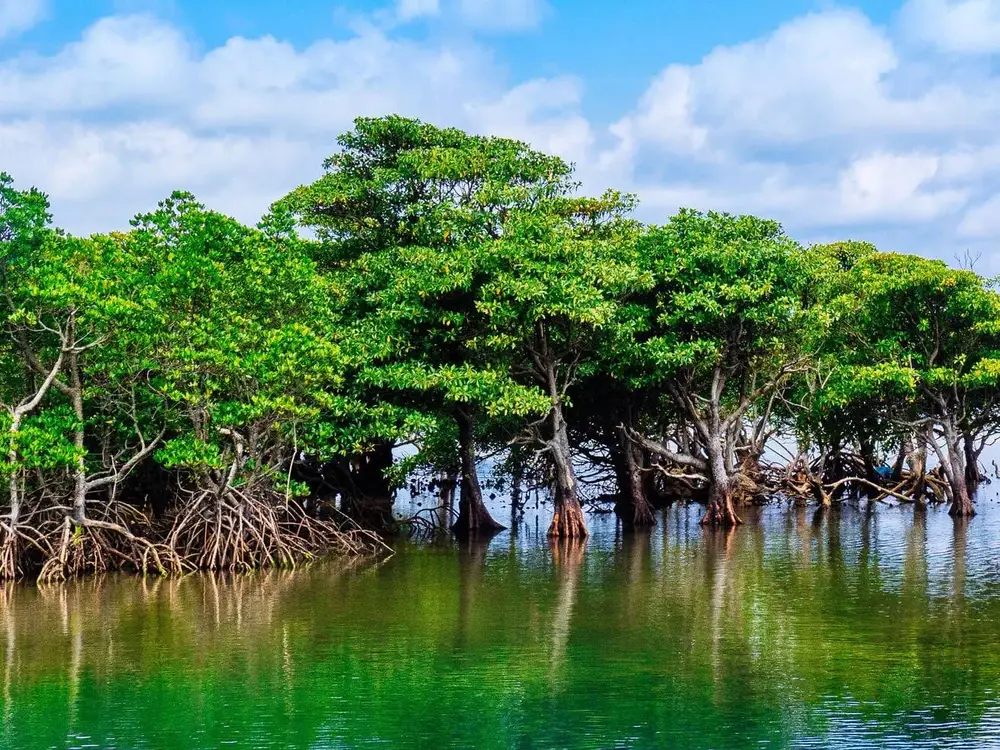
Introduction: Where the Ocean Breathes and the Mind Heals
At the intersection of climate action and mindful living lies a powerful concept: Blue Carbon Wellness — a model that fuses mangrove restoration with premium silent retreats and kayak-based therapy.
It is a concept built on the belief that environmental regeneration and personal well-being are not separate journeys, but two sides of the same tide.
As Sri Lanka positions itself for a new chapter in sustainable tourism, this emerging idea offers a timely and profound opportunity — to turn the restoration of our coastal ecosystems into both a therapeutic experience and a self-sustaining revenue model. It is tourism that heals twice: once for the traveler, and once for the land that receives them.
1. The Power of Mangroves: Nature’s Green Gold
Sri Lanka’s mangroves, covering approximately 19,894 hectares, are among the country’s most vital ecosystems. In 2015, Sri Lanka became the first nation in the world to legally protect all its mangrove forests — an act of foresight that placed the island on the global conservation map.
These living tidal forests are more than just trees; they are natural fortresses that defend our coasts from erosion, nurseries that cradle young fish and shrimp, and carbon sinks that absorb up to four times more carbon than tropical rainforests on land.
Yet, despite their ecological importance, over 80% of mangrove restoration projects globally fail due to poor hydrological planning and inadequate follow-up. A study covering 23 Sri Lankan sites — amounting to over 2,000 hectares — revealed that only about 12% of restorations achieved long-term success.
The challenge is not a lack of intention, but a lack of integration. Restoration efforts often exist in isolation from economic systems, while tourism operates detached from the ecosystems that sustain it. Blue Carbon Wellness bridges that divide.
2. Wellness Tourism: A Growing Global Force
The global wellness tourism industry is now valued at more than USD 800 billion, and growing at a rate faster than traditional tourism. High-value travelers are increasingly seeking transformative, nature-based experiences — not just luxury, but serenity, authenticity, and purpose.
Sri Lanka already has the raw ingredients for this trend: meditative landscapes, Ayurveda heritage, coastal biodiversity, and cultural depth. What has been missing is a unified concept that links wellness directly to ecological restoration — a tourism experience that gives back to the planet.
Blue Carbon Wellness envisions a small network of premium eco-retreats built along mangrove lagoons, estuaries, and coastal buffer zones. Guests engage in silent meditation, kayak therapy, and restorative breathing amidst tidal forests, knowing that a portion of their fee directly funds mangrove restoration and maintenance. It is a stay that restores both body and biosphere.
3. Designing the Experience: Where Silence Meets the Sea
The architecture of a Blue Carbon Wellness retreat is rooted in minimalism, ecology, and sensory awareness.
- Site Selection:
Locations are chosen in degraded or partially restored mangrove buffer zones — areas that can support eco-friendly development without disturbing the core mangrove forest. Hydrology, soil salinity, and community proximity are assessed before any foundation is laid. - Infrastructure:
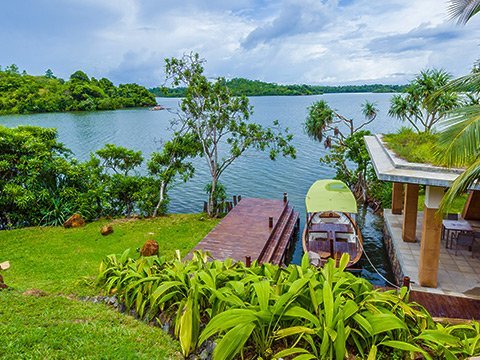
Instead of concrete hotels, there are timber-and-bamboo eco pods elevated on stilts, blending seamlessly into the landscape. A solar-powered meditation dome, open-air yoga decks, and floating kayak docks replace typical luxury facilities. Paths are boardwalks, not asphalt. - Therapeutic Elements:
- Silent Retreats: Guests spend designated days in silence, engaging in guided mindfulness and oceanic meditation.
- Kayak Therapy: Slow paddling through mangrove channels becomes a form of moving meditation, guided by trained naturalists and wellness therapists.
- Forest Bathing: Known in Japan as “Shinrin-Yoku,” this is adapted for coastal wetlands, focusing on sensory connection with mangrove flora and fauna.
- Citizen Science: Guests assist in measuring seedling growth or monitoring water salinity, merging wellness with science.
- Carbon Participation: Every guest contributes to planting or maintaining mangrove saplings, tracked through a personalized conservation passport.
- Community Integration:
Local families operate the kitchens, nurseries, and kayak services. Revenue-sharing ensures that every mangrove saved translates into livelihoods restored. - Monitoring and Restoration:
Each retreat maintains an on-site mangrove nursery. Using drones, soil sensors, and periodic sampling, data is gathered to track survival rates, water quality, and carbon capture. This is the science that supports the soul of the retreat.
4. Financing Nature: The Economics of Blue Carbon
Unlike charity-based conservation, Blue Carbon Wellness is built on a self-sustaining financial ecosystem.
Revenue Streams
- Retreat fees: Room packages including therapy sessions and guided restoration experiences.
- Carbon credits: Certified blue carbon offsets sold to corporates seeking verified climate neutrality.
- Educational programs: Partnerships with universities and research institutions for student residencies and eco-labs.
- Wellness merchandise: Organic teas, mangrove honey, artisanal soaps — branded with the retreat’s conservation identity.
- Philanthropic partnerships: Grants and endowments from climate and biodiversity funds.
Projected Financials
A pilot retreat with 20 cabins could attract an average 50% occupancy rate at USD 400 per night, generating about USD 1.46 million annually.
Operational costs — including staff, maintenance, and conservation work — may total around USD 1 million, leaving a net margin of approximately USD 400,000.
Carbon credit revenues (estimated 500 tonnes of CO₂ sequestration per year at USD 20 per tonne) add another USD 10,000 in supplementary income.
A minimum of 10% of net profit can be directed to a Blue Carbon Trust, which finances community planting, monitoring, and educational outreach.
This structure ensures that every dollar spent by a guest circulates back into environmental and social good.
5. Global and Regional Case Studies: Lessons to Learn
Case 1: The Seacology–Sudeesa Partnership, Sri Lanka
In 2015, a landmark initiative between Seacology and the local NGO Sudeesa created the world’s first nationwide mangrove conservation program. With an investment of over USD 3.4 million, it empowered 12,000 women in 1,500 villages, offering microloans and training in exchange for mangrove stewardship. Over 9,600 acres were replanted, proving that conservation thrives when livelihoods are linked to protection. This partnership laid the moral groundwork for the Blue Carbon Wellness approach.
Case 2: Koggala and Rumassala Community Ecotourism, Sri Lanka
In the south, small-scale mangrove tours supported by international foundations have shown that ecotourism can directly fund restoration. Revenues from guided canoe rides, birdwatching, and educational tours are reinvested into planting and local schools — a micro-model of the Blue Carbon vision.
Case 3: Karangsong Mangrove Ecotourism Park, Indonesia
In West Java, Indonesia, the Karangsong mangrove park turned a degraded coastline into a thriving tourism and conservation site. Surveys showed that over half of visitors reported high satisfaction with the natural environment, demonstrating how education and visitor engagement elevate environmental appreciation.
Case 4: ASEAN Mangrove Tourism Networks
Across Southeast Asia, a multi-country study revealed the importance of local participation and remote monitoring in sustaining mangrove tourism. The research found that tourism-based restoration projects achieved better long-term outcomes than NGO-led planting campaigns alone.
Case 5: Mangrove Ecotourism, Goa (India)
In Goa, a collaborative framework involving government, community groups, and private investors created a replicable ecotourism model. Local boat operators, guides, and artisans became stakeholders in preserving mangroves as part of their livelihood, reducing conflicts and enhancing resilience.
Case 6: Sundarbans, Bangladesh
The Sundarbans mangrove region, a UNESCO World Heritage Site, contributes an estimated USD 53 million annually to Bangladesh’s economy through sustainable tourism. Despite fragile ecosystems, regulated ecotourism has demonstrated that well-managed mangrove visitation can yield national-scale benefits.
Case 7: Maldivian Eco-Resort Sustainability
High-end island resorts in the Maldives offer another relevant lesson. Many have adopted triple-bottom-line frameworks—economic viability, environmental stewardship, and social inclusion. Their coral restoration programs, renewable energy use, and local workforce integration mirror what Blue Carbon Wellness can achieve for mangroves in Sri Lanka.
6. Legal, Policy, and Ethical Framework
Sri Lanka possesses one of South Asia’s most robust policy ecosystems for mangrove protection. The National Policy on Mangrove Conservation and Sustainable Utilization (2020), along with the Strategic Action Plan (2022–2026), provide strong institutional backing.
Any project within coastal zones must also comply with the Coast Conservation and Coastal Resource Management Act, the Fauna and Flora Protection Ordinance, and local environmental impact assessment procedures.
Ethically, the model emphasizes community consent, non-discrimination, and transparent benefit sharing — in alignment with the ICCPR Act No. 56 of 2007.
Data on visitors and ecosystems is handled according to international privacy and sustainability reporting standards. Every aspect of the model avoids “greenwashing” by using independent auditing and measurable indicators.
7. Implementation Roadmap
Phase 1: Feasibility and Pilot (Year 1)
- Select pilot site: e.g., a degraded lagoon area near Negombo or Puttalam.
- Conduct hydrological and ecological studies.
- Build 3–5 cabins, a nursery, and a kayak dock.
- Launch trial silent retreats with limited groups.
- Evaluate guest satisfaction, restoration survival rates, and community involvement.
Phase 2: Expansion and Certification (Years 2–4)
- Scale to 20 cabins and expand restoration to 10–20 hectares.
- Establish Blue Carbon Trust Fund.
- Apply for verified carbon certification.
- Host academic and corporate retreats to diversify revenue.
Phase 3: National Replication (Years 5–10)
- Develop sister retreats in the east (Kokkilai Lagoon) and north (Vankalai Sanctuary).
- Create a national network of “Blue Carbon Sanctuaries.”
- Partner with tourism boards to market Sri Lanka as a Blue Carbon Wellness Destination.
- Integrate into global carbon trading and wellness platforms.
Over a decade, such a network could restore 100 hectares of mangroves, generate over 2,000 high-value tourist visits annually, and channel millions of rupees into conservation and rural employment.
8. Anticipated Impacts
| Indicator | Expected Outcome |
|---|---|
| Mangrove survival rate | Over 70% after 2 years |
| Carbon sequestration | 500 tonnes CO₂e annually per site |
| Employment | 50–70 direct local jobs per retreat |
| Visitor satisfaction | Above 90% positive feedback |
| Local income | Increased household income by 20–30% |
| Educational outreach | 100+ students/volunteers annually |
| Replicability | Expansion to 3+ coastal zones |
Beyond numbers, the deeper transformation lies in how communities begin to own conservation — not as charity, but as enterprise; not as external funding, but as shared prosperity.
9. Challenges and Mitigation
- Hydrological Mismatch: Many failed restoration efforts ignored water flow dynamics. Early scientific assessment is essential.
- Overtourism: Strict capacity limits and silent retreat protocols ensure minimal disturbance.
- Community Resistance: Transparent communication, training, and guaranteed revenue-sharing counter skepticism.
- Climate Shocks: Elevated design and adaptive planting safeguard against sea-level rise and storm surges.
- Carbon Market Volatility: Retreats must not rely solely on carbon credits; tourism revenue remains the base engine.
- Regulatory Delays: Early engagement with government authorities and environmental agencies can expedite clearances.
10. Why Sri Lanka is Perfectly Positioned
Few countries combine the ecological richness, policy support, and tourism infrastructure that Sri Lanka possesses.
From Negombo Lagoon and Muthurajawela in the west to Kokkilai and Vankalai in the north, the island’s coastal wetlands offer ideal landscapes for pilot sites.
Its wellness tradition — from Ayurveda to meditation — already aligns with global wellness tourism values.
Its people, long experienced in hospitality, can bring authenticity and care that no imported brand can replicate.
And with its commitment to a Blue-Green Economy, Sri Lanka can pioneer a model the world looks to replicate.
11. The Human Experience: A Narrative Vision
Picture this: dawn breaking over a quiet lagoon. Mist rises between the mangrove roots as you glide silently in a kayak, the paddle barely touching water. A white egret crosses your path; the forest hums in tranquil rhythm. For hours, you listen — to waves, to wind, to yourself.
Later, in your stilted cabin, you sip a cup of mangrove honey tea and learn that the sapling you helped plant yesterday will absorb a tonne of carbon over its lifetime. You leave lighter, quieter, and prouder — knowing that your holiday helped heal both planet and soul.
That is the essence of Blue Carbon Wellness — tourism reborn as therapy for the Earth.
12. Strategic Recommendations
For Policymakers:
- Integrate Blue Carbon Wellness into national tourism and climate policies.
- Offer tax incentives for verified eco-restoration projects.
- Develop clear mangrove tourism zoning guidelines.
For Investors:
- View this as an impact investment opportunity with measurable returns.
- Support pilot projects through blended finance and CSR funds.
For Communities:
- Demand inclusion from inception.
- Form cooperative ownership structures for equitable profit sharing.
For Academia and NGOs:
- Collaborate on baseline data collection and monitoring.
- Offer certification programs in Blue Carbon Restoration Management.
Conclusion: Healing Twice
The greatest challenge of our time is to create economies that regenerate rather than extract. The Blue Carbon Wellness concept embodies that shift — turning every act of rest into a gesture of restoration.
For Sri Lanka, it is more than a tourism innovation. It is a statement to the world that our coasts, our communities, and our consciousness can thrive together — that well-being and rewilding are one and the same journey.
Disclaimer
This article has been authored and published in good faith by Dr. Dharshana Weerakoon, DBA (USA), based on publicly available data from national and international sources, professional experience across multiple continents, and continuous industry insight. It is intended solely for educational, journalistic, and public awareness purposes to stimulate discussion on sustainable tourism models. The author accepts no responsibility for any misinterpretation, adaptation, or misuse of the content.
Views expressed are entirely personal and analytical, and do not constitute legal, financial, or investment advice. This article and the proposed model are designed to comply fully with Sri Lankan law, including the Intellectual Property Act No. 52 of 1979, the ICCPR Act No. 56 of 2007, and all relevant data privacy and ethical standards.
✍ Authored independently and organically through lived professional expertise — not AI-generated.
Further Reading: https://www.linkedin.com/newsletters/outside-of-education-7046073343568977920/
Additional Reading: https://gray-magpie-132137.hostingersite.com/saudi-arabia-for-sri-lanka/