Powering a Tourism Nation: Why Reliable Electricity Is No Longer Optional for Sri Lanka
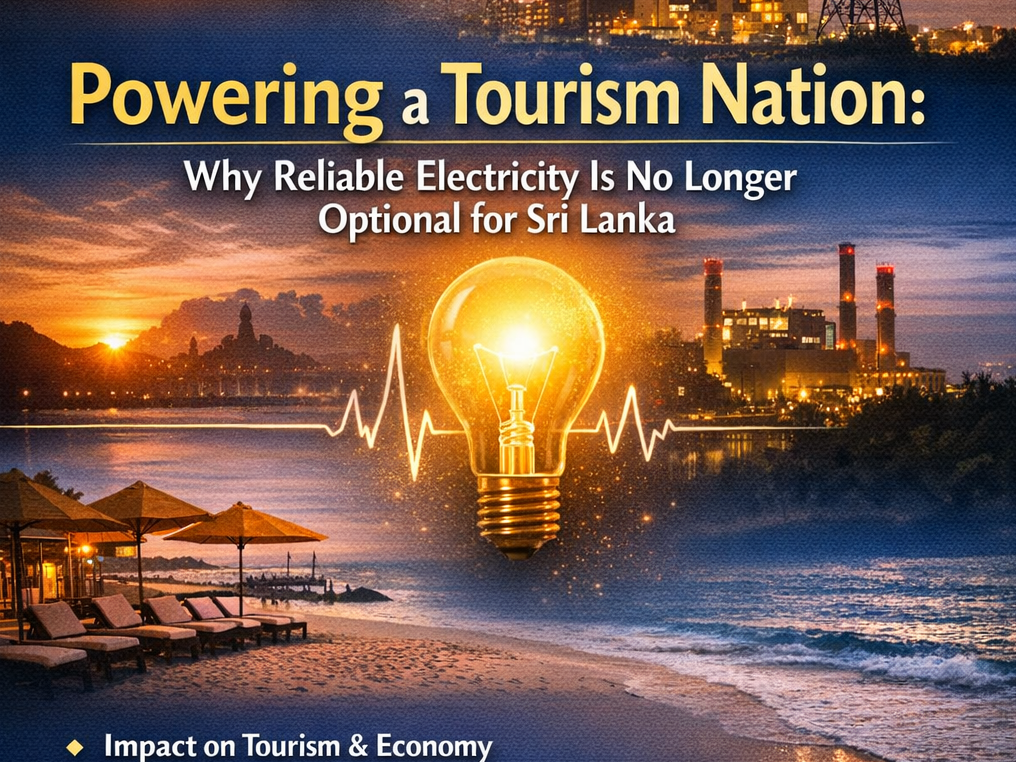
Powering a Tourism Nation: Why Reliable Electricity Is No Longer Optional for Sri Lanka
On 02 March 2026, I received yet another scheduled power interruption notice affecting my premises in Bemmulla. The supply was to be disconnected from 08:30 hrs to 17:00 hrs for essential maintenance work. For many citizens, this may appear routine. However, for those of us deeply engaged in the tourism and hospitality industry, it represents something far more consequential.
The greater concern is not the existence of scheduled maintenance itself. Infrastructure must be maintained. Systems require upgrades. Preventive shutdowns are part of responsible grid management. The issue, rather, lies in the frequency of interruptions, the recurrence every few weeks, and the broader pattern of unscheduled and uninformed disconnections that create uncertainty.
Sri Lanka aspires to be South Asia’s most refined, resilient, and premium tourism destination. Yet uninterrupted power supply remains a recurring vulnerability.
Therefore, the fundamental question is straightforward:
Where does the structural gap lie, and why is Sri Lanka still struggling to ensure uninterrupted power supply more than five decades after establishing its national electricity authority?
To answer that question meaningfully, we must examine history, structure, economics, governance, and the direct implications for tourism competitiveness.
Institutional Background and Structural Context
The Ceylon Electricity Board (CEB) was established in 1969. That means Sri Lanka has had over 55 years to develop, modernize, and future-proof its electricity infrastructure.
Over the decades, the electricity mix has evolved from heavy hydropower dependence to a more diversified portfolio including thermal, coal, oil, wind, and solar. However, structural stress remains evident in several areas:
- High exposure to imported fuel volatility
- Financial deficits accumulated through tariff misalignment
- Delays in commissioning new base-load plants
- Limited large-scale battery storage capacity
- Transmission constraints in high-demand corridors
- Weather-related hydro variability
Electricity demand in Sri Lanka has grown steadily. In recent years, peak demand has exceeded 2,700 MW. Meanwhile, prior to the Easter attacks and pandemic, tourist arrivals reached approximately 2.3 million annually. The sector is now in recovery mode, with ambitious targets to surpass previous records.
As tourism rebounds, energy demand intensifies — particularly in:
- Colombo and suburban commercial zones
- Southern coastal belt resorts
- Cultural triangle hospitality clusters
- Boutique and eco-lodges expanding in emerging destinations
Thus, power reliability is no longer a domestic convenience matter. It is a strategic tourism infrastructure matter.
Electricity as the Backbone of Hospitality Operations
In hospitality, electricity is not optional. It is foundational.
An 80-room mid-scale hotel operating at 75% occupancy consumes substantial energy daily across:
- Central air-conditioning systems
- Elevators and escalators
- Commercial kitchens
- Laundry services
- Water pumping systems
- Reservation software and cloud systems
- CCTV and security infrastructure
A single eight-hour power interruption forces immediate generator activation. Depending on size and diesel prices, one day of generator operation can cost between LKR 350,000 to 600,000. If this occurs 12–20 times per year, the additional operational burden becomes significant.
Moreover, generator usage is not a sustainable solution. It leads to:
- Increased carbon footprint
- Higher maintenance costs
- Noise pollution affecting guest experience
- Equipment degradation
- Diesel storage risk
Today’s global traveler expects seamless service. When a guest books through Booking.com or reads reviews on Tripadvisor, expectations are shaped by global standards.
A power failure does not appear online as “grid interruption.” It appears as “poor hotel management.”
That distinction is critical.
Tourism is perception-driven. Infrastructure reliability directly influences destination reputation.
The Economic Impact of Unreliable Electricity on Tourism
Tourism has historically contributed approximately 10–12% (direct and indirect) to Sri Lanka’s GDP during peak performance years.
Consider a simplified sector-wide impact assessment:
- Estimated 5,000 registered tourism-related establishments
- Average 12 scheduled interruption days annually
- Conservative LKR 200,000 generator cost per outage day
Estimated direct annual generator cost burden:
LKR 12 billion or more.
This does not include:
- Food spoilage losses
- Loss of bookings
- Compensation to dissatisfied guests
- Equipment replacement
- Air-conditioning compressor damage
- Brand erosion
Furthermore, international conference organizers evaluate power reliability before selecting destinations. Medical tourism, which depends on uninterrupted clinical equipment operation, demands even higher stability.
Therefore, electricity reliability is directly linked to foreign exchange earnings.
Structural Causes Behind Recurrent Interruptions
The issue is complex and multi-dimensional.
1. Fuel Import Dependency
Sri Lanka imports a significant share of fossil fuel for thermal generation. During foreign exchange shortages — such as the 2022 economic crisis — fuel procurement constraints directly impacted power generation capacity. Rolling blackouts of up to 10–13 hours daily were experienced nationwide.
2. Hydropower Variability
Hydropower contributes meaningfully during rainy seasons. However, drought periods sharply reduce output. Climate variability has increased unpredictability.
3. Financial Sustainability of the Utility
The Ceylon Electricity Board has historically reported cumulative financial losses running into hundreds of billions of rupees. Tariff freezes, fuel cost shocks, and debt servicing obligations have constrained capital reinvestment.
4. Renewable Integration Without Storage
Solar and wind capacity has grown. However, without large-scale battery storage or grid modernization, renewable intermittency introduces stability challenges.
5. Transmission and Distribution Constraints
Although losses have reduced compared to past decades, grid modernization remains incomplete. Urban load growth sometimes exceeds transmission upgrade pace.
6. Policy Inconsistency
Energy policy continuity requires long-term vision beyond electoral cycles. Delayed procurement decisions for major generation projects often lead to short-term crisis responses.
International Case Studies and Comparative Lessons
Case Study 1: Maldives – Decentralized Energy Autonomy
The Maldives, despite its limited landmass, hosts approximately 1.8 million tourists annually. Most resort islands operate independent hybrid energy systems combining diesel generators with solar installations. Outages within resort properties are rare.
Lesson: Decentralized energy independence in tourism zones enhances reliability.
Case Study 2: Singapore – Reliability as Economic Branding
Singapore consistently records one of the world’s lowest electricity interruption rates, often with system average interruption durations measured in minutes per year. Energy security is treated as national competitiveness.
Lesson: Reliability strengthens investor confidence and tourism branding simultaneously.
Case Study 3: Dubai – Long-Term Strategic Planning
Dubai aggressively invested in diversified generation, including large-scale solar parks. Redundancy planning ensured uninterrupted electricity even as tourism exceeded 17 million visitors annually.
Lesson: Infrastructure planning aligned with tourism ambition prevents crisis management.
Case Study 4: Sri Lanka 2022 Crisis
During the economic collapse, prolonged rolling blackouts severely impacted hotels. Diesel shortages forced some establishments to reduce operations. Estimated tourism revenue losses exceeded USD 1 billion relative to potential projections.
Lesson: Energy instability magnifies macroeconomic vulnerabilities.
Case Study 5: Kerala – Rooftop Solar Incentives
Kerala encouraged distributed solar adoption among commercial establishments. Hospitality properties benefited from reduced grid dependency and improved sustainability marketing.
Lesson: Incentive-driven decentralization strengthens resilience.
Case Study 6: Japan – Post-Crisis Reform
After the 2011 Fukushima disaster, Japan restructured its energy market, increased inter-regional connectivity, and diversified supply. Reliability was restored through structural reform.
Lesson: Crisis can catalyze modernization.
Case Study 7: Thailand – Tourism Hub Prioritization
Thailand supports over 35 million annual visitors. Tourism hubs like Bangkok and Phuket receive prioritized infrastructure upgrades and grid redundancy.
Lesson: Strategic zoning protects revenue-generating sectors.
The Tourism Competitiveness Equation
Uninterrupted power supply influences:
- Hotel classification standards
- Conference tourism growth
- Cruise terminal operations
- Digital nomad destination appeal
- Luxury brand entry decisions
If Sri Lanka aims to attract premium travelers spending USD 250–500 per night, reliability expectations must match that positioning.
Destination credibility depends on operational stability.
Policy Recommendations for Sustainable Reform
- Establish Tourism Energy Security Zones with guaranteed redundancy.
- Provide tax incentives for solar + battery storage installations.
- Expand smart grid investments.
- Introduce time-of-use commercial tariffs encouraging load balancing.
- Strengthen independent regulatory oversight for long-term planning.
- Improve outage communication transparency and digital alert systems.
- Encourage public-private partnerships in energy infrastructure.
Reform must be collaborative, data-driven, and future-oriented.
A Balanced and Constructive Perspective
It is important to acknowledge that grid maintenance is essential. Upgrades require planned shutdowns. Utility management operates within fiscal constraints.
However, frequent scheduled outages combined with unplanned disconnections indicate structural stress rather than isolated maintenance necessity.
Critique must therefore remain constructive.
Sri Lanka possesses:
- Abundant solar potential
- Offshore wind prospects
- Skilled engineers
- A strategic Indian Ocean location
- Growing tourism demand
The capability exists.
The imperative now is coordinated execution.
Conclusion: Energy Stability Equals Tourism Credibility
Tourism is built on trust.
Guests trust that:
- Their rooms will remain cooled.
- Elevators will function.
- Food safety will be maintained.
- Internet connectivity will remain uninterrupted.
Electricity underpins each of these elements.
If Sri Lanka seeks to position itself as a resilient, premium, and globally competitive tourism destination, uninterrupted power supply must be treated as strategic national infrastructure — not merely a public utility function.
Energy stability drives investor confidence.
Investor confidence drives tourism growth.
Tourism growth strengthens foreign exchange reserves.
Foreign exchange reserves stabilize the economy.
Thus, electricity reliability is not just about comfort. It is about national economic resilience.
The question is not whether Sri Lanka can provide uninterrupted power supply.
The question is whether we are prepared to align energy reform with our tourism ambition.
Disclaimer
This article has been authored and published in good faith by Dr. Dharshana Weerakoon, DBA (USA), based on publicly available national data, sectoral performance indicators, macroeconomic trends, and extensive professional experience within the global tourism and hospitality industry. It is intended solely for educational, journalistic, and public awareness purposes to stimulate informed discussion on energy reliability and tourism competitiveness in Sri Lanka. The author accepts no responsibility for any misinterpretation, adaptation, or misuse of the content. Views expressed are entirely personal, analytical, and policy-oriented, and do not constitute legal, financial, engineering, or investment advice. This article is written in compliance with applicable Sri Lankan legal and ethical standards and respects institutional integrity and public accountability. Authored independently and organically through lived professional expertise and industry insight.
Further Reading: https://www.linkedin.com/newsletters/7046073343568977920/
Further Reading: https://dharshanaweerakoon.com/the-business-of-motivation-without-results/