Hospitality Is Not a Machine: Why Human Touch Will Always Define the Soul of Sri Lanka’s Tourism
Hospitality Is Not a Machine: Why Human Touch Will Always Define the Soul of Sri Lanka’s Tourism
Introduction: Pleasure Is Mechanical. Hospitality Is Emotional.
Artificial Intelligence.
Chatbots.
Self check-in kiosks.
Service robots.
These innovations are becoming increasingly common across global hotels. They promise speed, precision, cost efficiency, and scalability. However, as someone who has worked across continents in tourism strategy and hospitality leadership, I must ask a fundamental question:
Are we confusing operational efficiency with hospitality?
Let me express this in the simplest and most human way possible.
You can use a machine to generate physical stimulation. You may experience pleasure from it. But pleasure is not the same as feeling. Mechanical satisfaction is not emotional connection. One is transactional. The other is relational.
Similarly, technology in hotels may deliver speed and functionality. It may provide convenience. But it cannot deliver love. It cannot offer care. It cannot smile with sincerity. It cannot recognize emotional exhaustion in a guest’s eyes.
The word “hospitality” itself implies:
- Human touch
- Human feelings
- Love
- Care
- Smile
- Attention
- Respect
- Recognition
- Empathy
Without these, we are not offering hospitality. We are merely delivering accommodation.
The Homecoming Analogy: The Purest Definition of Hospitality
Allow me to illustrate what true hospitality means.
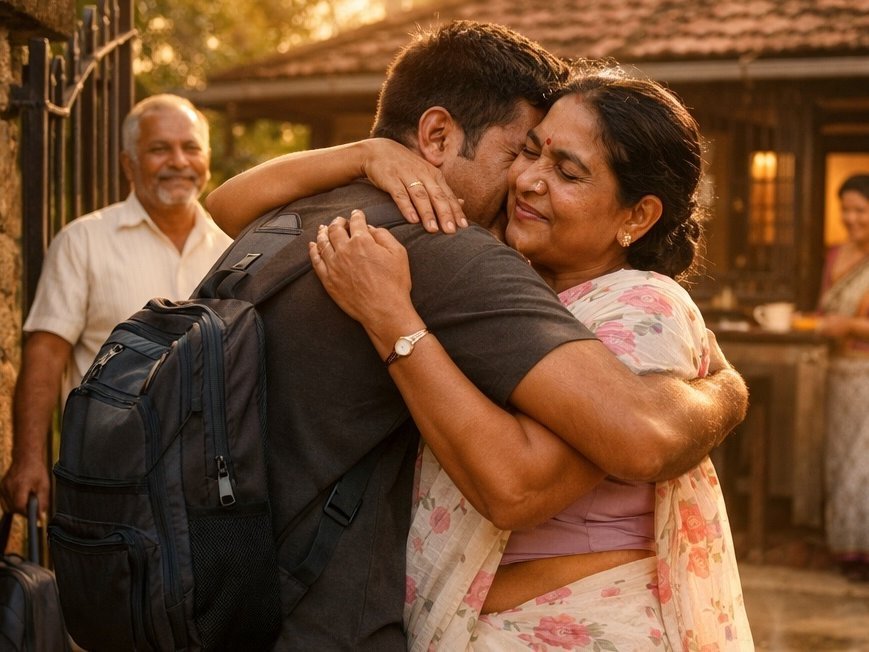
Imagine a son or daughter returning home after several months away. They step off a bus at the small bus stop near their house. From a short distance, they can already see the gate of their home. And there — waiting patiently — is their mother.
There are only a few meters between the bus stop and the house. The son or daughter walks slowly, carrying bags. The mother stands at the gate. At a certain distance, their eyes meet.
That eye contact says everything.
No words yet.
But the body language speaks.
The emotions build.
The son or daughter drops the bags and runs forward. They embrace. Tears flow. The mother holds them tightly — not as a formality, but as an instinct of love.
The father, or another family member, quietly picks up the luggage. The mother guides the son or daughter inside.
She says, “Sit down. You must be tired.”
She brings a hot cup of tea — not because it was ordered, but because it is understood.
After a few minutes of warm conversation, she says gently:
“My son, my daughter, you have traveled such a long distance. You must be exhausted. Go and have a wash or a shower. I will prepare your meals.”
This is not service.
This is not automation.
This is not protocol.
This is hospitality.
This is the feeling a guest should experience in a hotel.
Not literally a mother — but emotionally the same warmth, recognition, and attention.
Sri Lanka’s Tourism Reality: A Sector at a Strategic Crossroads
Sri Lanka’s tourism industry is one of the most critical pillars of our national economy.
According to the Sri Lanka Tourism Development Authority:
- Tourist arrivals peaked above 2.3 million before national crises.
- The recovery phase has crossed 1.5 million annual visitors.
- National targets aim beyond 2.5 million arrivals in the near term.
- Tourism earnings previously exceeded USD 4 billion annually.
- Over 400,000 Sri Lankans depend directly and indirectly on tourism for livelihood.
Meanwhile, data from the Central Bank of Sri Lanka confirms tourism as a leading foreign exchange earner, especially during times of economic stress.
However, the question we must ask is strategic:
Will Sri Lanka compete as a low-cost, automation-heavy destination?
Or will Sri Lanka position itself as the most emotionally rich hospitality destination in the Indian Ocean?
Our answer will determine our long-term brand equity.
Global Automation Trends: Efficiency Without Soul?
Across the world, hotels are rapidly adopting:
- Self check-in kiosks
- AI-powered chatbots
- Digital room keys
- Service delivery robots
- Facial recognition systems
One famous example is Henn-na Hotel in Japan — once marketed as the world’s first robot-staffed hotel. Initially, the concept gained international media attention. However, operational difficulties emerged:
- Robots failed to answer complex questions.
- Voice recognition struggled with accents.
- Technical malfunctions caused guest frustration.
Eventually, a significant number of robots were removed and replaced with human staff.
The lesson was clear: automation cannot replace emotional intelligence.
Even global giants such as Marriott International use technology extensively — but they continue to invest heavily in staff training, personalization programs, and service culture.
Technology supports the system.
People define the experience.
The Emotional Economy of Tourism
Research consistently shows:
- Over 80% of travelers value personalized service more than automated convenience.
- Nearly 70% of negative reviews relate to staff attitude rather than physical infrastructure.
- Guests who feel emotionally connected are 40% more likely to return.
- Luxury travelers rank “warm staff interaction” above in-room technology.
This demonstrates what I call the Emotional Economy.
In modern tourism:
Guests do not simply purchase a room.
They purchase a memory.
And memory is emotional.
Case Study 1: The Ritz-Carlton Standard of Care
The Ritz-Carlton empowers employees to resolve guest issues immediately, often without managerial approval.
Why?
Because delayed emotional response destroys trust.
Their model proves that human empowerment drives loyalty.
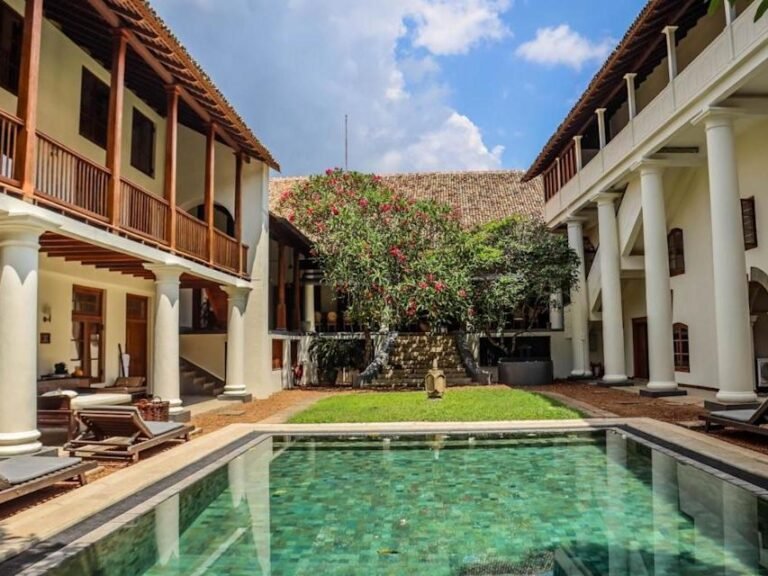
Case Study 2: Boutique Hotels in Galle Fort
Sri Lanka’s boutique hotels in Galle Fort thrive because:
- Guests are greeted personally by owners.
- Staff remember names.
- Stories about Sri Lankan culture are shared.
- Service feels intimate and authentic.
Occupancy rates in well-managed boutique properties often outperform larger chain hotels during off-peak periods.
The difference is not robotics.
It is relationship.
Case Study 3: The Airbnb Personal Host Model
Airbnb revolutionized travel through personal storytelling and human hosting.
Even on a digital platform, guests choose:
- Host personality
- Communication warmth
- Authentic engagement
Technology enables booking — but people drive preference.
Case Study 4: Online Reviews and Emotional Language
On platforms such as Booking.com, the highest-rated properties are praised for:
- “Staff treated us like family.”
- “They went beyond expectations.”
- “Felt like home.”
Rarely do reviews celebrate automation.
Emotion influences ratings.
Ratings influence revenue.
Case Study 5: Post-Pandemic Traveler Psychology
After global health crises:
- 65% of travelers prioritize human reassurance.
- Solo travelers seek staff interaction for safety.
- Families prefer emotionally engaging service.
An automated kiosk cannot sense anxiety.
A trained Sri Lankan staff member can.
Case Study 6: Village Tourism Experiences
In rural Sri Lanka:
- Cooking with local families.
- Participating in village festivals.
- Sharing meals in traditional homes.
These experiences generate powerful emotional memories — and organic social media promotion.
This is sustainable tourism.
The Risk of Losing Our Identity
If Sri Lanka over-automates:
- Youth employment declines.
- Cultural interaction weakens.
- Emotional differentiation disappears.
- We compete on price rather than value.
We cannot out-robot Japan.
We cannot out-automate Singapore.
But we can out-welcome the world.
A Strategic Hybrid Model for Sri Lanka
I am not anti-technology.
Digital systems should enhance:
- Reservations
- Data analytics
- Revenue management
- Security
- Efficiency
However, guest-facing interactions must remain deeply human.
Sri Lanka’s winning formula must be:
High-tech backend + High-touch frontline.
Hospitality as National Philosophy
When a traveler lands in Sri Lanka, they are not a number in an arrival statistic.
They are someone returning home to discover a new emotional experience.
Our hotel staff must metaphorically stand at the gate — like the mother in my earlier example — ready to welcome.
With eye contact.
With recognition.
With genuine care.
That is hospitality.
Conclusion: Machines Assist. Humans Embrace.
Automation will grow. Artificial Intelligence will expand. Investment in hospitality technology globally will continue rising into billions of dollars.
However, no machine will ever replicate:
- A sincere smile.
- An intuitive gesture.
- A comforting tone.
- A culturally authentic welcome.
Sri Lanka’s competitive advantage lies not in robotics — but in relationships.
If we protect this identity, our tourism industry will not only recover — it will flourish.
Hospitality is not technology.
Hospitality is humanity.
And humanity must remain at the heart of Sri Lanka’s tourism future.
Disclaimer
This article has been authored and published in good faith by Dr. Dharshana Weerakoon, DBA (USA), based on publicly available national and international tourism data (including insights from Sri Lankan regulatory authorities and global tourism performance monitors), decades of professional engagement across multiple continents, and ongoing strategic industry observation. It is intended solely for educational, journalistic, and public discourse purposes to encourage balanced dialogue on the future of tourism and hospitality in Sri Lanka. The author accepts no responsibility for misinterpretation, commercial adaptation, or misuse of this content. The opinions expressed are entirely personal, analytical, and strategic in nature, and do not constitute legal, financial, or investment advice. This article is presented in alignment with applicable Sri Lankan laws, intellectual property protections, non-discrimination principles, and ethical standards.
✍ Authored independently through lived professional expertise and strategic industry experience.
Further Reading: https://www.linkedin.com/newsletters/7046073343568977920/
Further Reading: https://dharshanaweerakoon.com/the-silent-resort-model/