Fuel, LP Gas, and the Illusion of Market Pricing in Sri Lanka: A Structural Disconnect
Introduction: When Pricing Defies Logic
In any functioning economy, fuel and energy prices are expected to reflect global market movements—particularly in a country like Sri Lanka, which relies heavily on imports. Yet, recent patterns in fuel and LP gas pricing suggest a growing disconnect between international benchmarks and domestic pricing mechanisms.
This is not merely an economic anomaly—it is a structural concern. When prices rise despite stable or declining global indices, questions must be raised. Are we observing inefficiencies, policy distortions, or deeper systemic issues embedded within the pricing architecture?
This analysis seeks to unpack these complexities through data, comparative insights, and real-world case studies.
Understanding the Expected Pricing Mechanism
Under standard economic conditions, domestic fuel pricing is influenced by several key variables:
- Global crude oil prices (Brent, WTI benchmarks)
- Exchange rate fluctuations (LKR vs USD)
- Import, refining, and distribution costs
- Government taxes and levies
- Subsidy frameworks
Sri Lanka officially follows a cost-reflective pricing formula, introduced post-economic crisis reforms, often under the guidance of institutions like the International Monetary Fund.
However, the practical application appears inconsistent.
Global Price Trends vs Local Reality
Between 2023 and early 2026:
- Brent crude oil fluctuated between USD 70–95 per barrel
- Global LP gas (LPG) prices declined by approximately 15–20% in 2024
- Shipping costs stabilized post-pandemic
Yet, domestically:
- Fuel prices increased by 8–12% in multiple revisions
- LP gas cylinder prices rose by Rs. 200–500 increments
- Price reductions were minimal and delayed
Data from the Central Bank of Sri Lanka indicates that energy-related inflation remained above 15% year-on-year in several quarters, even when global energy inflation softened.
This divergence forms the core of the argument: Sri Lanka’s pricing mechanism is not purely market-driven.
Key Structural Factors Behind the Disconnect
1. Exchange Rate Buffering and Risk Hedging
While global prices may fall, depreciation of the Sri Lankan Rupee offsets potential gains.
- LKR depreciated by nearly 20% between 2022–2024
- Importers price in future currency risk, not just current rates
This creates a “buffer pricing effect”, where consumers pay for anticipated volatility rather than actual costs.
2. Hidden Fiscal Adjustments Through Energy Pricing
Energy pricing has increasingly become a fiscal tool.
Instead of direct taxation:
- Governments adjust fuel margins
- Losses of state-owned enterprises are absorbed through pricing
- Cross-subsidization occurs (fuel profits offset other deficits)
This approach lacks transparency and distorts price signals.
3. Inefficiencies in State-Owned Enterprises
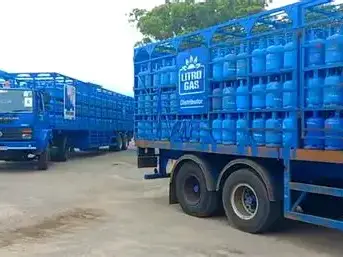
Entities like the Ceylon Petroleum Corporation and Litro Gas Lanka operate with structural inefficiencies:
- High operational overheads
- Debt servicing burdens
- Procurement inefficiencies
These costs are often passed directly to consumers, regardless of global price movements.
4. Lack of Competitive Market Dynamics
Sri Lanka’s energy sector remains semi-liberalized:
- Limited competition in fuel imports
- Regulatory barriers for new entrants
- Price controls with discretionary adjustments
Without true competition, pricing lacks downward pressure.
5. Policy Lag and Administrative Delays
Even when global prices decline:
- Domestic adjustments are delayed
- Bureaucratic processes slow implementation
- Political considerations influence timing
This creates an asymmetric pattern:
Prices rise quickly—but fall slowly.
Statistical Snapshot: A Comparative View
| Indicator | Global Trend | Sri Lanka Trend |
| Crude Oil (2024 avg) | ↓ 10% | ↑ Domestic retail prices |
| LPG Prices (global) | ↓ 15% | ↑ 8–10% locally |
| Shipping Costs | Stabilized | Minimal impact on retail |
| Exchange Rate | Stable globally | LKR volatility high |
| Energy Inflation | Moderate globally | >15% locally |
Case Studies: Lessons from Global and Local Contexts
Case Study 1: India – Transparent Pricing Formula
India follows a dynamic pricing model:
- Daily price revisions
- Direct correlation with global benchmarks
- Publicly available pricing formula
Lesson: Transparency builds trust and reduces speculation.
Case Study 2: Singapore – Fully Liberalized Market
Singapore operates a competitive fuel market:
- Multiple suppliers
- Market-driven pricing
- Strong regulatory oversight
Outcome: Prices reflect real-time global movements.
Case Study 3: Pakistan – IMF-Driven Reforms
Pakistan implemented strict cost-reflective pricing:
- Automatic adjustments
- Reduced political interference
Challenge: Public backlash due to rapid increases.
Case Study 4: Sri Lanka (Pre-2022 Crisis)
Before the crisis:
- Heavy subsidies distorted pricing
- Artificially low fuel prices
- Fiscal burden escalated
Result: Unsustainable system collapse.
Case Study 5: Post-2022 Sri Lanka
Reforms introduced:
- Pricing formula adoption
- Reduced subsidies
- IMF-aligned policies
Reality: Partial implementation with inconsistencies.
Case Study 6: Indonesia – Targeted Subsidy Model
Indonesia shifted to:
- Targeted subsidies for low-income groups
- Market pricing for others
Benefit: Balanced fiscal discipline and social protection.
Case Study 7: European Union – Energy Shock Response
European Union countries:
- Introduced temporary tax cuts
- Provided direct consumer relief
Insight: Governments can intervene without distorting long-term pricing.
Impact on Sri Lanka’s Economy
1. Inflationary Pressure
Fuel is a cost multiplier:
- Transport costs increase
- Food prices rise
- Services become expensive
2. Tourism Sector Strain
As a tourism strategist, I observe direct implications:
- Increased operational costs for hotels
- Higher transport expenses for tourists
- Reduced competitiveness vs regional destinations
3. SME and Household Burden
- Small businesses face margin compression
- Household disposable income declines
- Energy poverty risks increase
Is the Price Increase Logical?
From a purely economic perspective:
👉 No, it is not entirely logical if evaluated against global price trends alone.
However:
👉 Yes, it can be partially explained when internal inefficiencies, fiscal needs, and currency risks are considered.
This duality highlights the central issue:
Sri Lanka’s pricing is not purely market-driven—it is system-driven.
Strategic Recommendations
1. Full Transparency in Pricing Formula
- Publish detailed cost breakdowns
- Update regularly
- Ensure public accessibility
2. Introduce True Market Competition
- Allow more importers
- Reduce entry barriers
- Strengthen regulatory frameworks
3. Operational Efficiency Reforms
- Restructure state-owned enterprises
- Reduce inefficiencies
- Improve procurement systems
4. Targeted Subsidy Mechanism
- Protect vulnerable groups
- Avoid blanket subsidies
- Use digital identification systems
5. Independent Regulatory Authority
- Remove political influence
- Ensure consistent pricing adjustments
Conclusion: A Call for Structural Realignment
Sri Lanka stands at a critical juncture.
The issue is not merely about fuel or LP gas pricing—it is about economic credibility, policy integrity, and public trust.
If pricing mechanisms continue to deviate from global realities without transparency, the long-term consequences will extend beyond inflation:
- Erosion of investor confidence
- Decline in economic competitiveness
- Increased social dissatisfaction
The solution is not price suppression—but system correction.
Disclaimer
This article has been authored and published in good faith by Dr. Dharshana Weerakoon, DBA (USA), based on publicly available macroeconomic indicators, energy market trends, and institutional data from national entities such as the Central Bank of Sri Lanka and global energy benchmarks, combined with extensive professional experience across international markets.
It is intended solely for educational, analytical, and public awareness purposes to stimulate informed discussion on energy pricing structures and economic policy dynamics in Sri Lanka.
The author accepts no responsibility for any misinterpretation, adaptation, or external use of the content. Views expressed are strictly personal and analytical, and do not constitute legal, financial, or investment advice.
This article is developed in alignment with Sri Lankan legal and ethical standards, including applicable economic governance frameworks, public policy norms, and intellectual property regulations.
✍ Authored independently through professional expertise, industry analysis, and lived experience.
Further Reading: https://dharshanaweerakoon.com/sri-lanka-fuel-price-analysis-2026/
Further Reading: https://www.linkedin.com/newsletters/outside-of-education-7046073343568977920/