
From Farm to Doorstep: A New Era for Sri Lankan Farmers — Building Direct Connections with Local and Global Consumers
Introduction: Rethinking Value in Agriculture
A simple idea — “rent a mango tree” — has quietly disrupted how consumers think about food. While it may appear novel, it is, in essence, a re-engineering of something deeply traditional: direct access to fresh produce.
In Sri Lanka, we stand at a similar crossroads.
For generations, our farmers — cultivating mangoes, pineapples, watermelons, bananas, and countless other crops — have been the backbone of the rural economy. Yet, paradoxically, they remain among the most economically vulnerable stakeholders in the value chain. The primary reason is not productivity, but disconnection.
Farmers grow. Intermediaries control. Consumers pay premium prices.
The imbalance is clear.
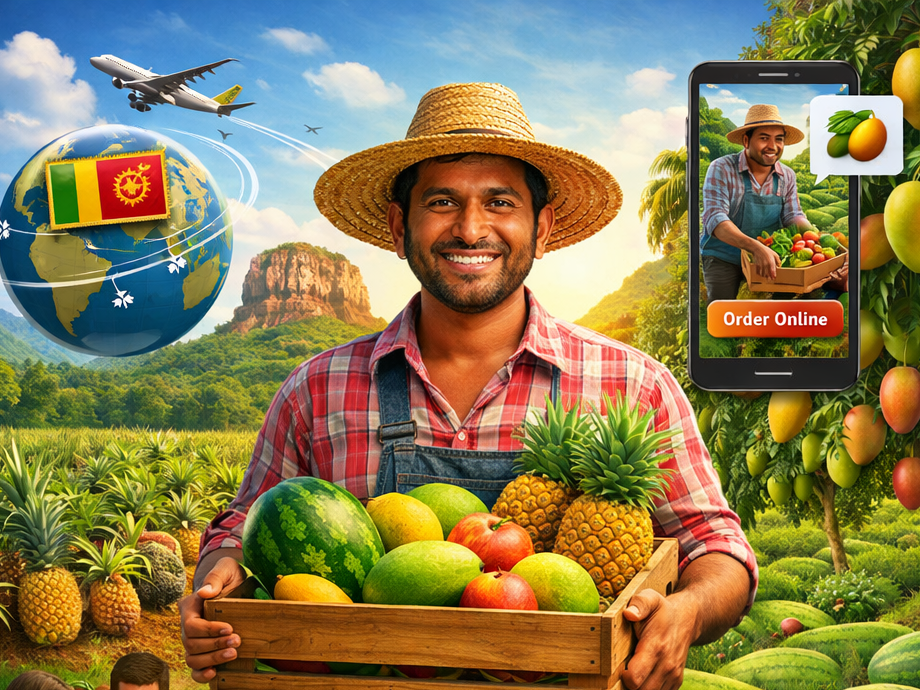
However, a powerful opportunity is emerging: Direct-to-Consumer (D2C) agriculture models. These models eliminate unnecessary middle layers, restore pricing power to farmers, and create transparency for consumers.
This article explores how Sri Lankan farmers can adopt such models, supported by global case studies, data-backed insights, and practical frameworks.
The Current Agricultural Landscape in Sri Lanka
Before proposing solutions, it is essential to understand the scale and structure of the challenge.
- Agriculture contributes approximately 7–8% to Sri Lanka’s GDP
- Employs nearly 25% of the national workforce
- Over 70% of farmers operate on smallholder plots (less than 2 hectares)
- Post-harvest losses range between 20%–40%, especially in fruits like mango, pineapple, and watermelon
- Farmers often receive only 30%–50% of final retail value
Meanwhile, urban consumers are paying increasing prices for fruits:
- Mango (premium varieties): LKR 800–1,500 per kg
- Pineapple (export-grade): LKR 400–700 per kg
- Watermelon: LKR 150–300 per kg
This price gap is largely driven by intermediaries, logistics inefficiencies, and lack of direct access to markets.
The Global Shift: Trust-Based and Experience-Driven Consumption
Consumers today are no longer just buying products — they are buying trust, transparency, and experience.
Key global trends:
- 72% of consumers prefer to buy directly from producers when possible
- 65% of millennials are willing to pay more for traceable food
- Subscription-based food models are growing at over 18% annually
- Farm-to-table ecosystems have expanded rapidly across Asia, Europe, and North America
This shift is not accidental. It reflects:
- Health consciousness
- Food safety concerns
- Ethical consumption
- Digital accessibility
Sri Lanka can leverage all of these.
A New Model for Sri Lanka: “Adopt, Subscribe, and Connect”
Let us contextualize this for Sri Lankan agriculture.
1. Adopt-a-Tree / Adopt-a-Farm Model
Consumers “adopt” a mango tree, pineapple plot, or watermelon patch for a season.
How it works:
- Consumer pays upfront (e.g., LKR 50,000–100,000 per season)
- Farmer manages cultivation
- Harvest is delivered in batches
- Digital updates (photos/videos) create engagement
Benefits:
- Guaranteed income for farmers
- Transparent sourcing for consumers
- Emotional connection to food
2. Subscription-Based Fruit Boxes
Weekly or monthly delivery of fresh produce.
Example:
- “Tropical Harvest Box” – includes pineapple, papaya, banana, mango
- Pricing: LKR 5,000–10,000/month
Advantages:
- Predictable demand
- Reduced waste
- Customer loyalty
3. Direct Export to Diaspora Markets
Sri Lankan diaspora communities in:
- UK
- Canada
- Australia
- Middle East
represent high-value consumers for premium produce.
Export-ready farmers can:
- Partner with logistics providers
- Use pre-order systems
- Sell at 2–3x local prices
4. Digital Marketplaces (Farmer-Owned Platforms)
Instead of relying on third-party platforms, farmer cooperatives can build:
- Mobile apps
- WhatsApp-based ordering systems
- Direct payment gateways
5. Supermarket Direct Contracts
Farmers can bypass distributors and negotiate directly with:
- Supermarket chains
- Hotels
- Resorts
This ensures:
- Stable pricing
- Volume commitments
- Brand positioning (e.g., “farm-certified produce”)
Case Studies: Lessons from Around the World
Case Study 1: Tree Adoption Model – India
Farmers offering mango tree adoption saw:
- 40% increase in annual income
- Elimination of middlemen
- Strong repeat customer base
Case Study 2: Community Supported Agriculture (CSA) – USA
CSA programs:
- Serve over 7,000 farms
- Generate predictable seasonal revenue
- Build strong local communities
Case Study 3: Digital Farm Platforms – Kenya
Mobile-based farmer platforms:
- Increased farmer income by 20%–30%
- Reduced transaction delays
- Improved market access
Case Study 4: Subscription Produce Boxes – Australia
Urban consumers subscribe to weekly produce deliveries:
- Reduced food waste by 25%
- Increased farmer margins
Case Study 5: Direct Export Model – Thailand
Fruit exporters:
- Use pre-order systems
- Sell premium durian globally
- Achieve 3x higher pricing
Case Study 6: Farm Branding – Italy
Small farms created strong brands:
- “Origin-based marketing”
- Protected pricing
- Premium positioning in supermarkets
Case Study 7: Cooperative Selling – Vietnam
Farmer cooperatives:
- Negotiated directly with retailers
- Increased profits by 35%
- Reduced dependency on brokers
Technology as the Enabler
The success of this model depends heavily on technology integration.
Key tools:
- Mobile apps for order management
- GPS-based farm tracking
- Digital payments (local and international)
- Social media marketing
- Blockchain (for traceability in exports)
Sri Lanka already has strong mobile penetration (over 120% SIM penetration rate), making digital adoption feasible even in rural areas.
Economic Impact: A National Opportunity
If implemented at scale:
- Farmer income could increase by 25%–60%
- Post-harvest losses could drop below 15%
- Export earnings could grow by USD 500M+ annually
- Rural employment could significantly expand
This is not just an agricultural shift — it is an economic transformation.
Challenges and Risk Mitigation
While promising, the model requires careful execution.
Key Challenges:
- Logistics infrastructure
- Quality consistency
- Digital literacy among farmers
- Regulatory compliance for exports
Mitigation Strategies:
- Farmer training programs
- Government-private partnerships
- Cold chain development
- Cooperative models
Legal and Ethical Considerations
To ensure sustainability and compliance:
- Transparent pricing structures
- Accurate product representation
- Data privacy protection
- Fair contracts with consumers
Farmers must avoid:
- Over-promising yields
- Misleading marketing claims
- Unregulated export practices
Ethical integrity will define long-term success.
The Sri Lankan Advantage
Sri Lanka has unique strengths:
- Year-round tropical climate
- High-quality fruit varieties
- Strong tourism brand
- Growing digital adoption
By integrating agriculture with tourism, the country can even create:
- “Agri-tourism experiences”
- Farm visits for tourists
- Export branding linked to Sri Lanka’s identity
A Strategic Way Forward
To make this a reality:
Short-Term (0–1 year):
- Pilot projects with selected farmers
- Build digital ordering systems
- Establish local subscription networks
Medium-Term (1–3 years):
- Expand to export markets
- Develop farmer cooperatives
- Introduce certification systems
Long-Term (3–5 years):
- Position Sri Lanka as a global leader in direct farm models
- Integrate AI and predictive agriculture
- Build global brand recognition
Conclusion: Redefining the Ordinary
There is a quiet irony in all of this.
What was once freely available — fruits from our own land — is now being rediscovered as a premium experience.
But this is not a loss. It is an evolution.
The future of agriculture is not just about growing more — it is about connecting better.
For Sri Lankan farmers, this is more than an opportunity.
It is a chance to reclaim control, build sustainable income, and redefine their role in the modern economy.
And perhaps the real question is not whether this model will work —
but how quickly we are willing to embrace it.
Disclaimer
This article has been authored and published in good faith by Dr. Dharshana Weerakoon, DBA (USA), based on publicly available agricultural data, global agri-business models, and extensive professional experience across international markets. It is intended solely for educational, analytical, and public awareness purposes to stimulate discussion on sustainable and direct-to-consumer agricultural frameworks in Sri Lanka. The author accepts no responsibility for any misinterpretation, adaptation, or application of the concepts presented. Views expressed are entirely personal and do not constitute legal, financial, or investment advice. All proposed models are designed to align with applicable Sri Lankan laws, including agricultural regulations, consumer protection standards, and data privacy requirements.
✍ Authored independently through professional expertise and industry insight.
Further Reading: https://www.linkedin.com/newsletters/7046073343568977920/
Further Reading: https://dharshanaweerakoon.com/wellness-data-sovereignty-2/