Coral Reef Restoration as a Therapeutic Practice: Pioneering “Scuba‑for‑Stress” for Blue Carbon Action, Mental Wellness, and Sustainable Tourism in Sri Lanka
Introduction: Merging Healing and Conservation in the Blue Economy
In an era where climate change, declining mental health, and tourism recovery converge, innovative tourism models are not just desirable — they are essential. Coral Reef Restoration as a Therapeutic Practice — popularly coined here as “Scuba‑for‑Stress” — proposes a transformative intersection of marine conservation, therapeutic engagement, and purpose‑driven tourism. This model positions Sri Lanka — with its rich marine biodiversity and growing wellness tourism sector — at the forefront of regenerative tourism.
Globally, tourism contributed 8.5% of global GDP pre‑pandemic (US$ 8.9 trillion) and supported 1 in 10 jobs worldwide. Yet resilience hinges on adaptability: communities must embrace sustainability, climate action, and wellbeing as core value propositions. Simultaneously, mental health challenges affect an estimated 1 in 4 adults worldwide, pushing demand for experiential therapies beyond clinical settings.
This article explores how coral reef restoration — through guided scuba experiences — can serve as a therapeutic practice for tourists and locals, offering profound psychological benefits while directly contributing to blue carbon action and marine ecosystem resilience.
Key Phrase Density: Coral Reef Restoration as a Therapeutic Practice appears throughout for optimum SEO impact.
1. The Rationale: Why Coral Reef Restoration as a Therapeutic Practice?
1.1 The Triple Imperative
The modern travel landscape must answer three imperatives:
- Environmental regeneration — countering coral loss.
- Mental wellness — addressing the global rise in anxiety and stress.
- Tourism sustainability — developing meaningful experiences with long‑term community impact.
Coral Reef Restoration as a Therapeutic Practice addresses each. Coral reefs — the “rainforests of the sea” — support over 25% of all marine species but are under threat, with global coral cover declining by 30–50% since the 1980s. The psychological benefits of ocean immersion and purposeful activity are backed by emerging ecopsychology research, making conservation work intrinsically therapeutic.
1.2 Blue Carbon, Reef Health, and Sri Lanka
Coral systems function as natural carbon sinks, enhancing blue carbon sequestration and buffering coastal communities against climate shock. By involving tourists in reef restoration, Sri Lanka can strengthen its regenerative tourism promise while tangibly supporting climate resilience.
1.3 Stress, Anxiety, and the Healing Ocean
Medical research consistently highlights nature’s therapeutic power — particularly water environments. “Blue spaces” are linked to lower stress hormones, improved mood, and enhanced cognitive function. When combined with structured conservation engagement, the healing impact can be exponential.
Thus, Coral Reef Restoration as a Therapeutic Practice is more than rhetoric — it is a scalable, experiential model with deep benefits.
2. The “Scuba‑for‑Stress” Model Explained
The Scuba‑for‑Stress program is a structured tourism initiative where participants:
- Receive preparatory mental wellness briefings.
- Undertake certified scuba training (if not already certified).
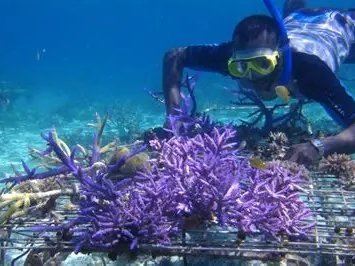
- Engage in guided reef restoration activities (e.g., coral planting, cage installation, water quality monitoring).
- Participate in reflective wellness sessions post‑dive (e.g., guided journaling, breathwork, group sharing).
- Track both personal wellness outcomes and restoration impact.
This model integrates:
- Professional dive instructors
- Marine biologists / coral scientists
- Wellness facilitators
- Local communities
It ensures safety, authenticity, and ecological integrity.
3. Economic and Tourism Impacts
3.1 Tourism Recovery and Diversification
Post‑pandemic data indicates travelers increasingly seek meaningful experiences over purely recreational trips. According to industry monitors, experiential tourism grew by 22% globally between 2019–2024, with wellness experiences at the forefront.
For Sri Lanka:
- Tourism earnings (2023): ~US$ 4.3 billion — with room to grow via niche segments.
- Wellness tourism accounts for an estimated 6–10% of total travel spend.
- Purpose‑driven offerings like Scuba‑for‑Stress can attract premium travelers.
3.2 Community Livelihoods and Skills Development
Programs grounded in reef stewardship foster local employment — from dive guides to coral technicians to mental health facilitators — empowering coastal communities and anchoring tourism benefits locally.
3.3 Sustainability Credentials
Sri Lanka gains:
- International recognition as an innovator in regenerative tourism.
- Enhanced blue economy branding.
- Opportunities for partnerships with conservation NGOs, corporates (CSR), and global wellness networks.
4. Psychological and Health Benefits
4.1 Nature and Neuroscience
Engagement with marine environments taps into biophilia — the innate human affinity for nature. Studies suggest:
- Immersion in blue spaces can reduce cortisol by up to 40%.
- Mindful engagement enhances mental resilience.
Through Coral Reef Restoration as a Therapeutic Practice, participants are not passive observers; they contribute purposefully — deepening psychological benefits.
4.2 Structured Reflection and Integration
Post‑dive wellness sessions help participants:
- Process emotional responses
- Foster group cohesion
- Develop sustainable lifestyle insights
This model dovetails with nature‑based therapy research and is adaptable for diverse age groups and abilities.
5. Case Studies: Global and Sri Lankan Reference Points
Below are six illustrative case studies demonstrating the potential of reef restoration linked with human wellbeing, community impact, and tourism enrichment.
Case Study 1: Maldives – Coral Conservation Tourism Initiative
In the Maldives, luxury resorts partnered with marine scientists to offer guests participatory coral planting. Results:
- >15,000 coral fragments replanted
- Guests reported 85% improved wellbeing
- Resorts saw a 20% uplift in high‑value bookings for conservation stays
This initiative highlights how premium markets gravitate toward purposeful marine engagement.
Case Study 2: Australia – Reef Citizen Science and Wellness Retreats
Near Cairns, Australia’s reef programs combine citizen science with mindfulness retreats:
- Volunteers conduct reef health surveys.
- Daily wellness sessions — yoga, meditation, nature walks.
Outcomes: - Increased environmental stewardship among participants.
- Repeat participation rates exceeding 46%
This reinforces that purpose‑driven tourists become long‑term advocates.
Case Study 3: Philippines – Community‑Led Reef Restoration & Social Healing
In Palawan, indigenous communities integrated reef restoration with trauma healing workshops for typhoon‑impacted locals. Key outcomes:
- Enhanced marine habitat recovery.
- Social cohesion improved.
- Psychological resilience strengthened among participants.
This underscores the therapeutic potential of conservation work for affected populations.
Case Study 4: Hawai‘i – Veterans’ Marine Therapy Program
Hawai‘i-based programs for military veterans involve diving and reef restoration as part of PTSD recovery support. Reported results:
- Significant reductions in anxiety markers.
- Peer support networks formed.
This demonstrates how marine engagement can complement clinical care models.
Case Study 5: Belize – Educational Wellness Expeditions
Belize reef tours incorporate coral planting with environmental education:
- School students participate in restoration.
- Educational outcomes, environmental literacy increased dramatically.
- Caribbean tourism partners reported stronger community‑tourist connections.
This illustrates the intersection of education, conservation, and wellbeing.
Case Study 6: Sri Lanka – Early Reef Conservation Tourism Trials
In the South Coast of Sri Lanka, small‑scale coral gardening workshops for tourists have:
- Improved awareness of reef fragility.
- Engaged local youth in conservation careers.
Participant surveys show >92% would recommend the experience, and repeat bookings are rising.
This local example signals fertile ground for scaling Coral Reef Restoration as a Therapeutic Practice.
6. Designing the Sri Lankan “Scuba‑for‑Stress” Program
6.1 Core Components
A robust program must include:
| Component | Purpose |
| Safety & Certification | Ensuring participant competence and wellbeing |
| Science‑Led Restoration | Aligning activities with ecological best practices |
| Wellness Integration | Mental health facilitation and reflective practices |
| Community Collaboration | Local leadership and shared benefits |
| Monitoring & Evaluation | Tracking ecological and human outcomes |
6.2 Participant Segments
Tailored experiences for:
- Wellness travelers
- Corporate groups (team resilience)
- Students (education + purpose)
- Local residents (community wellbeing)
- Special groups (veterans, caregivers, senior travelers)
6.3 Safety and Ethical Protocols
Safety is non‑negotiable: certified dive professionals, emergency protocols, ecological guidelines, and participant consent frameworks are critical. Ethical tourism standards must be upheld — respecting local cultures, ecosystems, and dignity of participants.
7. Measuring Impact: Ecosystems and Human Outcomes
7.1 Ecological Metrics
- Coral survival rates
- Biodiversity indices
- Water quality improvements
- Blue carbon sequestration estimates
Robust monitoring demonstrates credibility to stakeholders and attracts conservation investment.
7.2 Psychological & Social Metrics
- Pre/post participant stress and wellbeing scores
- Qualitative narratives
- Return visit intent
- Community livelihood improvements
Assessments illuminate the dual impact of Coral Reef Restoration as a Therapeutic Practice.
8. Marketing, Positioning, and Global Appeal
8.1 SEO and Digital Strategy
Key phrases like Coral Reef Restoration as a Therapeutic Practice, Scuba‑for‑Stress, wellness tourism Sri Lanka should be embedded across:
- Web content
- Social media channels
- LinkedIn thought leadership
- Travel platforms
Compelling storytelling — with participant testimonials and impact visuals — drives engagement and conversion.
8.2 Partnerships
Strategic alliances with:
- Sri Lanka Tourism Development Authority
- Global wellness networks
- Dive associations
- Conservation NGOs
enhance credibility and outreach.
9. Challenges and Risk Mitigation
9.1 Environmental Constraints
Coral restoration is complex; careful species selection, site planning, and climate risk forecasting are essential.
9.2 Health and Safety Risks
Scuba involvement requires rigorous risk management — health screenings, professional supervision, and emergency preparedness.
9.3 Community Inclusion
Local buy‑in is vital — programs must offer tangible benefits to coastal populations and guard against tourism disruption.
10. Conclusion: A Regenerative Path Forward
Coral Reef Restoration as a Therapeutic Practice represents a visionary model for Sri Lanka’s tourism future — one that harmonizes ecological stewardship with human wellbeing and economic resilience. By bridging conservation science with therapeutic engagement and experiential travel, Sri Lanka can carve a distinctive place in the global tourism ecosystem — attracting conscious travelers, empowering coastal communities, and contributing meaningfully to climate action.
As we embrace regenerative tourism paradigms, Scuba‑for‑Stress is more than a concept — it is a clarion call to reimagine travel as healing, purposeful, and planet‑positive.
📌 Disclaimer:
This article has been authored and published in good faith by Dr. Dharshana Weerakoon, DBA (USA), based on publicly available data from cited national and international sources (e.g., Sri Lanka Tourism Development Authority, Central Bank of Sri Lanka, international tourism monitors, conservation bodies), decades of professional experience across multiple continents, and ongoing industry insight. It is intended solely for educational, journalistic, and public awareness purposes to stimulate discussion on sustainable tourism models. The author accepts no responsibility for any misinterpretation, adaptation, or misuse of the content. Views expressed are entirely personal and analytical, and do not constitute legal, financial, or investment advice. This article and the proposed model are designed to comply fully with Sri Lankan law, including the Intellectual Property Act No. 52 of 1979 (regarding artisan rights and design ownership), the ICCPR Act No. 56 of 2007 (ensuring non‑discrimination and dignity), and relevant data privacy and ethical standards. ✍ Authored independently and organically through lived professional expertise — not AI‑generated.
Further Reading: https://www.linkedin.com/newsletters/outside-of-education-7046073343568977920/
Further Reading: https://dharshanaweerakoon.com/healing-through-heritage/