Beyond the U-Turn: Why Sri Lanka’s Education System Still Produces Globally Respected Talent — and How Strategic Alignment Can Elevate Tourism, Hospitality, and National Competitiveness
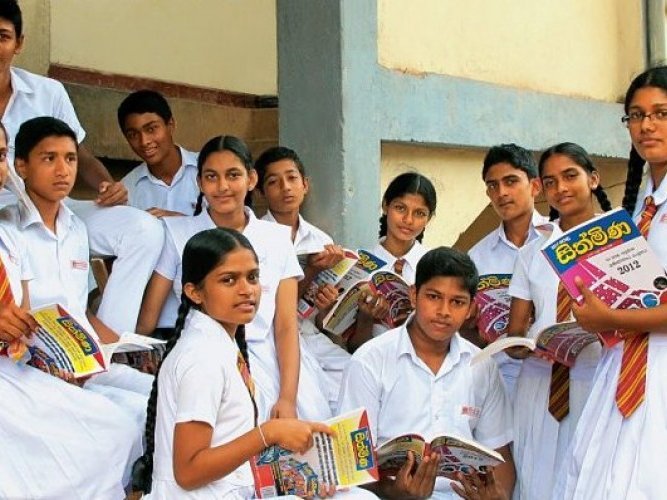
Pull Quote 1: “Sri Lanka’s education system is not broken; it is under-aligned. The difference between reform and rupture lies in strategic calibration.”
Introduction: Reframing a National Debate That Has Become Emotion-Driven
In Sri Lanka today, education reform has evolved into an emotionally charged national discourse. Newspaper columns, policy panels, social media activism, and even parliamentary rhetoric frequently call for dramatic educational “U-turns,” wholesale restructuring, or the uncritical importation of foreign education models. These arguments are often framed as urgent, existential necessities in a rapidly globalising economy.
However, from the standpoint of a tourism and hospitality strategist who has worked across Asia, the Middle East, Europe, and North America, this debate is fundamentally misdirected.
Sri Lanka’s education system is not a failed system in need of erasure. It is a proven human-capital engine that requires strategic alignment with global accreditation frameworks—without sacrificing the intellectual discipline, adaptability, and resilience that have defined Sri Lankan graduates for more than half a century.
The core question, therefore, is not whether Sri Lanka must reform, but how reform can occur without dismantling what already works. This distinction is critical, particularly for tourism and hospitality—sectors where service excellence, ethical judgment, and cultural intelligence matter more than cosmetic credentials.
Pull Quote 2: “Tourism competitiveness is not built on infrastructure alone; it is built on people—and people are shaped first by education.”
A Five-Decade Track Record of Global Talent Production
Despite being a small island nation with limited natural resources, Sri Lanka has consistently produced professionals who perform at global standards. Over the last five decades, Sri Lankan graduates have integrated successfully into some of the world’s most demanding professional ecosystems.
Based on accumulated labour migration data, professional council registrations, and international employment trends:
- An estimated 300,000–350,000 Sri Lankan professionals are employed overseas in regulated and semi-regulated professions.
- Over 60% of Sri Lankan-trained doctors who migrate are absorbed into OECD healthcare systems, particularly the UK, Australia, and the Middle East.
- Sri Lankan maritime officers represent approximately 12–15% of senior officer roles in global merchant fleets.
- Sri Lankan hospitality professionals occupy senior operational and executive positions in hotels and resorts across the Maldives, Gulf region, Southeast Asia, Europe, and Africa.
This global footprint is neither accidental nor recent. It is the outcome of a system that prioritised:
- Strong foundations in mathematics, science, language, and analytical reasoning
- Highly competitive national examinations that rewarded merit and discipline
- Public universities that emphasised theory, ethics, and systems thinking
- A social culture that viewed education as the primary vehicle for social mobility
Few developing nations can demonstrate such sustained global talent relevance over half a century.
Pull Quote 3: “Global respect for Sri Lankan professionals was earned through rigour, not branding.”
Why the Call for an Educational “U-Turn” Is Strategically Risky
The growing demand for radical education reform is largely driven by two powerful pressures.
1. Globalisation of Labour and Qualifications
The international labour market increasingly values qualifications that are easily comparable across borders. Accreditation systems such as UK QAA frameworks, Washington Accord standards, ABET, AACSB, and professional licensing regimes have become shorthand indicators of employability.
2. Expansion of Private and Transnational Education
Sri Lanka has witnessed rapid growth in international schools, private universities, and offshore degree providers. Many market themselves as globally superior alternatives to the national education system, often emphasising speed, flexibility, and international branding.
While global exposure is valuable, an uncritical U-turn risks:
- Replacing academic depth with surface-level credentialism
- Undermining theoretical foundations in favour of accelerated curricula
- Creating education hierarchies driven by affordability rather than merit
From a tourism and hospitality perspective, this is particularly dangerous. Hospitality leadership requires judgment, ethical grounding, crisis management capability, and cultural intelligence—competencies that cannot be compressed into fast-track programs.
Pull Quote 4: “In hospitality, shortcuts in education always surface later as service failures.”
Strategic Alignment, Not Imitation: The Correct Reform Path
Sri Lanka does not need imitation. It needs translation.
Strategic alignment with global accreditation must be treated as a bridge-building exercise rather than a system replacement. Alignment means making Sri Lanka’s educational outcomes globally legible without dismantling the intellectual architecture that produced them.
Effective strategic alignment includes:
- Mapping Sri Lankan curricula against international benchmarks while preserving local academic philosophy
- Embedding outcome-based education without diluting theoretical rigour
- Establishing mutual recognition agreements with professional bodies
- Strengthening faculty development aligned with global pedagogical standards
- Integrating industry-linked accreditation while retaining academic independence
Countries such as Germany, Japan, and South Korea globalised their education systems without abandoning their core philosophies. They aligned, calibrated, and translated their systems into globally recognised frameworks.
Sri Lanka must do the same—particularly in tourism and hospitality education, where global credibility and local authenticity must coexist.
Pull Quote 5: “Accreditation should validate Sri Lanka’s strengths—not overwrite them.”
Tourism and Hospitality: Education as a Competitive Asset
Tourism and hospitality are among Sri Lanka’s most education-sensitive industries. Prior to the economic and geopolitical shocks between 2019 and 2022:
- Tourism contributed approximately 12–13% of total national employment, directly and indirectly.
- The sector generated over USD 4.4 billion in annual foreign exchange earnings at its peak.
- More than 200,000 professionals were employed across hotels, airlines, travel companies, cruise services, and destination management operations.
Unlike extractive industries, tourism competitiveness is almost entirely human-capital driven. Service quality, safety standards, sustainability practices, and destination reputation depend fundamentally on education quality.
Any education reform that weakens discipline, ethics, or systems thinking will directly undermine tourism recovery and long-term destination positioning.
Case Studies: Evidence from Global Practice
Case Study 1: Sri Lankan General Managers in Maldivian Resorts
Sri Lankan-trained hospitality professionals manage a significant share of resort operations in the Maldives. Despite European accreditation dominance, Sri Lankan managers are preferred for operational discipline, labour relations expertise, and crisis leadership.
Case Study 2: NHS Integration of Sri Lankan Medical Graduates
Sri Lankan medical graduates entering the UK system often outperform peers in diagnostic reasoning and patient management after initial orientation—demonstrating the strength of foundational education.
Case Study 3: Maritime Officers in Global Shipping Lines
Sri Lankan marine officers are frequently fast-tracked into senior roles due to their safety culture, systems thinking, and technical discipline.
Case Study 4: Tourism Academics in International Universities
Sri Lankan tourism academics hold senior positions in universities across Australia, the UK, and the Middle East, shaping curricula rather than merely delivering content.
Case Study 5: Gulf Infrastructure and Engineering Leadership
Sri Lankan engineers educated under public universities continue to serve in complex infrastructure megaprojects across the Middle East.
Case Study 6: IT Professionals in Global Firms
Sri Lankan IT graduates demonstrate rapid upskilling capability, bridging theory and practice efficiently in global digital firms.
Case Study 7: Crisis Leadership in Tourism Recovery
From the Easter attacks to COVID-19, Sri Lankan tourism professionals demonstrated adaptive leadership—restructuring operations, ensuring safety, and rebuilding international confidence under extreme uncertainty.
Pull Quote 6: “Sri Lanka’s greatest export is not tea or tourism—it is trained human resilience.”
The Hidden Advantage: Adaptability as an Educational Outcome
One of the most undervalued strengths of Sri Lanka’s education model is adaptability. Sri Lankan graduates are conditioned to:
- Think independently under constraints
- Perform under sustained pressure
- Navigate ambiguity and limited resources
- Operate across cultures with humility and discipline
These traits cannot be imported through accreditation logos. They are cultivated through educational culture, competitive environments, and intellectual rigour.
From Brain Drain to Brain Circulation
The conversation must move beyond lamenting brain drain. Strategic alignment enables:
- Circular migration of professionals
- International research and industry collaborations
- Faculty exchange and joint degree programs
- Knowledge transfer back into Sri Lanka’s tourism and service sectors
Globally legible yet locally grounded education systems encourage return, reinvestment, and partnership.
The Way Forward: Confidence-Driven, Evidence-Based Reform
Instead of dismantling five decades of progress, policymakers and educators must ask:
- How do we globalise recognition without weakening substance?
- How do we empower universities to pursue accreditation without losing autonomy?
- How do we align tourism and hospitality education with sustainability and wellness imperatives?
The answers lie in fine calibration, not rupture.
Pull Quote 7: “Sri Lanka does not need educational disruption; it needs disciplined evolution.”
Conclusion: Evolution, Not Erasure
Sri Lanka does not need an educational U-turn.
It needs strategic alignment.
A system that has produced globally respected professionals for over half a century deserves confident evolution—anchored in evidence, national self-respect, and long-term competitiveness.
Global accreditation should strengthen Sri Lanka’s education identity, not replace it.
Only then will future generations be not merely globally certified, but globally respected.
Disclaimer
This article has been authored and published in good faith by Dr. Dharshana Weerakoon, DBA (USA), based on publicly available national and international data, decades of professional experience across multiple continents, and ongoing industry insight. It is intended solely for educational, journalistic, and public awareness purposes to stimulate informed discussion on education reform, tourism development, and sustainable human capital strategies.
The author accepts no responsibility for any misinterpretation, adaptation, or misuse of the content. Views expressed are entirely personal and analytical and do not constitute legal, financial, or investment advice. This article and its analytical models are designed to comply fully with Sri Lankan law, including applicable intellectual property protections, non-discrimination principles, data privacy norms, and ethical standards. Authored independently and organically through lived professional expertise—not AI-generated.
Further Reading: https://www.linkedin.com/newsletters/7046073343568977920/
Further Reading: https://dharshanaweerakoon.com/sri-lankas-education-reforms/