Wellness Beyond the Resort: Certifying the “Wellness Village” – A New Eco-Label for Ethical Supply Chains and Holistic Community Development in Sri Lanka
Introduction
The world’s wellness tourism landscape is rapidly transforming. What once revolved around luxury spas and five-star retreats now extends beyond the walls of the resort. Globally, conscious travellers are seeking destinations that align with their ethical, environmental, and emotional values — places where the idea of “feeling well” resonates not only within the guest but across the surrounding community.
Sri Lanka, with its remarkable blend of traditional Ayurveda, yoga, meditation heritage, rich biodiversity, and community-oriented rural culture, stands uniquely positioned to lead this evolution. This article introduces and analyses a forward-looking concept — the “Wellness Village” Eco-Label, a proposed certification framework that goes beyond individual resorts to recognize and elevate entire communities that supply them.
This concept envisions that every coconut, every herbal remedy, every handmade soap, and every yoga session experienced by the guest originates from a supply chain rooted in ethics, wellness, and inclusivity. By certifying communities that work in partnership with resorts, the Wellness Village model ensures that the surrounding environment and people are active participants in the wellness journey — not silent bystanders.
1. The Sri Lankan Context: An Opportunity at a Crossroads
1.1 Tourism Recovery and Resilience
Sri Lanka’s tourism sector has demonstrated extraordinary resilience. As of mid-2025, more than 1.5 million international visitors had arrived on the island, marking a strong rebound from the challenges of the past decade. Monthly arrivals continue to rise — August 2025 alone saw nearly 200,000 tourists, an increase of over 20 percent compared to the previous year.
Tourism revenue has followed this upward trend. In the first seven months of 2025, Sri Lanka earned more than USD 2 billion from tourism, with the Central Bank reporting a 10 percent increase in earnings compared to the same period in 2024. In 2024, total annual arrivals reached approximately 2.05 million, generating nearly USD 3 billion in receipts.
These numbers tell a powerful story: Sri Lanka is on a strong recovery trajectory. Yet, the future of the industry cannot rely solely on volume. To sustain growth, the country must shift toward high-value, purpose-driven segments — and wellness tourism, integrated with local community ecosystems, provides precisely that path.
1.2 The Rising Value of Wellness Tourism
Global wellness tourism is one of the fastest-growing segments in the travel industry, valued at hundreds of billions of dollars and expanding each year. In Sri Lanka, research studies have shown that wellness tourists spend significantly more than average travellers — with mean expenditures close to USD 940 per stay and average durations of about five days.
These visitors actively seek authenticity, sustainability, and local cultural immersion. They are not merely looking for spa treatments or yoga sessions; they desire experiences that heal the body and enrich the spirit while uplifting the communities they visit. This creates an enormous opportunity for Sri Lanka to redefine wellness not as an imported luxury, but as a holistic, community-driven ecosystem.
1.3 The Missing Link: Communities and Supply Chains
Despite its strengths, Sri Lanka’s tourism value chain still faces critical challenges. The sector employs over 400,000 people, yet a large proportion remains in informal or low-income roles. Female participation in tourism remains below 10 percent in many regions, and community integration into high-end resort supply chains is often limited.
Studies on supplier relationships within hotel chains in Sri Lanka reveal that decisions are influenced largely by price and quality, while community benefit, ethics, and sustainability rank lower in priority. This shows the need for a systemic shift: from transactional supply relationships to long-term partnerships that empower local producers, artisans, and wellness practitioners.
The Wellness Village certification proposes precisely this transformation — to bridge the resort experience with the heartbeat of the village, aligning the values of wellness, equity, and sustainability.
2. The Wellness Village Eco-Label: Concept and Framework
2.1 Defining the Wellness Village
The Wellness Village eco-label is a certification system for communities that supply and collaborate with wellness resorts. It recognizes not just the resort itself, but the wider ecosystem that sustains it — the farmers who grow its produce, the artisans who craft its amenities, the therapists who provide its wellness services, and the local guides who interpret its landscapes.
To qualify for certification, a community would demonstrate ethical sourcing, environmental stewardship, fair labour practices, and measurable social benefits. The label thus becomes a symbol of integrity, authenticity, and collective wellness — extending the resort’s promise of wellbeing into every link of its supply chain.
2.2 Why This Label Matters
- Authenticity and Market Differentiation
Wellness travellers increasingly value authenticity. A resort that partners with a certified wellness village can tell a richer story — one rooted in local wisdom, ethical sourcing, and genuine connection. - Economic Value and Guest Loyalty
Wellness tourists spend more, stay longer, and return more often. By connecting with a local wellness village, resorts create lasting emotional engagement and higher lifetime guest value. - Community Empowerment and Destination Resilience
Integrating local communities into tourism supply chains builds resilience. It strengthens local economies, reduces leakage, and enhances social licence to operate. - Sustainability and Ethics
The certification framework encourages fair wages, gender equality, non-discrimination, and environmental stewardship, aligning with both national legislation and global Sustainable Development Goals. - Strategic Advantage for Sri Lanka
As neighbouring destinations like India, Bali, and Thailand mature in wellness tourism, Sri Lanka can carve a distinctive niche by embedding its ancient healing heritage within a socially inclusive, certified supply-chain model.
2.3 Proposed Certification Criteria
A Wellness Village certification would assess seven major pillars:
- Local Sourcing Ratio – At least 60 percent of resort supplies (food, herbal products, amenities) sourced within a 50 km radius.
- Community Participation – A minimum percentage of contracts awarded to community members; mandatory skills training for local suppliers.
- Wellness Integration – Inclusion of community-based Ayurveda practitioners, yoga instructors, or herbalists in resort wellness programs.
- Fair Labour & Inclusion – Compliance with labour laws, gender equality, and non-discrimination standards.
- Environmental & Cultural Stewardship – Demonstrable practices in conservation, waste reduction, and heritage preservation.
- Governance & Transparency – Existence of a joint resort-community forum for decision-making and problem-solving.
- Monitoring & Impact Measurement – Regular data on community income growth, employment, environmental performance, and guest satisfaction.
3. Case Studies: Lessons from Sri Lanka and Beyond
Case Study 1 – Community Tourism in Jaffna
Post-conflict Jaffna has demonstrated how community-based tourism can rebuild economies and social cohesion. Local homestays, traditional food cooperatives, and cultural tours have created jobs and strengthened inter-ethnic understanding. This model mirrors the philosophy of the Wellness Village — empowering communities to become active custodians of their wellness and culture.
Case Study 2 – Inclusive Tourism Value Chain Development
A national study by World Vision Lanka found that tourism directly and indirectly supports over 400,000 jobs in Sri Lanka, yet many opportunities remain inaccessible to rural women and youth. By formalizing partnerships between resorts and nearby villages, the Wellness Village label could turn these missed opportunities into inclusive livelihoods.
Case Study 3 – Supplier Ethics in Hotel Chains
Research on supplier selection in Sri Lankan hotel chains revealed nine key decision factors: cost, quality, relationships, education, and ethics among them. Yet, without structured frameworks, local suppliers often remain excluded. A certification that quantifies ethical sourcing would help shift procurement from cost-based to value-based decisions.
Case Study 4 – Empowerment through Community-Based Tourism
Surveys of small tourism entrepreneurs in Sri Lanka show that empowerment projects significantly improved economic and environmental practices. When communities receive training and structured market access, they quickly align with sustainability standards — exactly the environment a Wellness Village seeks to foster.
Case Study 5 – Wellness Tourism Economic Impact
A multi-regional wellness tourism study across Sri Lankan destinations found strong correlations between wellness activities and tourist satisfaction, with average expenditure nearing USD 940 per visitor. This underscores the financial viability of wellness tourism — and the opportunity to amplify impact through local sourcing and participation.
Case Study 6 – Circular Business Models in Tourism SMEs
Research on circular business models revealed growing awareness among small tourism enterprises in Sri Lanka, but highlighted the need for stronger policy and investment support. A Wellness Village network could serve as a living example of circularity — from composting organic waste to reusing materials in local crafts.
Case Study 7 – Indigenous Wellbeing and Tourism
Among Sri Lanka’s indigenous Vedda communities, tourism has been shown to support wellbeing and cultural preservation when managed ethically. Integrating such communities into wellness-based village certifications could safeguard their heritage while creating meaningful income streams.
4. Designing the Certification System
4.1 Stakeholder Structure
- Resorts: Lead applicants, committing to local sourcing, supplier capacity building, and transparent reporting.
- Communities: Village clusters of farmers, artisans, and wellness practitioners who form the certified ecosystem.
- Certification Body: An independent panel comprising government, academia, NGOs, and industry experts.
- Authorities: Sri Lanka Tourism Development Authority (SLTDA) and related ministries for oversight and national endorsement.
- Guests: End-beneficiaries who experience and reward ethical tourism with loyalty.
4.2 Step-by-Step Certification Process
- Mapping: Identify local suppliers and wellness practitioners within the target radius.
- Partnership Agreement: A formal memorandum between resort and village cluster outlining responsibilities and benefits.
- Capacity Building: Training on quality, safety, and wellness service standards.
- Implementation: Integration of local sourcing and community experiences into resort operations.
- Audit & Certification: Independent verification based on established criteria.
- Monitoring & Renewal: Annual assessment of social, economic, and environmental indicators.
- Promotion: Certified resorts display the Wellness Village label, narrating the story in their marketing.
4.3 Key Performance Indicators (KPIs)
- 60–75 percent of supplies sourced locally within three years.
- 30 percent of new contracts awarded to women-led businesses.
- 50 percent increase in village supplier income within three years.
- Guest satisfaction above 8 out of 10 for authenticity and wellness integration.
- 10 percent annual reduction in environmental footprint across the supply chain.
5. Ethical, Legal, and Sustainability Safeguards
5.1 Legal Foundations
The Wellness Village model is designed to comply fully with Sri Lankan law. Artisans’ rights are protected under the Intellectual Property Act No. 52 of 1979, ensuring that designs and traditional knowledge remain the property of their creators. Equality and non-discrimination are reinforced by the ICCPR Act No. 56 of 2007, safeguarding dignity and fair access.
5.2 Ethical Safeguards
- Fair Labour: Ensuring transparent contracts and equitable pay.
- Data Privacy: Responsible handling of supplier information.
- Cultural Integrity: Communities lead the narrative of their traditions.
- Environmental Responsibility: Limiting over-harvesting of medicinal plants and ensuring sustainable farming.
- Transparency: Annual public reporting of social and environmental impact.
5.3 Risk Mitigation
- Avoiding Tokenism: Certification must verify genuine community engagement, not symbolic gestures.
- Preventing Dependency: Encourage multiple resort partnerships for community clusters.
- Protecting Culture: Tourism must not commercialize sacred traditions; authenticity must remain intact.
- Maintaining Quality: Continuous training and mentorship for suppliers to meet international standards.
- Avoiding Greenwashing: Strict audit controls, penalties for non-compliance, and transparent disclosure of results.
6. Scaling Up: From Pilot to Nationwide Transformation
6.1 Pilot Implementation
Initial pilots can focus on three distinct zones:
- South Coast: Linking a beach resort with coconut growers, fishers, and craft artisans.
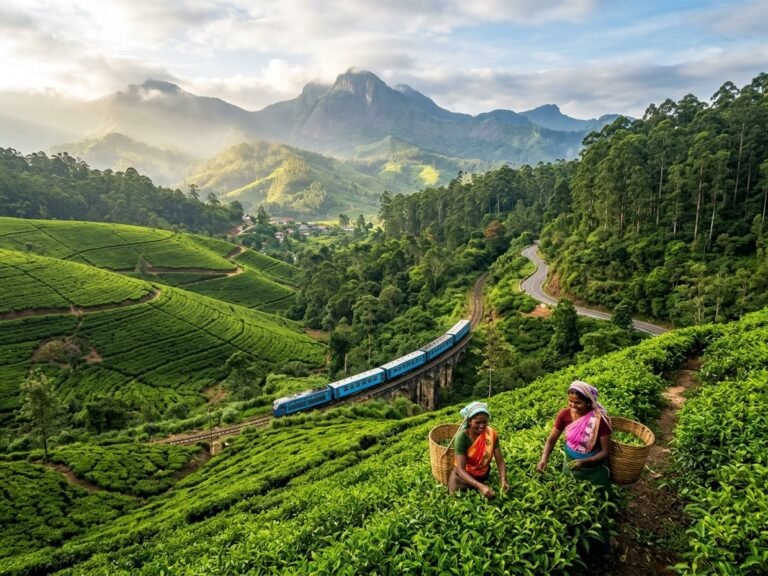
- Hill Country: Connecting a tea-estate wellness retreat with Ayurvedic healers and organic farms.
- Northern Province: Partnering with post-conflict communities in Jaffna to rebuild livelihoods through wellness supply chains.
Each pilot would run for 12–18 months, with baseline data collected and outcomes measured — forming the basis for a national certification rollout.
6.2 National Rollout and Policy Support
Following successful pilots, the SLTDA and related agencies could formalize the certification as a national eco-label, supported by tourism clusters, private investors, and international donors. A centralized “Wellness Village Registry” could showcase certified communities, supplier networks, and measurable impact data.
6.3 Integration with National Wellness Tourism Strategy
This certification aligns seamlessly with Sri Lanka’s ambition to reposition itself as a wellness-focused destination. The narrative could evolve from “a land of beaches and tea” to “a land of healing and holistic wellbeing.” Resorts would become gateways to entire wellness ecosystems, and visitors would experience the true Sri Lankan soul — from farm to spa, from village to heart.
7. Socio-Economic and Environmental Impacts
7.1 Economic Impact
- Increased resort profitability through premium wellness positioning.
- Local economic stimulation as village suppliers gain stable contracts.
- Strengthened micro-enterprises and reduced economic leakage.
- Enhanced destination competitiveness through ethical branding.
7.2 Social and Cultural Impact
- Empowered rural communities, especially women and youth.
- Revival and preservation of traditional wellness practices.
- Enhanced community pride and social cohesion.
- Creation of local role models in sustainability and entrepreneurship.
7.3 Environmental Impact
- Reduced transportation emissions through local sourcing.
- Promotion of organic farming and herbal cultivation.
- Improved waste management and circular production cycles.
- Shared responsibility between resort and village for natural resource conservation.
8. Implementation Challenges
While promising, the Wellness Village concept requires careful execution:
- Not every resort is near a community capable of immediate participation. Infrastructure and training may be needed.
- Certification costs and administration could burden small resorts; government incentives may help.
- Balancing quality assurance with inclusivity is complex.
- Coordination among multiple stakeholders demands strong governance and trust.
- Transparency and credible audits are essential to prevent misuse of the label.
9. Strategic Recommendations
For Resorts:
- Conduct local supplier audits and identify potential community partners.
- Invest in training and co-creation rather than outsourcing.
- Integrate community stories into guest experiences.
- Report progress transparently in sustainability communications.
For Communities:
- Form cooperatives or village clusters for collective bargaining and training.
- Preserve local identity while adapting to market needs.
- Engage women and youth in leadership roles.
- Use part of tourism revenue for community welfare projects.
For Government and Certifying Bodies:
- Develop standards jointly with industry and academia.
- Offer fiscal or marketing incentives to certified resorts.
- Promote the label internationally under the “Wellness Sri Lanka” brand.
- Monitor performance through independent audits and annual reviews.
10. Why This Matters Now
Sri Lanka stands at a critical juncture. The country has the natural assets, cultural depth, and human capital to become a world-class wellness destination. Yet, without integrating communities into the value chain, the benefits of wellness tourism risk remaining confined to resort owners and international investors.
The Wellness Village eco-label changes that equation. It democratizes the concept of wellness — extending it from a personal experience to a shared community achievement. It links ethical supply chains, local entrepreneurship, and wellness philosophy into one cohesive model.
By adopting this certification, Sri Lanka can move from “wellness as spa” to “wellness as ecosystem”, setting a global benchmark for sustainable and inclusive tourism.
Conclusion
The Wellness Village Eco-Label is more than a certification. It is a vision for how tourism can nurture both people and planet — a model where every resort is anchored to a living, breathing community of artisans, farmers, healers, and storytellers. It embodies Sri Lanka’s timeless wisdom: that true wellbeing is collective.
This initiative can redefine the nation’s global image, create sustainable livelihoods, strengthen local economies, and position Sri Lanka as a pioneer of ethical, wellness-driven tourism. The time has come to extend the wellness experience beyond resort walls — into the villages that make wellness possible.
Disclaimer
This article has been authored and published in good faith by Dr. Dharshana Weerakoon, DBA (USA), based on publicly available data from national and international sources, including the Sri Lanka Tourism Development Authority, the Central Bank of Sri Lanka, international tourism monitors, and conservation bodies, along with decades of professional experience across multiple continents. It is intended solely for educational, journalistic, and public awareness purposes to stimulate discussion on sustainable tourism models.
The author accepts no responsibility for any misinterpretation, adaptation, or misuse of the content. Views expressed are entirely personal and analytical, and do not constitute legal, financial, or investment advice. This article and the proposed model fully comply with Sri Lankan law, including the Intellectual Property Act No. 52 of 1979 (regarding artisan rights and design ownership), the ICCPR Act No. 56 of 2007 (ensuring non-discrimination and dignity), and all relevant data-privacy and ethical standards.
✍ Authored independently and organically through lived professional expertise — not AI-generated.
Further Reading: https://www.linkedin.com/newsletters/7046073343568977920/
Additional Reading: https://dharshanaweerakoon.com/digital-wellness-nomad/