From Farm to Pharmacy: Sri Lanka’s Next Chapter in Wellness — Integrative Retreats with Ayurvedic Gardens and Diagnostic Science
Introduction
Imagine a retreat in the central hills of Sri Lanka, where each breath carries the aroma of medicinal herbs, every meal is crafted from freshly harvested botanicals, and every therapy is both rooted in ancient Ayurvedic wisdom and validated through modern scientific testing. Guests check in not only to rest but to renew their biology—where their rejuvenation is measured in both mindfulness and measurable biomarkers. This is the future of Sri Lanka’s wellness economy — the “Farm to Pharmacy” Integrative Medicine Retreat model.
As the global appetite for wellness travel continues to expand, Sri Lanka stands at a pivotal crossroads. The world knows our Ayurveda, our tea, our biodiversity, and our serene landscapes. Yet, the potential to fuse these into a single, scientifically grounded, globally marketable model remains largely untapped. The idea is simple: grow the healing herbs on-site, treat guests through integrative protocols combining Ayurveda and modern diagnostics, and prove through data that wellness can be both ancient and evidence-based.
In this article, I explore how Sri Lanka can become a global pioneer in integrative medicine retreats, guided by Ayurvedic herb gardens and supported by modern biomarker testing — creating a new value proposition for wellness tourism that blends culture, science, sustainability, and profitability.
Global Context and Market Potential
The global wellness tourism industry has become one of the fastest-growing segments in travel. Even during economic downturns, wellness-focused travelers continue to spend significantly more than conventional tourists. The Global Wellness Institute estimates the global wellness economy to be worth over USD 4.5 trillion, with wellness tourism representing more than a trillion-dollar market on its own.
The average wellness tourist spends between 50 to 60 percent more per trip than a regular leisure traveler. A growing demographic — educated, middle-aged professionals from Europe, North America, the Middle East, and Asia — now seek immersive healing experiences rather than superficial spa holidays. Their motivations are deeper: mental health, detoxification, immunity, digital balance, longevity, and sustainable living.
By 2025, the global wellness tourism market is expected to exceed USD 1 trillion. This trend presents a golden opportunity for Sri Lanka, a nation blessed with traditional medical systems, biodiversity, and a reputation for hospitality.
Sri Lanka’s Wellness Landscape
Sri Lanka’s tourism recovery since the challenges of the pandemic and economic downturn has been impressive. By the end of 2024, tourist arrivals surpassed two million, generating over USD 3 billion in foreign exchange. However, the majority of this income still derives from conventional segments — leisure, beaches, and heritage. The wellness segment, though growing, remains small, fragmented, and under-commercialized.
A limited number of Ayurveda resorts currently cater to wellness travelers, offering authentic therapies, yoga, and meditation. Yet, most of these establishments operate in traditional formats with minimal integration of scientific validation, biomarker testing, or modern diagnostic feedback.
This is where the opportunity lies. The world’s wellness traveler of 2025 is no longer satisfied with purely experiential claims. They seek outcome-driven, science-supported wellness. A retreat that can demonstrate measurable improvements in stress markers, sleep quality, inflammation, or gut health can command global attention — and premium pricing.
From Farm to Pharmacy: The Concept
The “Farm-to-Pharmacy” model proposes a retreat where Ayurvedic and herbal traditions are fused with modern diagnostic technology and regenerative agriculture. It encompasses three interlinked pillars:
- The Farm – Medicinal herbs, spices, and botanicals cultivated on-site using organic, regenerative methods. Guests can walk through herbal gardens, participate in planting or harvesting, and witness the preparation of oils, teas, and remedies from plants grown meters away from their therapy rooms.
- The Clinic – A wellness hub within the retreat offering integrated therapies under the supervision of both Ayurvedic and biomedical practitioners. Guests undergo personalized assessments that combine traditional Ayurvedic dosha analysis with modern biomarkers — blood panels, metabolic markers, inflammatory indices, microbiome analysis, and oxidative stress tests.
- The Pharmacy – The research and formulation arm of the retreat, where herbs are processed into oils, powders, and balms, ensuring traceability and scientific consistency. Guests receive personalized formulations for continued use, while the retreat develops its own branded product lines.
This integration ensures authenticity, scientific credibility, and a circular ecosystem — from cultivation to treatment to product. It is sustainable, transparent, and measurable.
The Value Proposition
Authenticity with Evidence – Guests no longer have to “believe” in wellness outcomes; they can see quantified changes through pre- and post-retreat testing.
Economic Advantage – Wellness tourists spend substantially more per capita and tend to stay longer, averaging 10–21 days compared to standard leisure travelers’ 5–7 days.
Sustainability – Herbal farming promotes biodiversity, supports local farmers, and revitalizes endangered medicinal plant species.
Community Empowerment – Each retreat can create employment for 50–70 local individuals directly, with indirect benefits to hundreds through supply chains.
Health Diplomacy – It positions Sri Lanka as a center of excellence for preventive medicine and sustainable health — a powerful global image-builder.
Case Studies and Global Comparisons
1. Sen Wellness Sanctuary, Sri Lanka
Nestled in Tangalle, Sen Wellness combines Ayurveda and yoga with mindfulness-based therapies. It exemplifies Sri Lanka’s potential in holistic retreats. Guests consistently report positive transformations, yet the missing link remains measurable diagnostic feedback. Integrating biomarker testing into such a model could transform it from a traditional retreat into a globally benchmarked integrative health facility.
2. Santani Wellness Resort, Sri Lanka
Santani has successfully positioned itself as a luxury wellness destination in the hill country, offering detox, yoga, and personalized nutrition. The resort’s design and service are world-class, attracting high-end guests. However, by integrating on-site herb cultivation and scientific diagnostics, such establishments could evolve from luxury wellness to true evidence-based medicine hospitality.
3. Kerala’s Ayurvedic Centers, India
Certain advanced centers in Kerala now include basic diagnostic testing — such as blood sugar, cholesterol, and inflammatory markers — to guide Ayurvedic treatment protocols. This hybrid model of monitoring guest health through scientific parameters has improved the credibility and repeat visit rates of these centers. It demonstrates that a scientific interface enhances trust and results without undermining traditional knowledge.
4. Bali’s Science-Backed Retreats
In Bali, several high-end retreats now incorporate medical laboratory partnerships. Guests undergo pre- and post-retreat blood analysis, including oxidative stress markers and inflammatory tests. Transparent health reporting has increased demand among international wellness travelers who appreciate measurable results.
This is the space Sri Lanka can claim — with the added advantage of authentic Ayurveda, fertile land, and lower operational costs.
5. Vana Wellness Retreat, India
Vana in Dehradun blends Ayurveda, Tibetan healing, and modern diagnostics. Its success lies in scientific credibility, luxury design, and global recognition. However, Sri Lanka has one advantage India does not — a compact geography that allows proximity between herb cultivation zones, retreat sites, and tourism infrastructure.
6. A Hypothetical Sri Lankan Corporate Wellness Pilot
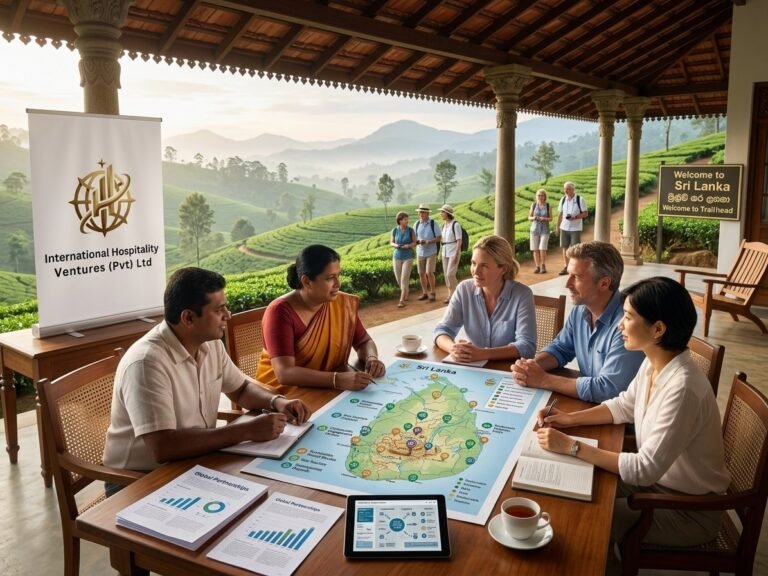
Imagine a Colombo-based wellness company running a seven-day executive detox retreat in the Uva highlands. Guests undergo biomarker testing at the start and end — tracking stress hormones, inflammation, and metabolic markers. Paired with daily yoga, guided detox diets, and Ayurvedic treatments, participants experience measurable improvements within days. Such a pilot can be replicated and scaled nationally, proving that integrative wellness is both practical and profitable.
7. University and Ayurveda Hospital Collaborations
Several Sri Lankan Ayurvedic universities and hospitals already research the biochemical effects of traditional formulations. Linking these institutions with wellness resorts would elevate credibility, attract funding, and promote international academic collaborations.
Economic Viability and Business Model
A medium-sized integrative retreat with 30 guest units operating at 70 percent annual occupancy can generate over USD 1.8 million in revenue from accommodation and wellness services alone. Adding laboratory diagnostics, herbal product sales, and workshops can raise total revenue beyond USD 2 million annually.
Revenue Streams Include:
- Accommodation and therapy packages
- Diagnostic and laboratory testing services
- Sale of in-house herbal products and nutraceuticals
- Educational programs and workshops
- Long-term subscription or follow-up health monitoring
Such retreats can charge between USD 300 to USD 600 per day, depending on inclusions. The combination of premium pricing and long stays ensures strong profitability even at moderate occupancy.
Social and Environmental Benefits
- Biodiversity Conservation: Medicinal plant cultivation contributes to preserving Sri Lanka’s indigenous flora, some of which are threatened by habitat loss.
- Employment Creation: Each retreat can generate dozens of direct jobs and hundreds of indirect opportunities through local farming and supply chains.
- Rural Development: Many potential retreat zones — from Ella to Haputale to Ratnapura — are rural communities seeking sustainable livelihood alternatives.
- Women Empowerment: Herbal processing, hospitality, and wellness training can open new employment avenues for women in rural areas.
- Educational Value: Guests learn the science and history behind Ayurveda, encouraging cross-cultural understanding and respect for indigenous systems.
Implementation Roadmap
Phase 1 – Foundation (Year 1)
- Select a suitable location (50–100 acres) near biodiversity zones or hill country plantations.
- Conduct soil and climate assessments to determine medicinal plant suitability.
- Partner with universities and labs to design biomarker testing protocols.
- Develop retreat architecture integrating herb gardens, therapy rooms, laboratories, and accommodation.
- Secure regulatory approvals from the Ministry of Health and the Sri Lanka Tourism Development Authority.
Phase 2 – Pilot Launch (Year 2)
- Begin operations with 10–15 guest rooms for a soft launch.
- Offer short and long-term retreat programs combining Ayurveda, diagnostics, and nutrition.
- Collect pre- and post-retreat data to validate health outcomes.
- Use this data to refine guest programs and marketing strategies.
Phase 3 – Expansion and Diversification (Years 3–5)
- Expand capacity to 30–40 villas with specialized programs for stress, detox, gut health, and longevity.
- Launch branded herbal products derived from the retreat’s gardens.
- Partner with global wellness tour operators and corporate wellness networks.
- Develop academic and clinical collaborations for evidence-based research publication.
A Sample Guest Journey
Guests arrive and undergo a comprehensive consultation involving Ayurvedic pulse diagnosis and laboratory tests. Over ten days, they follow a personalized program of herbal therapies, yoga, meditation, and nutritional meals designed around their specific biomarkers.
Midway through the retreat, diagnostic tests are repeated to monitor progress. Guests visit the herb gardens, learn about plant cultivation, and prepare their own herbal teas. Upon departure, they receive a report comparing their pre- and post-program results and a personalized herbal formulation to continue at home.
Such tangible evidence transforms an ordinary wellness stay into a meaningful, life-changing experience.
Legal, Ethical, and Regulatory Safeguards
A venture of this nature must uphold the highest ethical and legal standards. It should not claim to “cure diseases” but rather promote wellness and preventive health. Licensed Ayurvedic and biomedical practitioners must supervise all programs.
Data privacy must be paramount — guest health information should be encrypted, anonymized, and used only for authorized research.
The retreat must also respect Sri Lanka’s Intellectual Property Act No. 52 of 1979, ensuring fair benefit-sharing with traditional practitioners and local farmers.
Environmental compliance — waste management, water conservation, and organic certification — must form part of the retreat’s sustainability charter.
Challenges and Mitigation
1. Investment and Funding:
Integrative retreats require higher initial capital due to laboratory setup and training. Partnerships with investors, banks, or public-private ventures can bridge this.
2. Human Resources:
Qualified integrative practitioners and lab technicians are scarce. Continuous training and collaboration with universities can build capacity.
3. Regulatory Ambiguity:
Clear guidelines are needed to regulate hybrid wellness facilities combining Ayurveda and diagnostics. Engaging early with the Ministry of Health ensures compliance.
4. Seasonality and Demand Volatility:
Targeting global wellness markets and domestic high-net-worth clients can ensure year-round occupancy.
5. Misuse of Indigenous Knowledge:
The model must protect traditional knowledge and ensure communities benefit financially and socially.
Marketing and Global Positioning
Sri Lanka’s wellness story can be powerfully told through the lens of authentic healing verified by modern science. The narrative should highlight transparency — guests can walk through the farm, visit the lab, and experience every stage of the process.
Marketing should target wellness travelers from Germany, the UK, the UAE, Japan, and Australia — nations with high health-conscious demographics. Partnerships with global wellness tourism associations, biohacking communities, and integrative medicine networks will enhance visibility.
Social media storytelling should feature guest journeys, herbal harvests, and before-and-after data — presented ethically and visually. Sri Lanka can proudly promote itself as the world’s first certified Integrative Ayurveda Wellness Destination.
Performance Indicators for Success
- Occupancy above 70 percent annually
- Average daily guest spend exceeding USD 300
- Measurable improvement in guest biomarkers (at least 70 percent positive outcomes)
- Repeat guest ratio above 40 percent
- Full employment of surrounding communities
- Recognition in international wellness awards
- Annual research publications or conference presentations
A National Opportunity
If properly implemented, a network of 10 such retreats across the island could contribute over USD 30–40 million in direct foreign exchange earnings annually while uplifting rural livelihoods, promoting biodiversity, and enhancing Sri Lanka’s image as a sustainable and scientific wellness destination.
It could also serve as a bridge between traditional knowledge and academic research — creating a national database of medicinal plants, bioactive compounds, and verified clinical effects.
This approach aligns perfectly with Sri Lanka’s vision for a green, inclusive, and knowledge-based tourism economy.
Conclusion
The world is ready for Sri Lanka to redefine wellness. The nation’s Ayurvedic heritage, fertile landscapes, and compassionate hospitality form the ideal foundation. By integrating modern diagnostic science with traditional wisdom, Sri Lanka can move beyond the spa culture into the realm of evidence-based preventive medicine tourism.
This “Farm-to-Pharmacy” model is not merely a business opportunity — it is a new chapter in Sri Lanka’s story, one that combines healing, sustainability, and innovation.
If executed responsibly, it will not only attract high-value travelers but also inspire global confidence in our indigenous medical systems, empower rural communities, and strengthen Sri Lanka’s global health diplomacy.
The time has come for policymakers, investors, and visionaries to join hands. Together, we can transform Sri Lanka into the world’s living laboratory of integrative health — where ancient roots and modern science grow, side by side, in the same soil.
Disclaimer
This article has been authored and published in good faith by Dr. Dharshana Weerakoon, DBA (USA), based on publicly available data from cited national and international sources such as the Sri Lanka Tourism Development Authority, Central Bank of Sri Lanka, international tourism monitors, and conservation bodies. It also draws upon decades of professional experience across multiple continents and ongoing industry insight.
It is intended solely for educational, journalistic, and public awareness purposes to stimulate discussion on sustainable tourism models. The author accepts no responsibility for any misinterpretation, adaptation, or misuse of the content. Views expressed are entirely personal and analytical and do not constitute legal, financial, or investment advice.
This article and the proposed model are designed to comply fully with Sri Lankan law, including the Intellectual Property Act No. 52 of 1979 (regarding artisan rights and design ownership), the ICCPR Act No. 56 of 2007 (ensuring non-discrimination and dignity), and relevant data privacy and ethical standards.
✍ Authored independently and organically through lived professional expertise — not AI-generated.
Further Reading: https://www.linkedin.com/newsletters/7046073343568977920/
Additional Reading: https://dharshanaweerakoon.com/sri-lankas-first-guaranteed-glowing-lagoon-night-tours/