
Sri Lanka’s Digital Payments Crossroads: Are We Truly Global-Standard — or Just Getting Comfortable Locally?
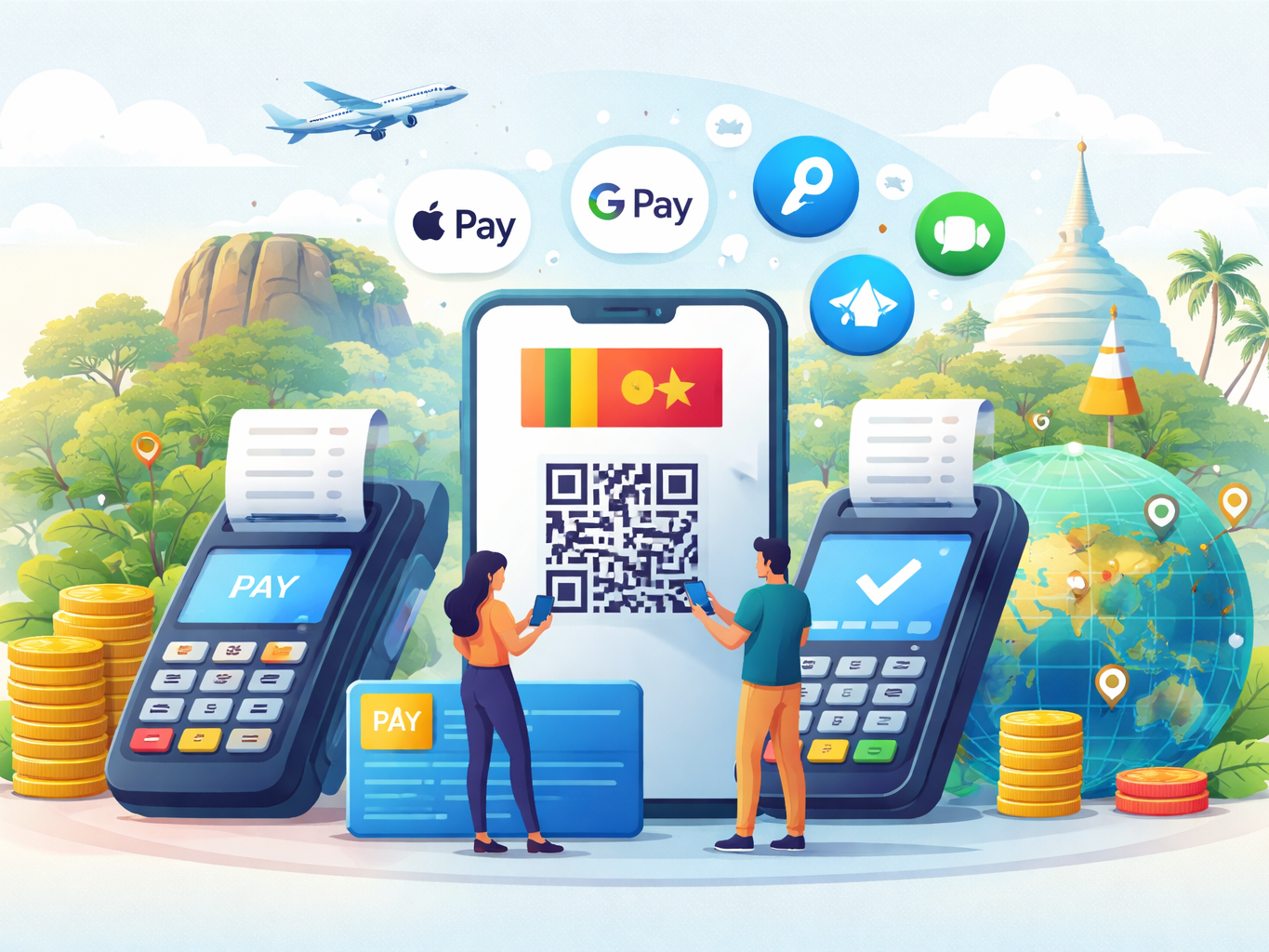
Introduction: A System That Works… But Does It Compete?
Sri Lanka has made meaningful progress in digitizing its financial ecosystem over the past decade. Platforms like LankaPay and infrastructure regulated by the Central Bank of Sri Lanka have created a relatively stable, interoperable domestic payments environment.
However, the real question is not whether the system works locally.
The question is whether Sri Lanka’s payment architecture is globally competitive, scalable, and attractive for international tourism, investment, and cross-border commerce.
From my perspective—working across global tourism, hospitality, and investment ecosystems—the answer is nuanced:
👉 Sri Lanka is functionally adequate domestically
👉 But structurally behind internationally
And this gap matters more than most policymakers currently acknowledge.
1. Understanding Sri Lanka’s Current Payment Landscape
Sri Lanka’s digital payment ecosystem is built around three primary pillars:
1.1 Domestic Payment Infrastructure
- LankaPay (umbrella network)
- CEFTS (real-time fund transfers)
- SLIPS (batch transfers)
- LankaQR (QR-based payments)
These systems enable:
- Bank-to-bank transfers within seconds
- QR-based merchant payments
- Interoperability across local banks
1.2 Card-Based Systems
- Integration with global networks:
- Visa
- Mastercard
- UnionPay
1.3 Mobile Banking & Wallets
- Bank-driven apps dominate
- Limited independent fintech wallets
- QR adoption growing but still uneven
Key Statistics (Estimated & Aggregated Insights)
- Digital payment transactions have grown 20–30% annually post-2020
- LankaQR adoption: ~200,000+ merchants registered
- Card penetration: ~1.8–2.2 cards per adult (urban skewed)
- Cash still accounts for ~70–80% of retail transactions
- Tourism-related digital payments remain under-optimized
2. Are We “International Standard”? Let’s Be Honest.
Let’s break this down across key dimensions:
2.1 Interoperability — Strong Domestically, Weak Globally
Sri Lanka has done well internally. LankaQR is a success story.
However:
- LankaQR is not widely interoperable with global QR systems
- Limited acceptance of international wallet ecosystems
👉 Compare this with:
- Singapore (PayNow + global linkages)
- India (UPI global expansion)
2.2 User Experience — Fragmented
- Multiple banking apps with inconsistent UX
- Limited unified wallet experience
- Tourists face friction onboarding local payment methods
2.3 Cross-Border Payments — The Biggest Weakness
This is where Sri Lanka significantly lags.
- High remittance friction
- Limited real-time international payment rails
- Heavy reliance on traditional banking channels
2.4 Fintech Innovation — Conservative
- Bank-led ecosystem
- Limited startup disruption
- Regulatory caution slows experimentation
2.5 Tourism Payment Readiness — Underdeveloped
In a country where tourism is a key economic pillar, we still lack:
- Seamless QR payments for foreign tourists
- Integration with Asian super-app ecosystems
- Multi-currency wallet acceptance
3. Case Studies: What the World Is Doing Right
Case Study 1: India — UPI Revolution
India’s UPI transformed payments:
- 10+ billion monthly transactions
- QR payments everywhere
- Now expanding globally (UAE, Singapore, France)
👉 Lesson: Scale + simplicity wins
Case Study 2: Singapore — PayNow Globalization
Singapore connects its system internationally:
- PayNow + Thailand PromptPay linkage
- Real-time cross-border transfers
👉 Lesson: Interoperability is the future
Case Study 3: China — Super App Dominance
Platforms like:
- Alipay
- WeChat Pay
Control:
- Retail payments
- Transport
- Tourism spending
👉 Lesson: Payments must integrate into lifestyle ecosystems
Case Study 4: UAE — Tourism-First Payment Strategy
Dubai enables:
- Global card acceptance
- Mobile wallet compatibility
- Instant tax refunds digitally
👉 Lesson: Payments drive tourism convenience
Case Study 5: Kenya — Mobile Money Leapfrog
M-Pesa achieved:
- Financial inclusion at scale
- Mobile-first economy
👉 Lesson: Innovation doesn’t need legacy systems
Case Study 6: Europe — Open Banking PSD2
- API-based financial integration
- Fintech ecosystem explosion
👉 Lesson: Regulation can enable innovation
Case Study 7: Thailand — QR Tourism Integration
- PromptPay QR used nationwide
- Integrated with ASEAN systems
👉 Lesson: Regional alignment creates scale
4. What Sri Lanka Is Missing (Critical Gaps)
Let’s be direct.
4.1 Global Wallet Integration
Sri Lanka lacks widespread support for:
- Apple Pay
- Google Pay
- PayPal
4.2 Tourism Payment Ecosystems
No seamless support for:
- Chinese wallets
- Southeast Asian QR systems
- Multi-currency digital wallets
4.3 Real-Time Cross-Border Transfers
Still heavily dependent on:
- SWIFT-based banking
- Delayed settlements
- Higher transaction costs
4.4 Fintech-Friendly Regulatory Environment
- Innovation sandbox exists but slow
- Licensing complexity limits startups
4.5 Merchant Enablement
- SMEs still cash-heavy
- QR adoption inconsistent outside cities
5. What Payment Methods Sri Lanka Should Introduce
5.1 International Mobile Wallet Acceptance
Priority integrations:
- Apple Pay
- Google Pay
- Alipay
- WeChat Pay
👉 Immediate impact on tourism and retail
5.2 UPI-Style Payment System Expansion
- Enhance LankaQR into a global QR system
- Enable foreign users to scan and pay instantly
5.3 Multi-Currency Digital Wallets
- Allow tourists to pay in home currency
- Automatic FX conversion
5.4 Open Banking APIs
- Enable fintech startups
- Encourage innovation layers over banking
5.5 Contactless Transit Payments
- Tap-and-go for buses, trains, taxis
- Integrate tourism mobility
5.6 Digital Identity Integration
- Secure onboarding for foreigners
- Simplify KYC processes
5.7 Cross-Border Real-Time Payment Links
- Connect with India, ASEAN, Middle East
- Reduce remittance cost (currently ~5–7%)
6. Strategic Implications for Tourism & Investment
From a tourism strategist’s perspective, payments are not just infrastructure—they are experience architecture.
Why This Matters
A tourist today expects:
- Tap → Pay → Move on
If Sri Lanka cannot deliver that:
👉 Spending drops
👉 Friction increases
👉 Destination competitiveness declines
Economic Impact Potential
If optimized:
- Tourism revenue could increase 10–15% through ease-of-spend
- SME participation could rise 20–30%
- Informal economy could reduce significantly
7. Risk Considerations (Balanced View)
While expanding payment systems, Sri Lanka must manage:
- Data privacy risks
- Cybersecurity vulnerabilities
- Regulatory arbitrage
- Foreign platform dominance
A balanced approach is essential:
👉 Open, but controlled
👉 Innovative, but secure
8. The Way Forward: A Practical Roadmap
Short-Term (1–2 Years)
- Enable Apple Pay & Google Pay
- Expand LankaQR adoption
- Tourism-focused payment pilots
Medium-Term (3–5 Years)
- Cross-border QR integration
- Open banking rollout
- Fintech ecosystem expansion
Long-Term (5–10 Years)
- Position Sri Lanka as a regional digital payment hub
- Integrate payments with tourism, logistics, and trade
Conclusion: Functional Is Not Enough
Sri Lanka’s payment ecosystem is stable, functional, and improving.
But in a globalized economy:
👉 Functional ≠ Competitive
👉 Domestic success ≠ International readiness
The next phase is not about building more systems.
It is about connecting Sri Lanka to the world’s financial ecosystem seamlessly.
That is where real value lies.
Disclaimer
This article has been authored and published in good faith by Dr. Dharshana Weerakoon, DBA (USA), based on publicly available financial system data, insights from the Central Bank of Sri Lanka, global payment infrastructure benchmarks, and extensive professional experience in international tourism, investment, and hospitality strategy across multiple regions.
It is intended solely for educational, analytical, and public discussion purposes to explore the evolution and global positioning of Sri Lanka’s digital payment ecosystem. The author accepts no responsibility for any misinterpretation, adaptation, or external use of the content.
All views expressed are personal, independent, and analytical in nature, and do not constitute legal, financial, regulatory, or investment advice. This article is designed to align with Sri Lankan regulatory frameworks, including financial compliance standards, data protection principles, and international best practices in digital transactions and cybersecurity.
✍ Authored independently and grounded in real-world professional expertise and industry observation.
Further Reading: https://www.linkedin.com/newsletters/outside-of-education-7046073343568977920/
Further Reading: https://dharshanaweerakoon.com/the-price-of-expertise/