Sri Lanka at the Crossroads: Navigating the Global Energy Shock and Building a Resilient Economic Future
Introduction: When Global Events Reach Local Fuel Stations
In an interconnected world, geopolitical developments rarely remain confined to their region of origin. Events occurring thousands of kilometers away can quickly ripple through global supply chains, financial markets, and commodity prices. In particular, tensions and conflict in the Middle East often have a direct impact on international energy markets.
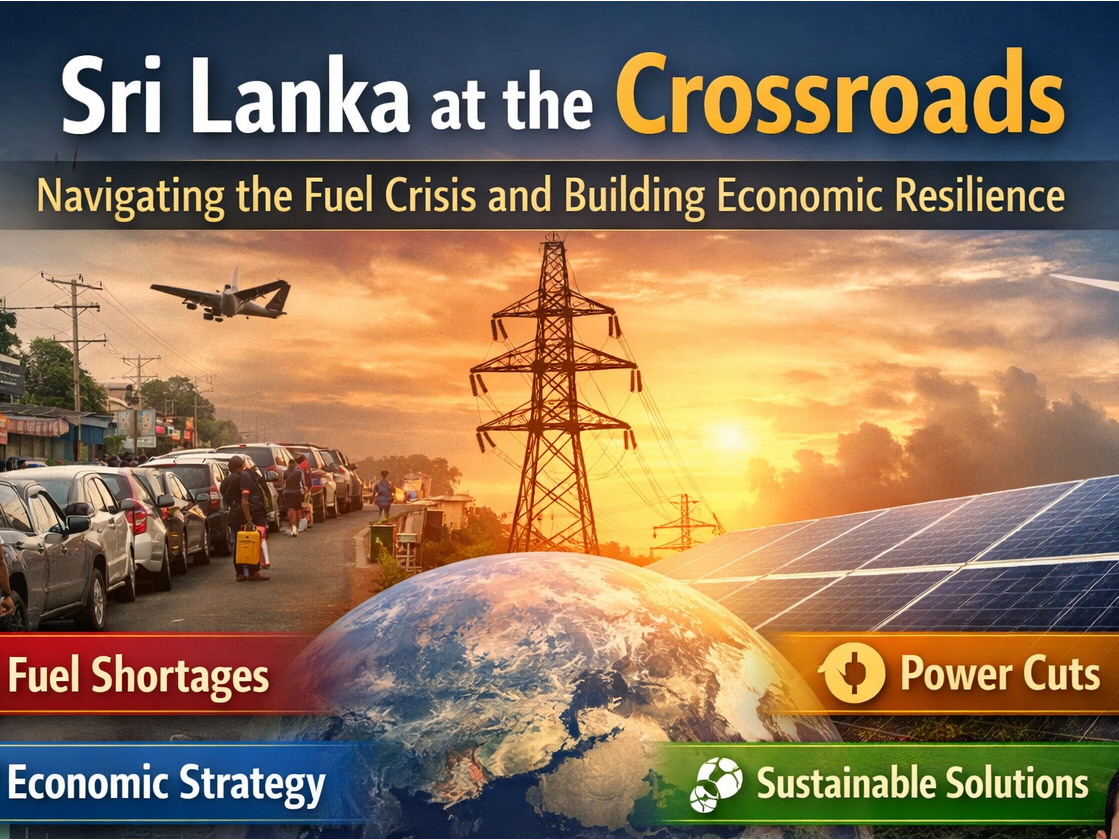
For Sri Lanka, a country that depends heavily on imported petroleum products, fluctuations in global oil markets can have immediate domestic consequences. Recent developments in global energy markets, combined with existing economic sensitivities, have contributed to renewed public concern about fuel availability, transportation disruptions, and potential power supply constraints.
Across the country, people are once again seeing queues at fuel stations, QR-based fuel allocation mechanisms, and discussions about possible electricity management measures. In addition, temporary administrative measures such as reduced working days for certain government sectors have been introduced to help manage demand and maintain stability.
These developments do not necessarily signal a repeat of past crises. However, they do remind us that economic resilience and strategic preparedness remain essential for Sri Lanka’s future stability.
This article offers a big-picture analysis of the Sri Lanka fuel crisis context, exploring possible short-term, medium-term, and long-term impacts while outlining strategic solutions that can strengthen the country’s resilience. The discussion draws upon economic trends, tourism industry experience, and lessons from global case studies.
Understanding the Global Energy Context
Energy markets are among the most sensitive sectors in the global economy. Even modest disruptions in supply or transport routes can trigger price fluctuations that affect countries worldwide.
The Middle East plays a central role in global oil supply. The region produces roughly 30–35% of the world’s crude oil, and key maritime routes such as the Strait of Hormuz facilitate the movement of nearly one-fifth of global oil shipments each day.
Therefore, whenever geopolitical tensions arise in this region, energy markets often react quickly.
For oil-importing nations like Sri Lanka, the effects can include:
- Rising import costs
- Pressure on foreign exchange reserves
- Increased transportation expenses
- Electricity generation challenges
Sri Lanka’s economic structure makes the country particularly sensitive to fuel price volatility.
Several indicators highlight this dependence:
- Sri Lanka imports approximately $4–5 billion worth of petroleum annually
- Nearly 100% of crude oil requirements are imported
- Transportation consumes around 70% of total petroleum usage
- Thermal power plants often provide 40–50% of electricity during supply shortages
Consequently, even moderate increases in global oil prices can influence multiple sectors of the economy.
This dynamic is central to understanding the broader Sri Lanka fuel crisis discussion.
Current Signs of Economic Stress
Several developments suggest that the country is entering a period of heightened caution in energy management.
Fuel QR System and Allocation Measures
The QR-based fuel distribution system was originally introduced during the 2022 economic crisis as a mechanism to prevent excessive demand and maintain equitable distribution. Its reappearance signals a proactive approach to managing supply stability.
Fuel Station Queues
Queues are often an early indicator of supply anxiety rather than actual shortages. When consumers expect scarcity, demand tends to increase temporarily.
Electricity Supply Concerns
Thermal power generation depends on fuel availability. If supply becomes constrained, electricity authorities may introduce scheduled demand-management measures, commonly referred to as power cuts.
Administrative Adjustments
Temporary government holidays or flexible working arrangements help reduce daily fuel consumption and commuter traffic.
These measures are not uncommon during periods of global supply uncertainty. However, they highlight the importance of long-term energy resilience.
Short-Term Economic Impact (0–6 Months)
If global energy market pressures continue, Sri Lanka may experience several short-term economic effects.
1. Rising Fuel Costs
Global oil prices have historically demonstrated sharp fluctuations during geopolitical tension.
Even a $10 increase per barrel can significantly raise national import expenses for countries heavily reliant on petroleum imports.
For Sri Lanka, this means higher costs in:
- Transportation
- Electricity production
- Logistics
- Industrial operations
These costs often cascade through the economy.
2. Inflationary Pressures
Fuel costs influence the price of many goods and services.
For example:
- Food transportation costs increase
- Construction materials become more expensive
- Fisheries and agriculture face higher operational costs
Therefore, temporary inflationary pressures may arise during a Sri Lanka fuel crisis scenario.
3. Tourism Industry Sensitivity
Sri Lanka’s tourism sector has been recovering steadily, welcoming nearly two million visitors annually again after the pandemic period.
However, global travel patterns are sensitive to airline fuel costs.
Higher aviation fuel prices can influence:
- air ticket prices
- travel frequency
- regional tourism flows
Nevertheless, Sri Lanka’s long-stay tourism and wellness tourism segments often remain relatively resilient.
4. Business Productivity Challenges
Power interruptions and transport disruptions may reduce productivity in:
- manufacturing
- logistics operations
- retail distribution
- small businesses
However, companies with strong digital infrastructure and flexible working systems can adapt more effectively.
5. Currency and Trade Balance Pressure
Rising fuel import bills can increase demand for foreign currency, placing pressure on exchange rates.
Managing foreign exchange reserves therefore becomes a key policy priority.
Medium-Term Economic Impact (6 Months – 3 Years)
If global energy volatility continues over a longer period, structural changes may emerge within Sri Lanka’s economy.
Transportation Transformation
Businesses and households often begin shifting toward fuel-efficient alternatives.
These may include:
- hybrid vehicles
- electric mobility
- public transport usage
- shared logistics systems
Such shifts reduce long-term vulnerability to fuel supply disruptions.
Tourism Industry Adaptation
The tourism sector increasingly invests in sustainability measures such as:
- solar energy systems
- energy-efficient cooling systems
- water conservation technologies
- local sourcing of food and materials
These initiatives reduce operational costs while supporting environmental goals.
Expansion of the Digital Economy
Energy shortages often accelerate digital transformation.
Companies adopt:
- remote working models
- online commerce platforms
- digital logistics management systems
This transformation allows economic activity to continue even during mobility restrictions.
Consumer Behaviour Changes
Economic uncertainty typically encourages more cautious spending patterns.
Consumers begin prioritizing:
- essential goods
- energy efficiency
- cost-effective transportation
Such behavioural shifts can influence long-term market trends.
Long-Term Impact (3–10 Years)
Over longer periods, crises often drive structural innovation.
Energy Transition
Sri Lanka possesses significant potential in renewable energy sources, particularly solar and wind power.
Expanding renewable capacity could reduce dependence on imported fuel while strengthening energy security.
Economic Diversification
Countries vulnerable to commodity shocks often accelerate diversification strategies.
Sri Lanka has strong potential in:
- information technology services
- knowledge-based exports
- high-value tourism
- sustainable agriculture
These sectors generate economic growth with lower energy intensity.
Tourism Reinvention
Global travel trends increasingly favour sustainable tourism experiences.
Sri Lanka’s natural environment, cultural heritage, and wellness traditions position the country well for high-value tourism markets.
Local Production and Supply Chains
Encouraging domestic manufacturing and agriculture can reduce import dependency while strengthening economic resilience.
Strategic Short-Term Solutions
Addressing immediate challenges requires coordinated national action.
Prioritized Fuel Allocation
Essential sectors such as:
- agriculture
- healthcare
- logistics
- public transportation
should receive priority fuel access to maintain economic stability.
Flexible Working Arrangements
Remote work and staggered schedules help reduce daily fuel consumption and urban congestion.
Public Energy Conservation
Awareness campaigns encouraging reduced electricity usage and efficient transportation can produce meaningful collective impact.
Tourism Market Diversification
Focusing on regional tourism markets, long-stay visitors, and digital nomads can stabilize tourism revenue during uncertain periods.
Medium-Term Strategic Solutions
Accelerating Renewable Energy Projects
Investment in solar and wind infrastructure can significantly reduce dependence on imported fuel.
Rooftop solar programs and large-scale solar parks are particularly promising.
Smart Public Transport
Improving rail systems and introducing electric bus networks can lower national petroleum consumption.
Digital Business Infrastructure
Technology platforms supporting logistics, supply chain monitoring, and online commerce can maintain productivity even during disruptions.
Companies involved in software and technology services, including organizations within Sri Lanka’s growing digital sector, can play an important role in supporting these transformations.
Strategic Energy Reserves
Developing fuel reserves capable of sustaining national demand for several weeks can enhance crisis preparedness.
Long-Term National Strategies
Energy Independence Vision
A long-term national goal could involve achieving 70% renewable electricity generation within the next two decades.
Economic Resilience Planning
Developing contingency frameworks for global disruptions—whether economic, environmental, or geopolitical—can improve preparedness.
Sustainable Tourism Development
Future tourism strategies should emphasize:
- environmental sustainability
- community-based tourism
- cultural heritage experiences
Such models generate high economic value while minimizing environmental impact.
Technology-Driven Growth
Sri Lanka has the potential to develop into a regional technology and innovation hub, generating exports through software development, data services, and digital solutions.
These sectors require relatively low energy consumption compared with traditional heavy industries.
Global Lessons and Case Studies
Many countries have successfully transformed economic challenges into opportunities for innovation.
Japan – Energy Efficiency Leadership
Following the oil crisis of the 1970s, Japan invested heavily in energy-efficient technology and industrial innovation.
Iceland – Renewable Energy Transformation
Iceland developed geothermal and hydropower resources, enabling nearly 100% renewable electricity generation.
Singapore – Strategic Resource Planning
Singapore maintains extensive reserves of essential commodities, ensuring supply stability during disruptions.
Dubai – Tourism Diversification
Dubai continuously adapts its tourism offerings and infrastructure to remain resilient against economic fluctuations.
Costa Rica – Sustainable Tourism Model
Costa Rica built a globally respected tourism industry centered on environmental protection and biodiversity.
Germany – Renewable Energy Expansion
Germany’s investment in wind and solar power significantly reduced fossil fuel dependence.
South Korea – Knowledge Economy Development
South Korea’s focus on technology and education created a globally competitive knowledge-based economy.
The Role of Responsible Private Sector Leadership
Economic resilience cannot be achieved through public policy alone.
Private sector leadership plays a vital role in:
- innovation
- sustainable business practices
- workforce stability
- technological development
Entrepreneurs, industry leaders, and organizations across sectors must collaborate with policymakers to strengthen national resilience.
Conclusion: Turning Challenge into Opportunity
Sri Lanka has faced numerous economic challenges throughout its history. Each time, the nation has demonstrated remarkable resilience and adaptability.
While global energy market volatility may create temporary uncertainty, it also presents an opportunity to accelerate structural transformation.
Three strategic priorities will be essential:
Energy diversification
Economic innovation
Technological advancement
By embracing these principles, Sri Lanka can transform present challenges into a pathway toward long-term sustainability and prosperity.
Editorial & Legal Disclaimer
This article has been authored and published in good faith by Dr. Dharshana Weerakoon, DBA (USA) based on publicly available economic indicators, global market observations, and professional experience within international tourism, hospitality strategy, and business development sectors.
The analysis is intended solely for educational, journalistic, and public awareness purposes to encourage constructive dialogue on economic resilience and energy security in Sri Lanka.
All geopolitical references are included only for general contextual analysis of international economic trends and do not intend to attribute responsibility or criticism toward any country, institution, or organization.
While reasonable efforts have been made to ensure accuracy, global economic conditions and market dynamics may change over time. Therefore, the author does not guarantee the completeness or timeliness of all information presented.
Nothing contained in this article should be interpreted as legal, financial, policy, or investment advice, and readers are encouraged to seek appropriate professional guidance before making decisions based on the topics discussed.
The views expressed are entirely personal, analytical, and independent, and they do not represent the official position of any government authority, regulatory body, or institution.
The author shall not be held responsible for any interpretation, use, or reliance upon the material contained in this publication.
Further Reading: https://dharshanaweerakoon.com/powering-a-tourism-nation/
Further Reading: https://www.linkedin.com/newsletters/7046073343568977920/