One Country, Two Pathways: Education Reform, Human Capital, and the Quiet Risk to Sri Lanka’s Global Competitiveness
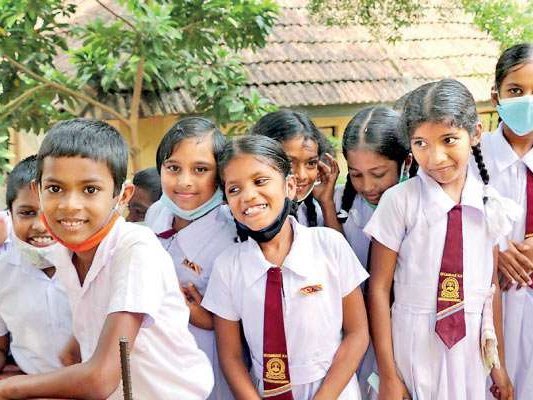
Introduction: Education Reform Is Nation-Building
Education reform in Sri Lanka is more than a classroom or political discussion; it is a strategic decision shaping the country’s long-term economic and social trajectory. Education quality influences workforce readiness, leadership potential, innovation, and global competitiveness across industries—including tourism and hospitality, which contributes 12–14% of Sri Lanka’s GDP during recovery periods according to national economic estimates.
While the government emphasizes reform objectives such as reducing rote memorization, updating curricula, and improving student well-being, parallel education pathways exist in Sri Lanka, including international schools following Cambridge, Edexcel, IB, or American systems. These differences in curricular models and assessment approaches mean that implementation decisions could influence long-term human capital distribution.
The critical question for policymakers, educators, and parents is: How will these reforms affect the comparative quality of skills, innovation potential, and global readiness among future graduates?
Verified Facts About Sri Lanka’s Education Reforms
Based on official statements from the Ministry of Education and verified media coverage:
- Phased Implementation: Reforms will start in Grades 1 and 6, gradually extending across the system through 2028–2029.
- Core Subjects Retained: History, Aesthetics, Religion, and other foundational subjects remain part of the curriculum.
- Assessment Modernization: Emphasis on continuous, formative, and project-based assessment to reduce rote learning.
- Teacher Training Focus: Capacity building and professional development are central to the reform strategy.
- No Privatization: Ministry officials explicitly rejected claims that reforms aim to privatize education or undermine free education.
These points establish a verifiable, factual foundation on which professional analysis can safely build.
One Country, Multiple Learning Pathways
Sri Lanka’s education ecosystem is diverse:
- Government Schools: Local curricula with phased reforms planned.
- Semi-Government / National Schools: Hybrid pathways combining local and selective international frameworks.
- International Schools: External curricula (Cambridge, Edexcel, IB, American) benchmarked against international standards.
While the full revised syllabi for government schools are not publicly released, it is reasonable to anticipate differences in pedagogical style and assessment focus, especially as international curricula are continuously updated to align with global trends. The professional concern is not intent but potential outcome: if reforms and implementation are not carefully monitored, differences in preparedness and skill development could widen over time.
Pressure Reduction vs. Academic Depth
Globally, reducing student stress is a valid policy goal. OECD studies consistently show that well-designed education systems can reduce exam stress without diluting learning outcomes. Examples include:
- Finland: Reduced standardized testing, retained curriculum depth and teacher quality.
- Singapore: Reduced rote memorization, introduced applied STEM, coding, and analytical skills from early grades.
- South Korea: Balanced mental health initiatives with advanced STEM instruction.
Professional takeaway: Reducing pressure does not require lowering intellectual challenge. Sri Lanka’s reforms must maintain rigor and relevance while modernizing assessment.
Why Tourism and Hospitality Depend on Education Quality
Tourism and hospitality are human-capital-intensive industries. Globally:
- Over 70% of tourism value creation comes from workforce capability, not infrastructure.
- Countries with strong education-to-industry alignment see up to 35% higher tourism yield per visitor.
Sri Lanka’s tourism sector employs hundreds of thousands directly and indirectly. Competencies increasingly demanded include:
- Data-driven decision-making and revenue management
- Sustainability literacy
- Cross-cultural communication and management
- Technology and digital tool literacy
- Service psychology and customer experience design
Observation: Foundational education quality directly affects the pipeline of skilled professionals, which determines global competitiveness and national revenue potential.
Case Study 1: Singapore – Balanced Reform
Singapore reduced rote learning while enhancing analytical rigor. Applied STEM exposure began as early as age 8. Outcomes:
- Maintains global ranking in PISA scores for mathematics and science.
- Workforce capable of leading high-tech hospitality and tourism operations.
- Tourism revenue efficiency remains among Asia’s highest.
Lesson: Reducing pressure without sacrificing rigor preserves competitiveness.
Case Study 2: Finland – Misunderstood Model
Finland reduced testing but retained curriculum depth. Teacher quality and applied learning remain high. Outcomes:
- PISA literacy and numeracy scores above OECD average.
- Early exposure to project-based and experiential learning.
Lesson: Reform can enhance well-being while maintaining academic quality.
Case Study 3: Switzerland – Hospitality Pipelines
Swiss hospitality programs embed analytical and operational training from early stages. Outcomes:
- Swiss-trained hospitality professionals dominate global management roles.
- Programs combine practical experience with academic excellence.
Lesson: Early intellectual rigor builds leadership pipelines.
Case Study 4: Sri Lanka – Scholarship Exam Era
Sri Lanka’s Grade 5 scholarship exam historically enabled talented students from rural backgrounds to access elite institutions. Outcomes:
- Produced leaders in medicine, engineering, tourism, and public service.
- Demonstrates the importance of merit-based mobility.
Lesson: Any reform that reduces comparative differentiation risks limiting social mobility.
Case Study 5: India – Parallel Systems
India’s public versus international school systems show growing divergence in global employability. Outcomes:
- International curriculum students increasingly favored by global universities.
- Public-school students face variable preparedness.
Lesson: Unequal curriculum rigor can translate into opportunity gaps over time.
Case Study 6: Maldives – Infrastructure vs. Human Capital
Maldives invested heavily in tourism infrastructure but lagged in local workforce capacity. Outcomes:
- Senior management positions dominated by expatriates.
- Local talent often restricted to operational roles.
Lesson: Education policy shapes who captures the value, not just participation.
Case Study 7: OECD Evidence
Across OECD economies, productivity growth strongly correlates with:
- Cognitive skill development
- Analytical capacity
- Early exposure to problem-solving and technology
Lesson: Weakened foundational education limits long-term economic performance.
Analytical Concern: Potential Stratification
Framing as analytical concern, not accusation:
- Unequal pathways may inadvertently create opportunity gaps if implementation pacing differs.
- Parents may respond by seeking international alternatives.
- Market dynamics could drive stratification without intentional policy.
Maintaining equity requires transparent benchmarking, continuous assessment, and monitoring.
Recommendations for Responsible Reform
- Preserve curriculum depth while diversifying assessment.
- Invest in teacher development and instructional innovation.
- Maintain merit-based mobility pathways.
- Introduce applied STEM, digital literacy, and sustainability literacy early.
- Monitor outcomes across pathways and adjust policies as needed.
Goal: Reduce risk while meeting reform objectives and promoting national competitiveness.
Conclusion: Education Reform Shapes the Nation
Education reform is nation-building. The tourism and hospitality sector, highly dependent on skilled professionals, will be directly affected by the quality and depth of foundational education.
Sri Lanka’s reform journey must ensure that all pathways enhance skills, innovation, and global competitiveness. One country cannot drift into multiple futures by accident.
Disclaimer
This article has been authored and published in good faith by Dr. Dharshana Weerakoon, DBA (USA), based on publicly available data, official statements, and professional experience across global tourism, hospitality, and human capital development. It is intended solely for educational, journalistic, and public awareness purposes. Views expressed are personal and analytical, not legal, financial, or investment advice. No claims are made about unpublished curricula or confidential policy decisions. This work complies with Sri Lankan law, including intellectual property and non-discrimination regulations.
Further Reading: https://www.linkedin.com/newsletters/7046073343568977920/
Further Reading: https://dharshanaweerakoon.com/sri-lankas-education-reforms/