GCC Wellness Pilgrimage – Curating Islamic Holistic Health Retreats in Sri Lanka for the Middle Eastern Market
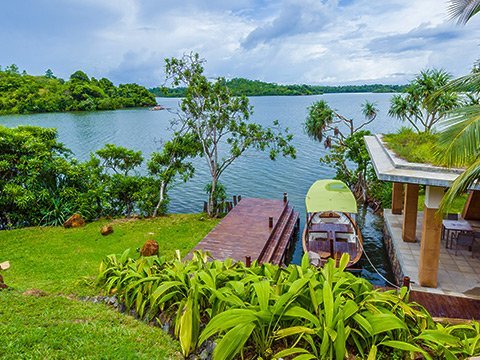
(A strategic convergence of faith, wellness, and experiential tourism—positioning Sri Lanka as the Indian Ocean’s premier Islamic wellness destination for GCC travellers)
Introduction: Why the GCC Wellness Traveller Is the Next Strategic Frontier for Sri Lanka
Tourism globally is undergoing a fundamental transformation. Travellers are no longer seeking only leisure or luxury; they are seeking meaning, healing, faith alignment, privacy, safety, and cultural resonance. Nowhere is this shift more pronounced than in the Gulf Cooperation Council (GCC) region—particularly Saudi Arabia, the UAE, Qatar, Kuwait, and Oman.
The Islamic wellness tourism market, once niche, is now rapidly evolving into a high-value, experience-driven segment. GCC travellers are increasingly combining spiritual reflection, preventive healthcare, halal-compliant wellness, and nature-based healing into what can best be described as a “Wellness Pilgrimage.”
Sri Lanka—an island endowed with Ayurvedic heritage, biodiversity, privacy-friendly landscapes, and geographic proximity to the Middle East—is uniquely positioned to curate this experience. Yet, despite its potential, Sri Lanka has not systematically designed wellness tourism products that align with Islamic principles and GCC cultural expectations.
This article presents a strategic, ethical, and commercially viable blueprint for positioning Sri Lanka as a preferred Islamic holistic health retreat destination for the Middle Eastern market—without compromising national values, legal frameworks, or inclusivity.
Understanding the GCC Wellness Market: Data, Demand, and Demographics
To design effectively, we must first understand the numbers.
According to global tourism monitors and Middle Eastern travel councils:
- GCC outbound tourism expenditure exceeded USD 76 billion in 2023
- Saudi Arabia and the UAE alone account for over 60% of GCC luxury wellness travel
- Muslim-friendly tourism is projected to reach USD 300 billion globally by 2026
- Wellness travellers spend 130–150% more per trip than conventional leisure tourists
- Average length of stay for GCC wellness tourists: 10–18 nights
- Preferred travel periods: March–May and September–November
Crucially, over 70% of GCC travellers now prioritise halal compliance, privacy, and faith-sensitive wellness services when choosing destinations.
Sri Lanka, with its 7–9 hour flight radius from the Gulf, competitive pricing, and year-round climate, fits this demand curve perfectly—if the product is designed intentionally.
What Is an Islamic Wellness Pilgrimage? (And What It Is Not)
An Islamic wellness pilgrimage is not religious tourism in the traditional sense. It is also not medical tourism.
Instead, it integrates:
- Physical rejuvenation (nutrition, detox, mobility, longevity)
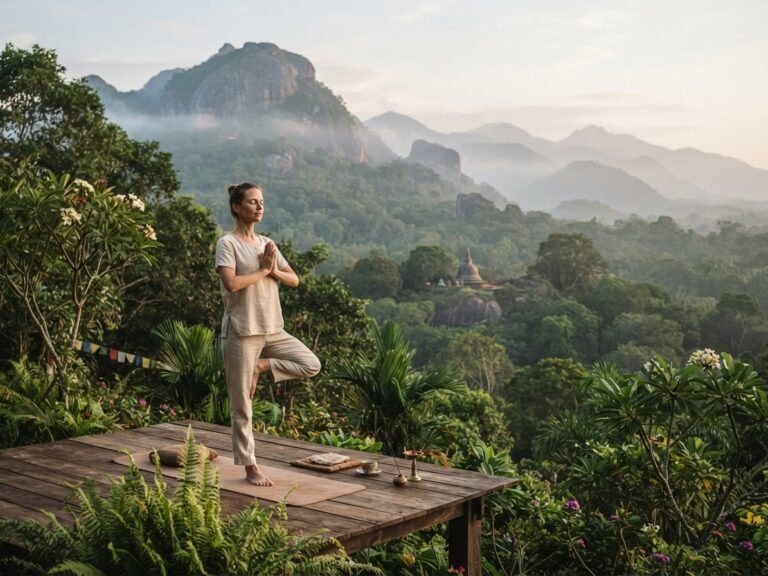
- Mental clarity (stress management, digital detox, mindfulness)
- Spiritual alignment (prayer-friendly spaces, reflection, ethical living)
- Cultural dignity (privacy, modesty, halal assurance)
- Nature-based healing (forests, oceans, mountains, silence)
It respects Islamic values without imposing religion, and it remains inclusive and non-discriminatory, fully aligned with Sri Lankan law and multicultural ethics.
Why Sri Lanka Is Structurally Suited for This Model
1. Ancient Wellness Systems
Sri Lanka’s Ayurveda, Siddha, and indigenous healing traditions align seamlessly with Islamic concepts of balance (Mizan), prevention (Hifz), and cleanliness (Taharah).
2. Geography and Privacy
From Knuckles and Haputale to Kalpitiya and the Eastern Coast, Sri Lanka offers low-density, secluded environments ideal for privacy-seeking GCC travellers.
3. Halal Ecosystem Potential
Sri Lanka already has:
- Halal-certifiable food supply chains
- Trained hospitality professionals in GCC service standards
- Mosques and Islamic heritage sites nationwide
4. Competitive Cost Advantage
A 14-night wellness retreat in Sri Lanka can be delivered at 40–50% lower cost than comparable offerings in Europe or Southeast Asia—without compromising quality.
Case Studies: Global & Regional Models Sri Lanka Can Learn From
Case Study 1: AlUla Wellness Retreats – Saudi Arabia
Saudi Arabia’s AlUla integrates heritage, silence, desert wellness, and spirituality—proving that faith-aligned wellness is commercially viable.
Lesson for Sri Lanka:
Narrative-driven wellness rooted in land, history, and introspection.
Case Study 2: Zulal Wellness Resort – Qatar
The Middle East’s first full-scale wellness resort blending Traditional Arabic & Islamic Medicine (TAIM) with modern diagnostics.
Lesson:
Indigenous healing systems gain global credibility when medically structured.
Case Study 3: Ananda in the Himalayas – India
A spiritual wellness destination attracting GCC royalty and elites.
Lesson:
Privacy, discretion, and personalised programs matter more than size.
Case Study 4: Six Senses Zighy Bay – Oman
Luxury wellness integrated with Islamic hospitality values and seclusion.
Lesson:
Islamic-friendly does not mean religious branding—it means cultural intelligence.
Case Study 5: Turkey’s Thermal Wellness Clusters
Turkey markets halal-certified thermal wellness resorts to GCC families.
Lesson:
Certification + storytelling = trust.
Case Study 6: Bali’s Muslim-Friendly Wellness Villas
Despite being non-Muslim, Bali attracts GCC travellers through customised halal wellness villas.
Lesson:
Faith sensitivity is about service design, not demographics.
Case Study 7: Maldives Private Wellness Islands
The Maldives excels in privacy-first, villa-based wellness tourism for Middle Eastern travellers.
Lesson:
Sri Lanka can offer similar privacy at greater cultural depth and lower cost.
Designing the Sri Lankan GCC Wellness Pilgrimage Model
Core Components
- Halal-Certified Wellness Cuisine
- Gender-segregated or family-private therapy spaces
- Prayer facilities & Qibla orientation
- Modest wellness attire options
- Arabic-speaking wellness concierges
- Faith-sensitive spa and therapy protocols
- Confidentiality and discretion policies
Ideal Locations
- Knuckles & Riverston (forest healing)
- Haputale & Bandarawela (altitude detox)
- Kalpitiya (ocean therapy & privacy)
- Eastern Province (post-seasonal GCC travel)
Economic Impact for Sri Lanka
A well-structured GCC wellness strategy could:
- Generate USD 250–400 million annually within 5 years
- Create high-skill employment (therapists, nutritionists, wellness managers)
- Extend average tourist stay from 7 to 14+ nights
- Reduce seasonality
- Attract repeat, family-based travel
Most importantly, it positions Sri Lanka as a premium wellness nation, not a discount destination.
Legal, Ethical & Cultural Safeguards
This model:
- Fully complies with Sri Lankan tourism law
- Aligns with the ICCPR Act No. 56 of 2007
- Respects non-discrimination and dignity
- Avoids religious segregation or exclusivity
- Ensures artisan IP protection under Sri Lanka’s IP Act
Wellness tourism must unite cultures, not divide them.
Conclusion: From Leisure Tourism to Purpose-Driven Nation Branding
The GCC wellness pilgrimage is not a trend—it is a structural shift.
Sri Lanka stands at a crossroads:
- Compete on price, or
- Lead on purpose, healing, and dignity.
By curating Islamic holistic wellness retreats with intelligence, ethics, and cultural fluency, Sri Lanka can attract a high-value, loyal, and respectful traveller segment—while strengthening its global brand as a sanctuary for wellbeing.
This is not about religion.
This is about respect, design, and strategic foresight.
Disclaimer
This article has been authored and published in good faith by Dr. Dharshana Weerakoon, DBA (USA), based on publicly available data from cited national and international sources (including Sri Lanka Tourism Development Authority, Central Bank of Sri Lanka, international tourism monitors, and conservation bodies), decades of professional experience across multiple continents, and ongoing industry insight. It is intended solely for educational, journalistic, and public awareness purposes to stimulate discussion on sustainable tourism models. The author accepts no responsibility for any misinterpretation, adaptation, or misuse of the content. Views expressed are entirely personal and analytical, and do not constitute legal, financial, or investment advice. This article and the proposed model are designed to comply fully with Sri Lankan law, including the Intellectual Property Act No. 52 of 1979, the ICCPR Act No. 56 of 2007, and relevant data privacy and ethical standards. Authored independently and organically through lived professional expertise.
Further Reading: https://www.linkedin.com/newsletters/7046073343568977920/
Further Reading: https://dharshanaweerakoon.com/ethics-expectations-and-misconduct-why-sri-lanka-must-professionalize-its-spa-wellness-industry-nowspa-wellness-industry/